FREE SHIPPING ALL ORDERS $450 AND UP!

SAME DAY & EXPEDITED SHIPPING AVAILABLE

Sidebar

Posted by National Lock Supply on Jun 17th 2026
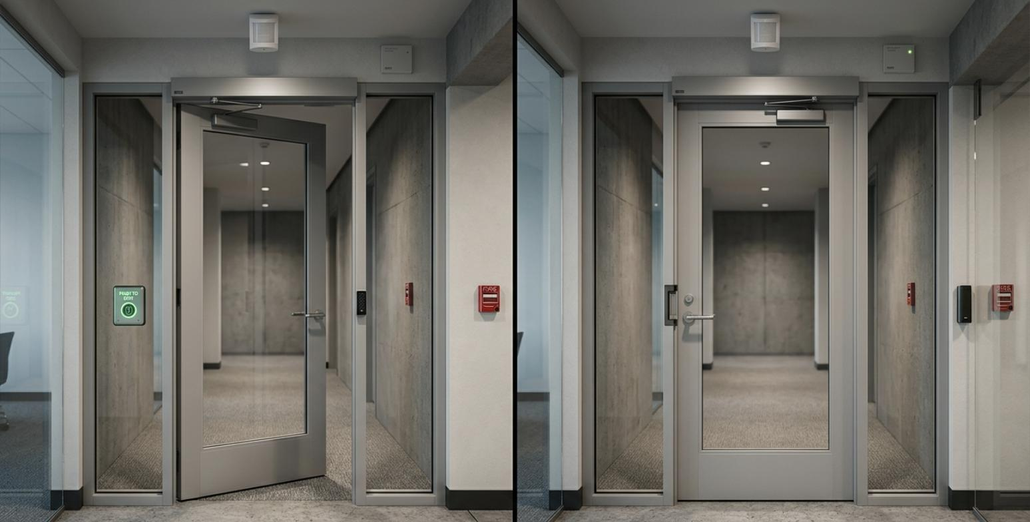
Senior living and behavioral-health facilities specify door hardware around one overriding requirement the rest of commercial work does not face: patient self-harm and elopement risk. That drives two specialized hardware families. Anti-ligature (ligature-resistant) hardware uses sloped, closed, or recessed shapes that give nothing to attach a cord to, on the doors of at-risk patient areas. Delayed egress and controlled access manage wander and el… Read more

Posted by National Lock Supply on Jun 15th 2026
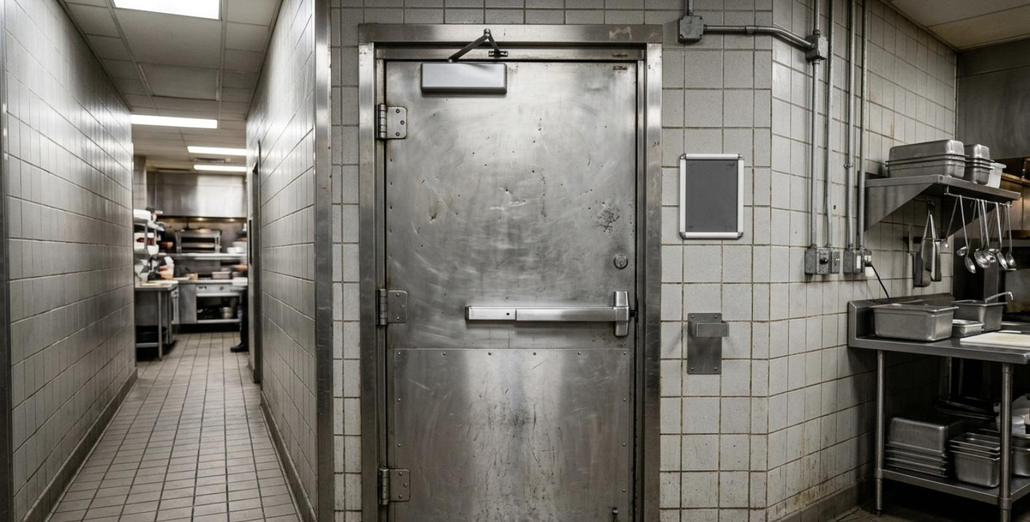
Restaurant door hardware lives in a harsh environment: grease, steam, frequent cleaning with caustic chemicals, and traffic counts that wear residential-grade hardware out in months. The spec that holds up is BHMA Grade 1 in 630 satin stainless steel for corrosion resistance, heavy-duty closers tuned for high cycle counts, panic hardware on every required exit, and kick or armor plates on doors that take cart and foot abuse. The split that matter… Read more

Posted by National Lock Supply on Jun 13th 2026

In Florida, commercial door hardware on exterior openings has to do two jobs the rest of the country does not require: survive hurricane wind pressure and resist windborne-debris impact. The governing documents are the Florida Building Code (FBC) and, in the High-Velocity Hurricane Zone (HVHZ, meaning Miami-Dade and Broward counties), a product-specific Miami-Dade Notice of Acceptance (NOA) or a Florida Product Approval. The hardware that qualifi… Read more

Posted by National Lock Supply on Jun 12th 2026
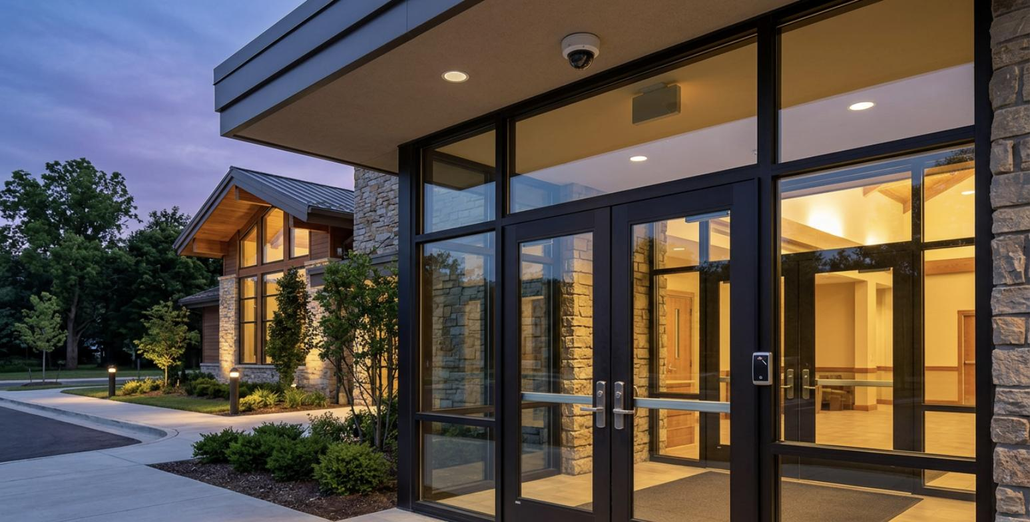
A house of worship has to do two things that pull in opposite directions: welcome the public during services and lock down hard against a threat the rest of the time. The hardware that resolves this is a layered access plan, with a controlled main entry on access control, fail-secure electric strikes or electrified locks on staff and child-area doors, panic exit devices on every assembly exit for code-compliant egress, and a lockdown function tha… Read more

Posted by National Lock Supply on Jun 10th 2026
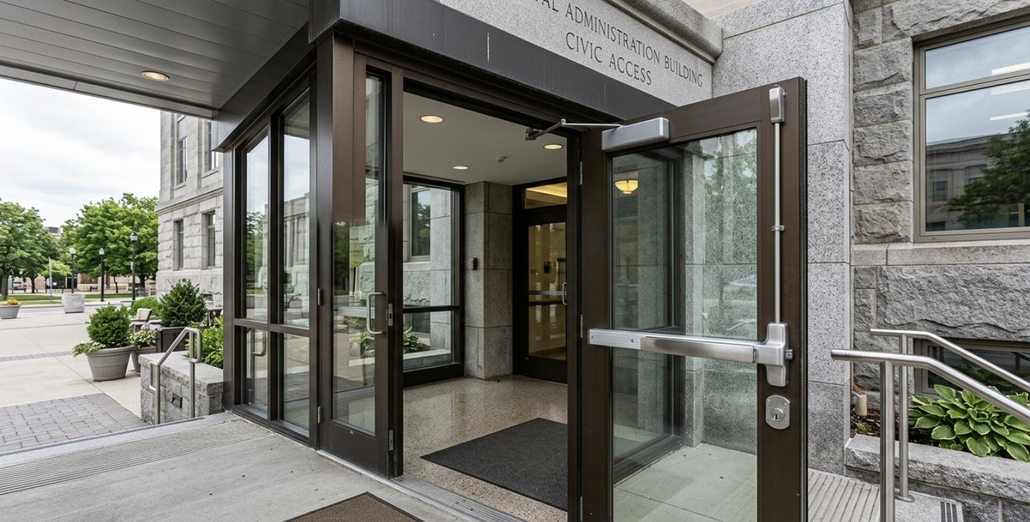
Government and municipal door hardware adds a procurement layer on top of the normal commercial spec: domestic-manufacture requirements (Buy American), GSA approval on certain federal work, and graduated security levels tied to the building function. The hardware itself is BHMA Grade 1 commercial, but on public projects the sourcing and documentation decide whether a product is acceptable, not just its performance. Most major US-made hardware (Sa… Read more

Posted by National Lock Supply on Jun 9th 2026
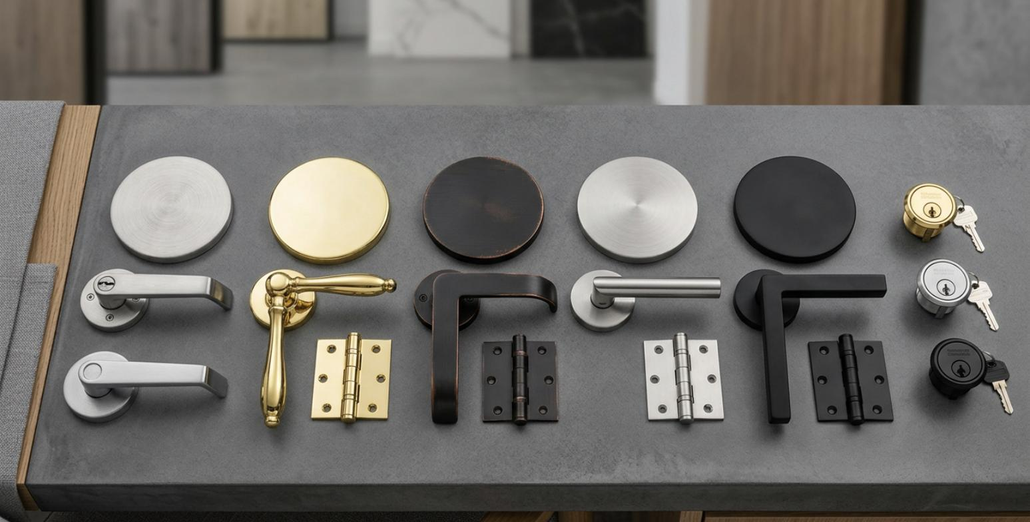
Fail-safe means a device unlocks when power is lost, and fail-secure means it stays locked when power is lost. The choice is a life-safety and security decision made per opening, not per building. One rule resolves most doors: fire, egress, and stair doors that must release on alarm are fail-safe, while perimeter and secured interior doors are fail-secure, because a fail-secure door still allows free mechanical egress from the inside through the… Read more

Posted by National Lock Supply on Jun 7th 2026
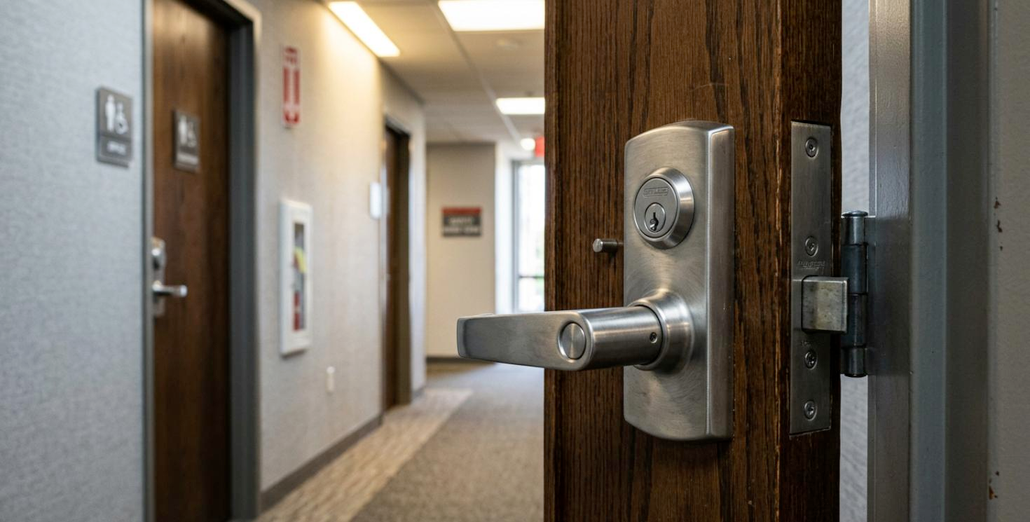
Every commercial hardware order requires a finish code, and there are two systems still in use. The older US numbering (US3, US26D, US10B) and the BHMA/ANSI A156.18 codes that replaced it (605, 626, 613) describe the same finishes, but the BHMA code is the current standard while the US code is the legacy shorthand most of the trade still speaks. The two finishes you will order most are 626 (satin chrome, formerly US26D) for interior commercial ha… Read more

Posted by National Lock Supply on Jun 5th 2026
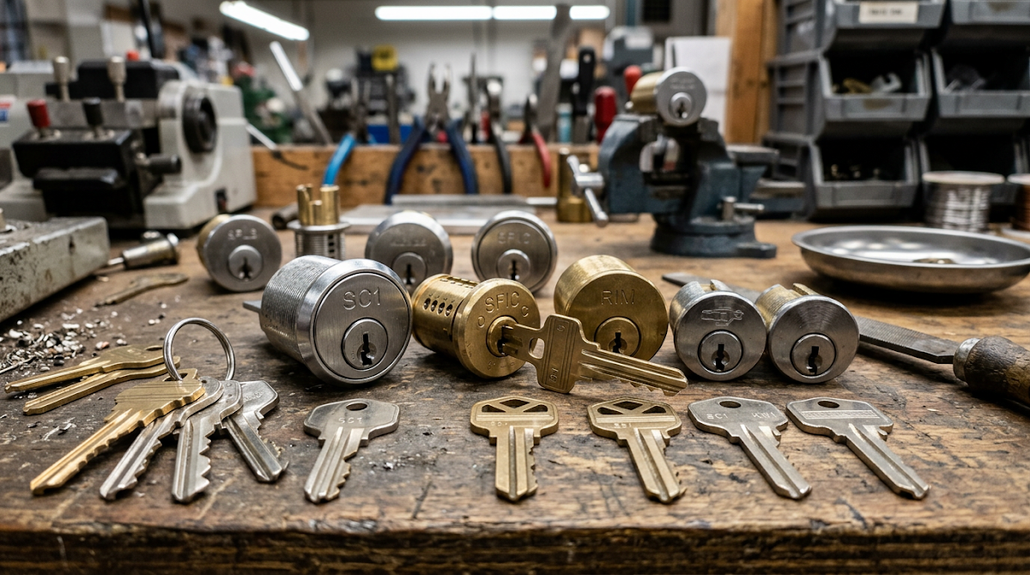
A function code defines how a commercial lockset behaves: which side locks, whether the outside lever is rigid or free, and whether a key or a thumbturn controls it. You cannot order a commercial lock without choosing one. The ANSI/BHMA function names (Office, Classroom, Storeroom, Privacy, Passage, and a dozen more) are standardized in A156.2 for cylindrical locks and A156.13 for mortise locks, but each manufacturer also assigns its own catalog… Read more

Posted by National Lock Supply on Jun 4th 2026
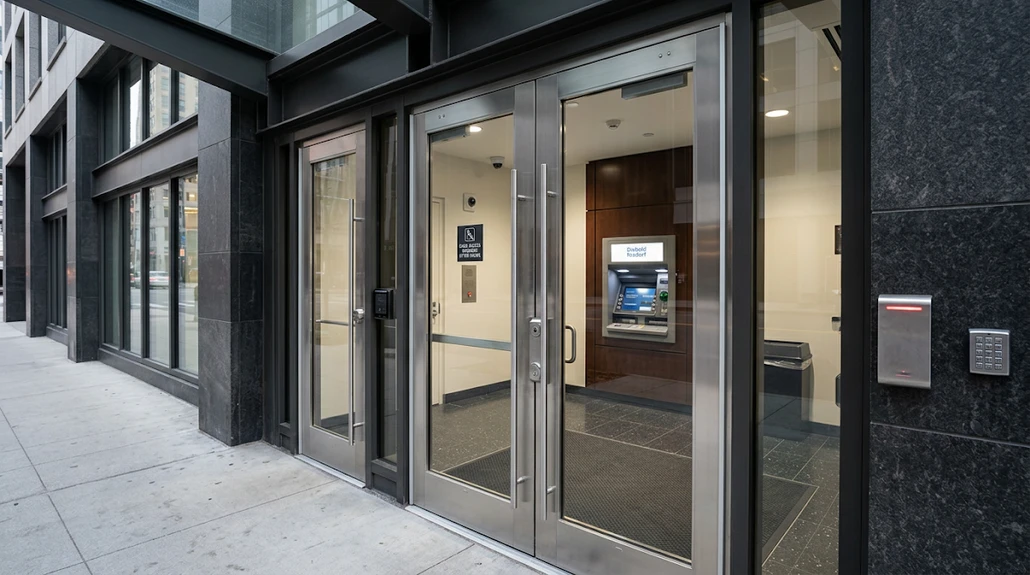
A keyway is the shaped slot a key blank fits into, and it is the single factor that decides which cylinders can share a key. The keyway is what lets a key turn a lock at all, while the pinning inside the cylinder is what makes it the right key. Commercial keying really comes down to three decisions made in order: the keyway family (Schlage C, Sargent LA, Corbin Russwin 59/60, Yale, or a high-security keyway), the cylinder format (standard mortise… Read more

Posted by National Lock Supply on Jun 2nd 2026

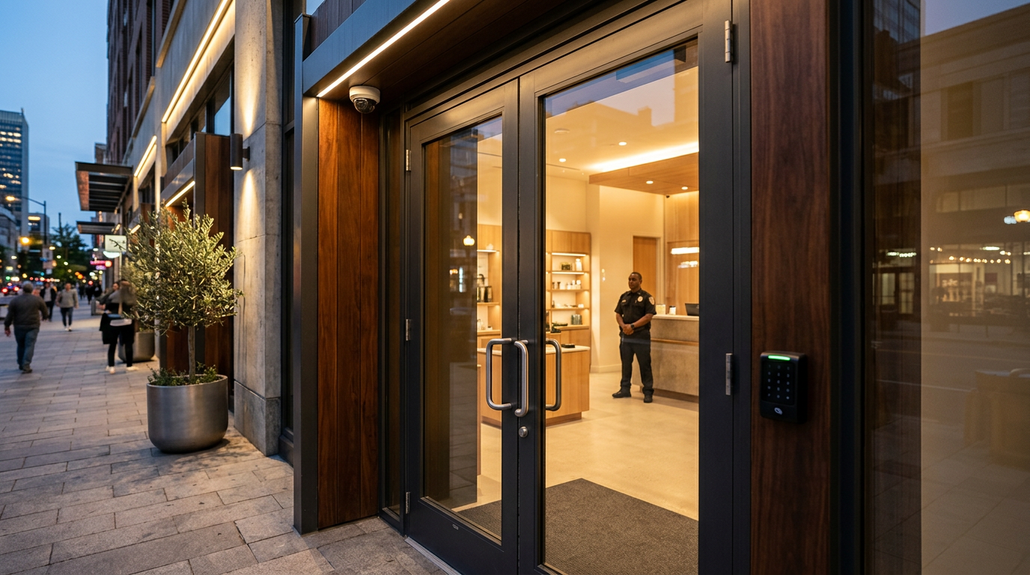
A bank or credit union branch is a layered-security building, and the door hardware has to reflect that layering. The entry is an access-controlled mandatory vestibule, the teller line and back-office doors run high-security cylinders and electrified locks, the vault and cash-handling perimeter use delayed egress, and the after-hours ATM lobby runs on its own access-control schedule. The principle that ties all of it together is defense in depth… Read more

Posted by National Lock Supply on May 22nd 2026
Migrating a 200-door portfolio from brass keys to electronic credentials takes 12-18 months when done well, and stalls at month 6 when done badly. The portfolios that finish on time pick the credential platform first, then sequence hardware replacement in waves based on door risk and traffic, not by floor or building. Plan to spend 1,200 per opening fully loaded (hardware + labor + commissioning + credentials). Plan for the IT and tenant communic… Read more

Posted by National Lock Supply on May 20th 2026

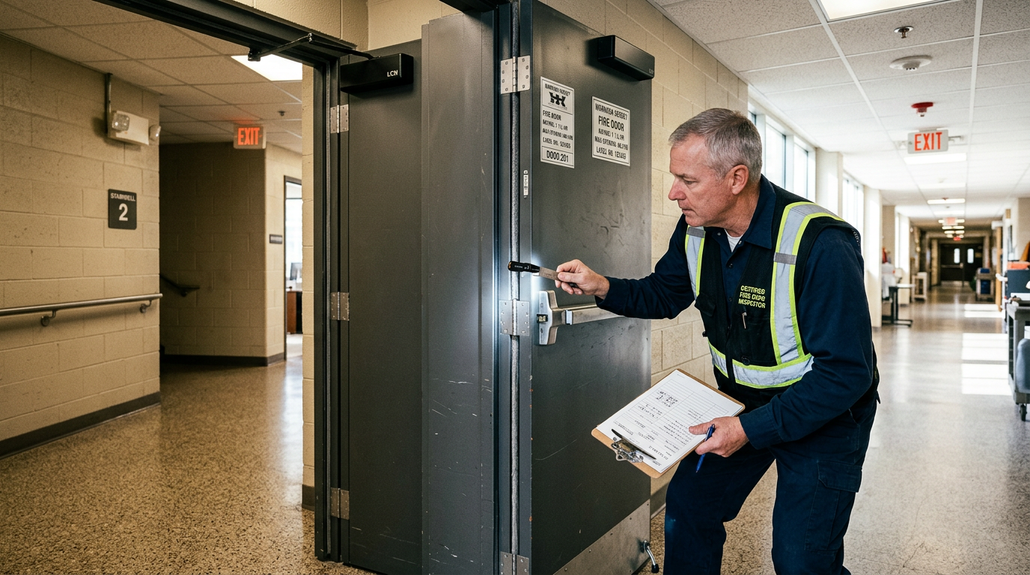
NFPA 80 requires every fire-rated door assembly in a commercial building to be inspected annually by a qualified person. The inspection covers 13 items defined in Chapter 5: labels, gaps, hardware, glazing, frame, latch, closer, signage, and field modifications. Deficiencies must be repaired without delay. Some require the door out of service immediately (missing latch, unrated hardware on a rated opening). Others have weeks. The penalty for skip… Read more

Posted by National Lock Supply on May 18th 2026

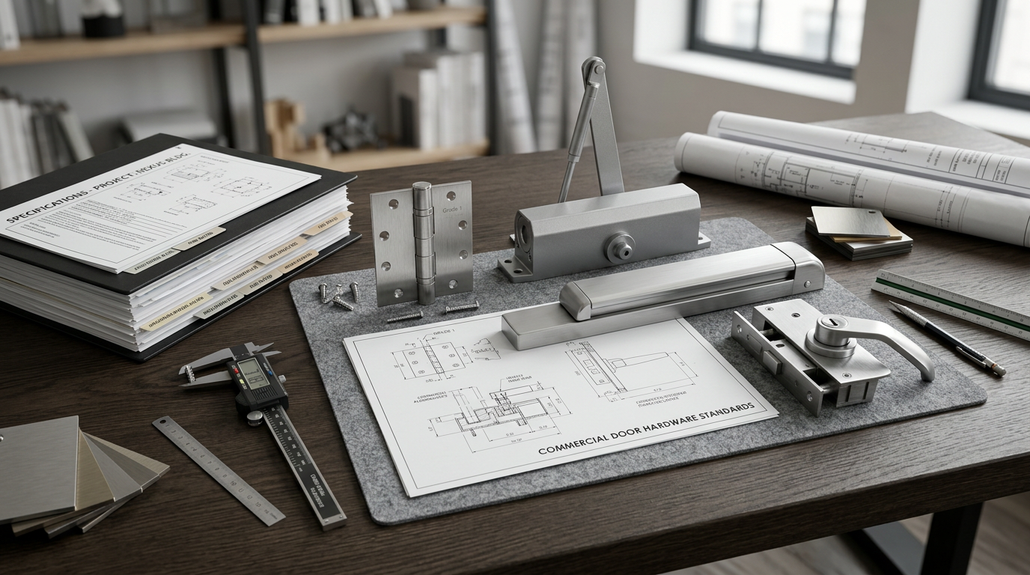
A door hardware schedule lives in Division 08 of the project specification and lists every opening in the building by number, with a hardware set (HW-1, HW-2, HW-3…) that points to a parts list. Each hardware set names brand, model, function code, and finish for every piece on that opening. The estimator's job is to take each HW set, multiply by the door count assigned to it, and translate into a purchasable line item. The most common mist… Read more

Posted by National Lock Supply on May 15th 2026
A data center spec divides openings into four security zones, and each zone has its own hardware playbook. The perimeter zone uses high-cycle maglocks or electric strikes with anti-passback card readers. The vestibule and mantrap zone uses interlocked doors with optical tailgating detection. The white-space zone uses dual-credential biometric readers tied to electric strikes on rated doors. The cage and cabinet zone uses rack-level locks with aud… Read more

Posted by National Lock Supply on May 13th 2026
Cannabis dispensaries operate under a hardware spec that does not look like a typical retail store. Most states require a vault or limited-access area with reinforced doors, perimeter doors with motion-detected alarms and reinforced strikes, a dedicated ID verification area where customers cross from the public space into the sales floor, and video coverage tied to every access event. The hardware that meets the requirements is mostly commercial-… Read more

Posted by National Lock Supply on May 11th 2026

ANSI/BHMA A156 is the family of performance standards that defines how commercial door hardware is tested, graded, and labeled. There are 40+ individual standards in the series. Each covers one hardware category (hinges, locks, exit devices, closers, electric strikes, etc.) and defines cycle counts, force tests, and grade thresholds. A spec book references the standard number and grade ("ANSI/BHMA A156.13 Grade 1") to lock in a quality floor. Thi… Read more

Posted by National Lock Supply on May 8th 2026

A self-storage facility has four distinct opening types and four corresponding hardware spec sheets. The perimeter and office openings use standard commercial hardware. The gate operator is a separate procurement (gate hardware, intercom, RFID reader). The unit doors are the highest-volume hardware line on the facility and the one with the most operational impact: disc-detainer padlocks for outdoor units, cylinder-and-hasp for indoor units, overl… Read more

Posted by National Lock Supply on May 6th 2026
Commercial door hardware varies 8x across building types: $150-1,200 per opening fully loaded. The cost is driven by four variables: function (passage vs entry vs panic), fire rating (rated vs non-rated), electrification (mechanical vs electrified), and finish grade. A typical office building runs $250-450 per opening on most interior doors with $600-1,200 spikes on perimeter and electrified entries. Healthcare and high-security buildings run $40… Read more

Posted by National Lock Supply on May 4th 2026

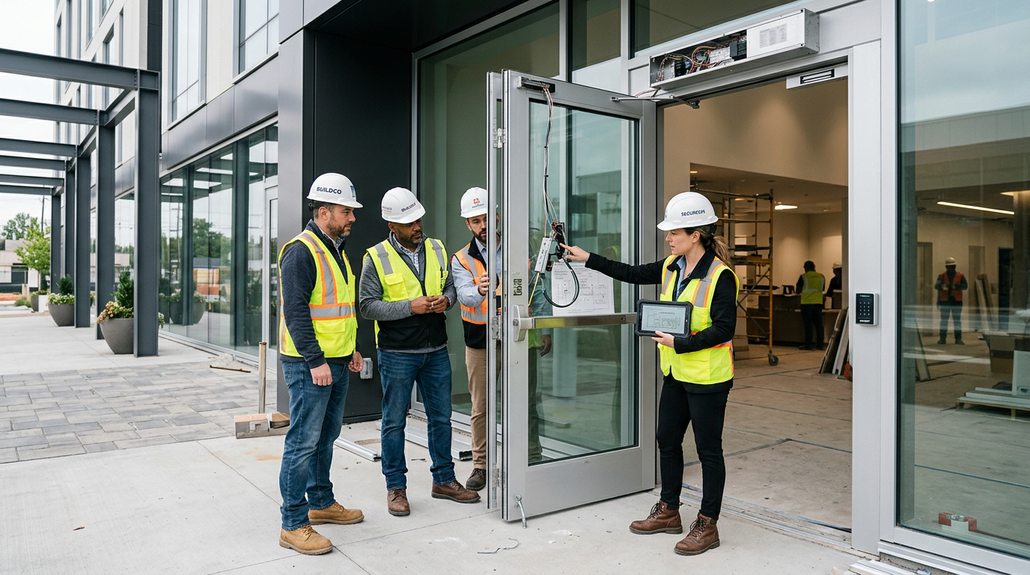
A typical electrified commercial opening carries five devices that have to coexist: a door closer, an exit device, an electric strike (or a maglock), a request-to-exit signal, and a regulated power supply. The order they get specified matters. Closer sizing dictates door speed and force, exit device type fixes the strike geometry, the strike fixes the amperage draw, the REX fixes the bypass logic, and the power supply has to absorb the whole stac… Read more

Posted by National Lock Supply on May 1st 2026
The repair vs replace decision for commercial door hardware follows three rules. Replace when the failure is structural (cracked housing, broken spring, worn bearing). Repair when the failure is service-level (dirty mechanism, loose fastener, misaligned strike). Replace when the unit is past 60% of its design cycle life and the failure is the second one this year. Below are the 12 failure modes facility teams see most, the root cause, the field d… Read more

Posted by National Lock Supply on Apr 17th 2026
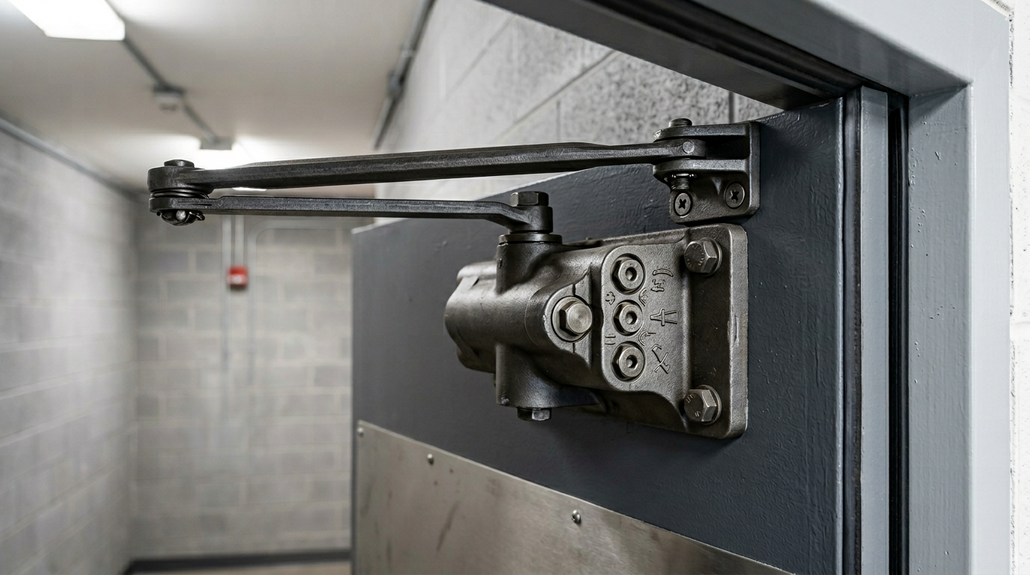
A commercial door closer is the hydraulic device mounted to a commercial door that closes the door after every opening at a controlled speed. Its correct behavior is governed by two field adjustments (sweep speed and latch speed), one structural setting (spring size), and optionally a third valve (backcheck) on heavy-duty models. When a closer slams, fails to latch, or leaves the door ajar, the fix is almost always an adjustment — not a rep… Read more

Posted by National Lock Supply on Apr 16th 2026
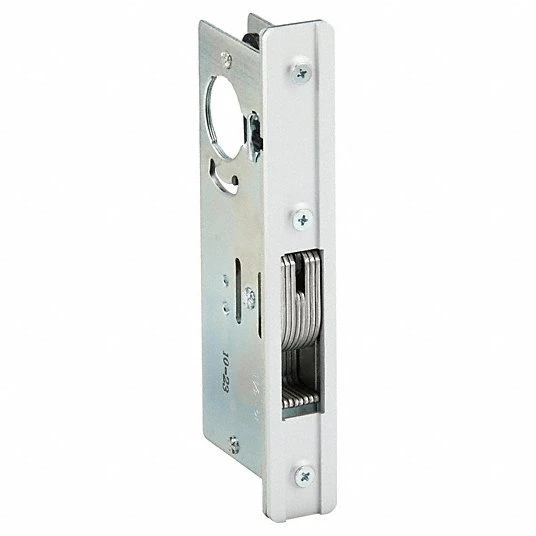
The Adams Rite MS1850 and MS1890 are the two heavy-duty narrow-stile deadlocks specified for aluminum storefront doors across North American commercial construction. Both are ANSI/BHMA Grade 1, both mount into a narrow aluminum stile, and both are engineered for the specific physics of a storefront door — thin metal frame, tight backset, full-glass lite. They differ in bolt geometry and backset, and those two differences drive the correct s… Read more

Posted by National Lock Supply on Apr 15th 2026
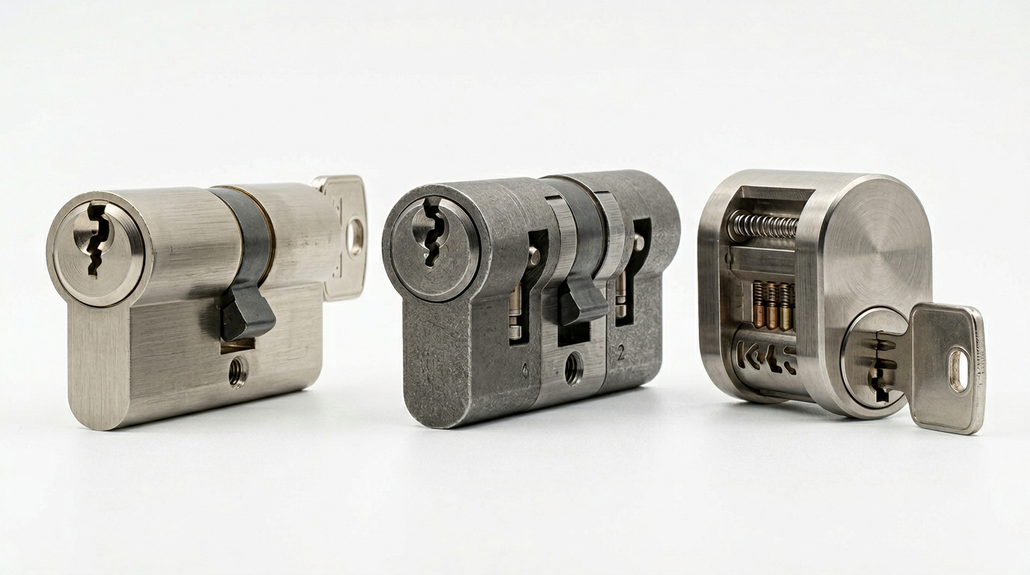
A high-security lock cylinder is a drop-in cylinder replacement that upgrades a commercial lock body with pick resistance, drill resistance, and restricted key-control — without replacing the lock body itself. The three brands that dominate the U.S. high-security cylinder market are Medeco (ASSA ABLOY), Mul-T-Lock (ASSA ABLOY), and ASSA (also ASSA ABLOY, same parent company, different product line). All three carry UL 437 listing for attack… Read more

Posted by National Lock Supply on Apr 14th 2026

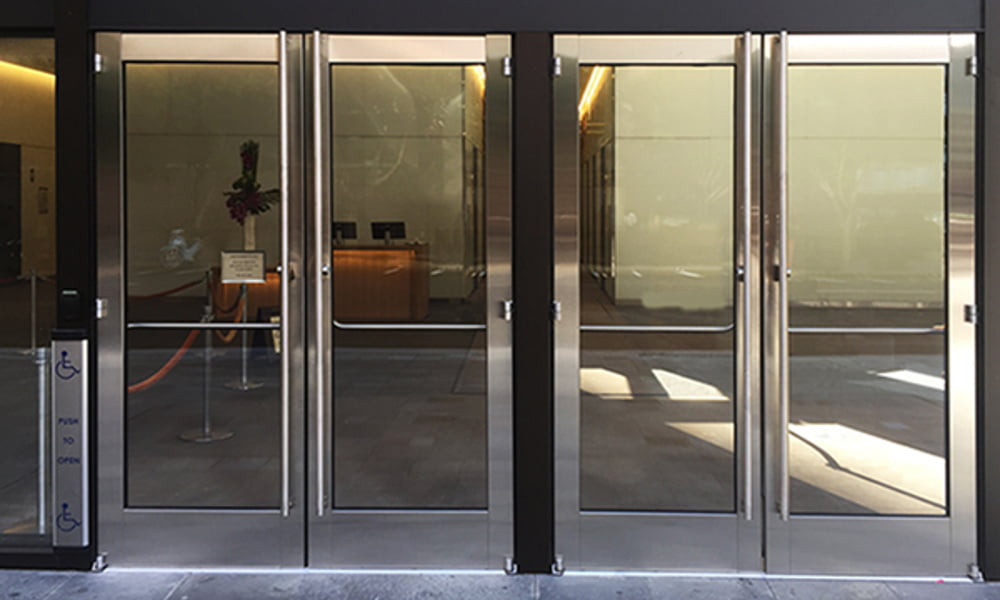
A panic bar for a glass storefront door or gate is an exit device engineered for two opening types that are structurally different from the hollow-metal doors most panic hardware is designed for: narrow-stile aluminum storefront with full-glass lites and exterior gates at assembly venues, stadiums, parks, and industrial yards. These openings have thinner stiles, no door coordinators, different strike geometries, and — in the case of gates &… Read more

Posted by National Lock Supply on Apr 13th 2026
A commercial mortise lockset is a Grade 1 lock installed inside a pocket (mortise) cut into the edge of the door. It is the highest-security and most durable mechanical lock format in ANSI/BHMA A156.13, and it is the default specification for exterior entries, public-building interior doors, and any opening where a cylindrical lock will not survive the cycle count. The three models that dominate U.S. commercial mortise specification are the Schla… Read more

Posted by National Lock Supply on Apr 10th 2026
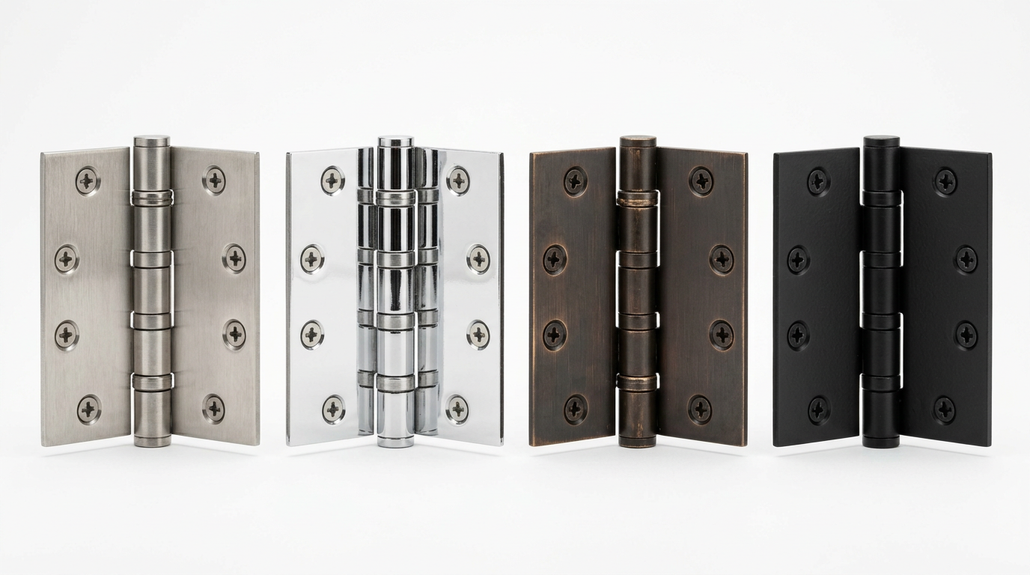
A commercial door hinge is the structural pivot that carries a commercial door’s weight, cycles it tens of thousands of times per year, and determines whether the lockset stays aligned with the strike. In the U.S. commercial market, four brands dominate full-mortise butt hinge specification: Hager, McKinney, Stanley, and Bommer. They are largely interchangeable on paper — all four meet ANSI/BHMA A156.1 — but they differ in beari… Read more

Posted by National Lock Supply on Apr 9th 2026
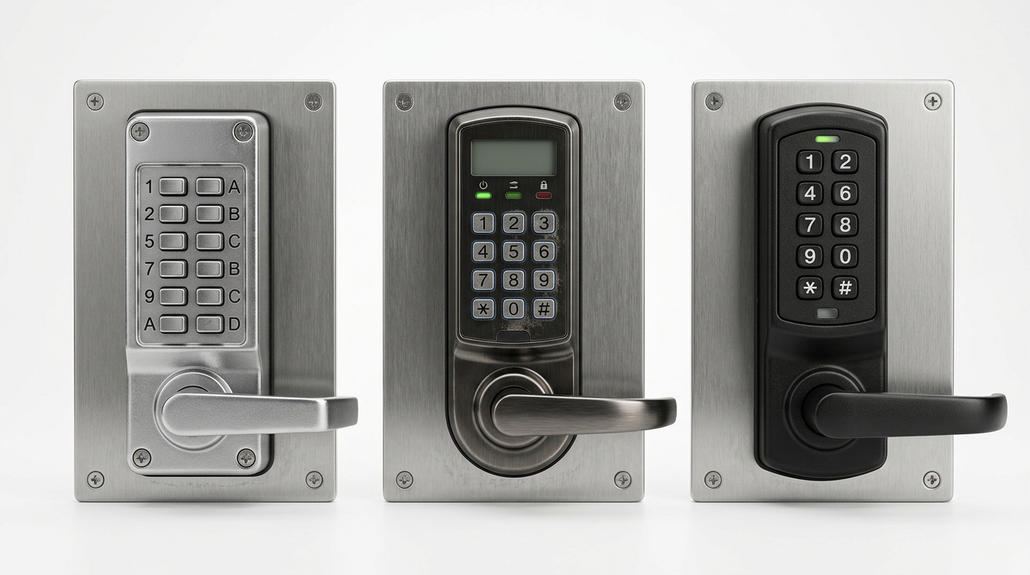
A commercial keypad lock is a standalone electronic or mechanical lock that opens on a numeric code entered at the door, without cylinder keys or a central access-control server. The three models that dominate this category in the U.S. are the Alarm Lock Trilogy DL2700 (electronic, battery-powered, with audit trail), the Schlage FE595 (electronic, battery-powered, Grade 2 residential/light commercial), and the Kaba Simplex 1000 (fully mechanical,… Read more

Posted by National Lock Supply on Apr 8th 2026
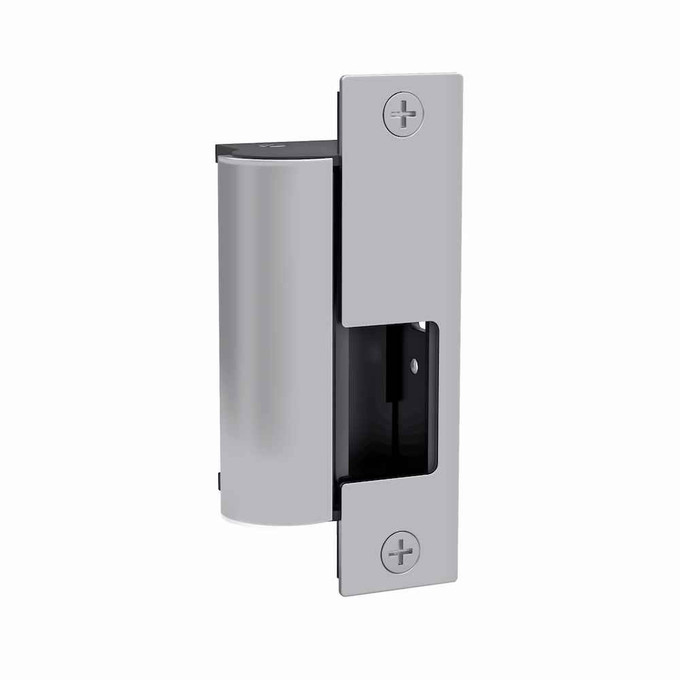
The HES 1006, HES 9600, and HES 5000 are the three most specified electric strikes in North American commercial access control. All three are manufactured by HES (Hanchett Entry Systems, an Assa Abloy company), all three are UL 1034 burglary-resistant listed, and all three handle 12 V or 24 V DC with field-selectable fail-safe / fail-secure operation. They are not interchangeable. Each one is engineered for a different frame type, latch type, and… Read more

Posted by National Lock Supply on Apr 7th 2026

The Von Duprin 99 and Von Duprin 98 are the two flagship heavy-duty panic exit devices in the Allegion catalog and the benchmark against which every competing crash bar is measured. They share an identical chassis, identical latch mechanism, identical UL 305 panic and UL 10C fire listing, and identical warranty. They differ in one thing only: the 99 uses a pushpad actuator, and the 98 uses a crossbar actuator. That single difference drives a hand… Read more

Posted by National Lock Supply on Apr 6th 2026

The LCN 4040XP and the Norton 7500 are the two surface-mounted heavy-duty door closers most often specified for high-traffic commercial doors in the United States. Both are ANSI/BHMA Grade 1 closers built for exterior and high-cycle interior openings, but they differ in cycle life, arm flexibility, price tier, and parts availability. This guide compares them on every attribute that matters for a purchase decision. If you still haven’t decid… Read more

Posted by National Lock Supply on Apr 3rd 2026

Multi-family door hardware is the category of commercial-grade hardware specified for apartment buildings, condominiums, and other residential structures containing multiple dwelling units that fall under the International Building Code (IBC) rather than the International Residential Code (IRC). This distinction is important because IBC requires commercial-grade fire-rated assemblies, panic hardware on egress doors, and ADA-compliant hardware on… Read more

Posted by National Lock Supply on Apr 3rd 2026

Industrial and warehouse door hardware is the category of commercial hardware specified for manufacturing plants, distribution centers, logistics facilities, food processing plants, and other high-cycle, high-abuse environments. It is defined by its emphasis on maximum duty cycle ratings, resistance to physical impact, and performance under harsh conditions including temperature extremes, corrosive atmospheres, and constant exposure to heavy equi… Read more

Posted by National Lock Supply on Apr 3rd 2026

Retail and storefront door hardware is a specialized category of commercial hardware designed for two distinct environments within the same building: the customer-facing storefront (typically aluminum-framed glass doors where aesthetics and specialized frame compatibility are primary concerns) and the back-of-house (hollow metal doors in steel frames where security and code compliance take priority). The defining characteristic of storefront hard… Read more

Posted by National Lock Supply on Apr 3rd 2026

Healthcare facility door hardware encompasses all locking devices, automatic operators, closers, hinges, and protective hardware specified for hospitals, outpatient clinics, surgical centers, and behavioral health facilities. It is distinguished from other commercial hardware categories by three concurrent requirements: infection control (minimizing touch points through automatic and hands-free operation), patient safety (including anti-ligature… Read more

Posted by National Lock Supply on Apr 3rd 2026

K-12 school door hardware is the category of commercial locksets, exit devices, closers, and access control products specified for educational facilities serving kindergarten through twelfth grade. It is defined by two competing requirements that must be satisfied simultaneously: lockdown security (the ability to secure classrooms instantly during an active threat) and egress safety (the ability for students and staff to evacuate freely at all ti… Read more

Posted by National Lock Supply on Apr 3rd 2026

Office building door hardware refers to the complete set of mechanical and electrified locking devices, closers, hinges, and protective accessories specified across all door openings in a commercial office environment. It includes everything from the main lobby entry through individual tenant suites, private offices, server rooms, stairwells, and parking access points. Hardware specifications for office buildings are governed by the International… Read more

Posted by National Lock Supply on Mar 24th 2026

Every piece of hardware in a commercial door specification is constrained by the frame before a single product is selected. The frame determines which lock functions are physically possible, which hinge gauge is required, where the closer can mount, what strike dimensions the electric strike must match, and whether a cylindrical or mortise lockset is compatible with the existing door preparation. Selecting hardware without verifying frame type an… Read more

Posted by National Lock Supply on Mar 20th 2026

The most consequential decision in exit hardware specification is not brand, not finish, and not function. It is channel. The channel determines whether the device is mechanically compatible with the door, whether it latches at one point or two, whether the rods are visible on the door face, and whether installation requires standard surface mounting or door factory modification. Specifying a concealed vertical rod device on a solid core wood doo… Read more

Posted by National Lock Supply on Mar 17th 2026

A surface-mounted door closer does three things simultaneously: it controls the door, it announces its presence on the door face, and it defines the aesthetic of every opening it appears on. In standard commercial construction, this is acceptable. In historic buildings, high-end lobbies, glass-walled corridors, and architecturally significant spaces, a surface-mounted closer on every door is an aesthetic problem that no amount of finish coordinat… Read more

Posted by National Lock Supply on Mar 16th 2026

School door hardware specification has changed materially since 2012, and changed again after 2018 and 2022. Each legislative response to school security incidents produced new hardware requirements: lockdown functions that work from inside the room without opening the door, rated cycle counts for high-use applications, and classroom security certifications that did not exist in most hardware catalogs ten years ago. Specifying a classroom door wi… Read more

Posted by National Lock Supply on Mar 13th 2026

A master key system is a mechanical key control architecture in which a single key operates every lock in the system while individual change keys operate only specific locks. The value is access management: giving a maintenance technician or property manager access to every door in a building without distributing a separate key for each lock, while ensuring a tenant's change key works only their door. When designed correctly, rekeying after a per… Read more

Posted by National Lock Supply on Mar 11th 2026

ADA compliance in commercial door hardware is not a single standard applied uniformly to every door. It is a collection of specific requirements, each applying to a specific type of door in a specific context: operating force, hardware shape, mounting height, threshold height, and maneuvering clearance. ADA violations in commercial buildings are almost always specification failures, not installation failures. The wrong hardware type was chosen fo… Read more

Posted by National Lock Supply on Mar 9th 2026

When access control is added to an opening that already has a cylindrical lock prep, the standard 2-1/8-inch cross-bore and 1-inch edge bore found in virtually every commercial door built in the last fifty years, the obvious options are to add a maglock, replace the strike with an electric strike, or replace the entire lock body with an electrified cylindrical lock. Each controls the opening in a fundamentally different way. An electric strike co… Read more

Posted by National Lock Supply on Mar 5th 2026

An electric strike is the most installation-sensitive component in access control hardware. Unlike a magnetic lock where the worst specification error is a mounting bracket mismatch, an electric strike that is incompatible with the existing lock body requires frame modification to correct. The strike must match the lock type, the fail mode must match the application's code requirements, the voltage must match the power supply, and the faceplate m… Read more

Posted by National Lock Supply on Mar 3rd 2026

A magnetic lock is the only electrified locking device with no moving parts. No solenoid, no bolt, no keeper. Just an electromagnet bonded to a steel armature plate through electromagnetic attraction. That simplicity makes maglocks extremely reliable in high-cycle commercial applications, but it also means specification errors cannot be corrected in the field. The holding force is fixed. The mounting geometry is fixed. The fail mode is fixed at t… Read more

Posted by National Lock Supply on Mar 2nd 2026

A commercial door closer fails in three predictable ways: it slams, it does not latch, or it resists opening so strongly it creates an ADA violation. In each case the hardware itself is rarely defective. The specification was wrong. Size, arm configuration, grade, and backcheck interact as a system, and getting any one of them wrong produces a door that generates steady service calls with no obvious mechanical cause. What a Commercial Door Closer… Read more

Posted by National Lock Supply on Feb 17th 2026

Storefront trim looks like a “feel” decision until you’re dealing with a door that cycles all day, gets pulled from every angle, and still has to operate cleanly at closing time. On narrow-stile aluminum doors, trim selection affects more than comfort—it influences durability, user behavior, and whether the opening stays reliable or becomes a steady source of service calls. This guide compares paddle vs lever trim the way… Read more

Posted by National Lock Supply on Feb 17th 2026

Aluminum storefront doors look straightforward—until you’re the one responsible for the replacement. Narrow stiles limit what can physically fit, high traffic exposes weak choices fast, and “close enough” measurements often turn into returns, downtime, and a door that won’t secure the way it should at the end of the day. That’s why choosing between a deadlatch, a deadlock, or a flushbolt/flushlock isn’t j… Read more

Posted by National Lock Supply on Feb 16th 2026

Request-to-exit devices are one of those components you only notice when they’re missing—or when they’re chosen wrong. In a controlled-access opening, you need the secure side to release predictably for authorized egress without creating nuisance releases, unsafe workarounds, or “sometimes it works” behavior. That’s exactly what a REX device is for: it tells the system “someone is exiting” so the lo… Read more

Posted by National Lock Supply on Feb 13th 2026

Keyless entry sounds simple—until you’re the one responsible for making it work every day. The “right” solution isn’t just about convenience. It’s about how the door is used (public traffic vs staff-only), how access is managed (one code vs many users), what happens when power fails, and how much maintenance the site will actually tolerate. That’s why choosing between keypad and proximity entry is really… Read more