 SAME DAY & EXPEDITED SHIPPING AVAILABLE






Cylinders, Cores and Key Blanks
Lock cylinders, cores and key blanks for locksmiths, facility managers and contractors who rekey, replace or add keys to commercial door locks. Shop mortise cylinders, conventional cylinders, deadbolt cylinders, IC housings, interchangeable cores and key blanks for the major commercial keyways, from Schlage, Ilco, BEST, Falcon and Sargent.
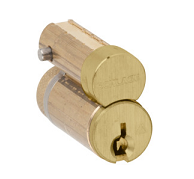

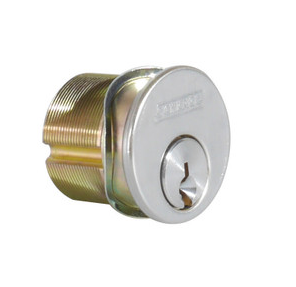


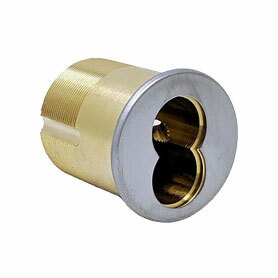


Cylinder, core and key blank: what is the difference?
A lock cylinder is the keyed part of the lock that turns when the correct key is inserted. A core is a cylinder that lifts out of its housing as one piece, so the lock can be rekeyed without taking the lock apart. A key blank is the uncut key that is cut to match a cylinder or a core. People often search for a "key core" when they mean an interchangeable core: the cores page covers them in detail, including SFIC and LFIC interchangeable cores. Here we cover the cylinder formats, the keyways and the blanks.
Types of door lock cylinders
Lock cylinders are named for the lock they operate, and the fit depends on the lock body, not just the keyway. Five formats cover almost every commercial door.
- Mortise cylinders thread into a mortise lock or a storefront deadlatch, and are sized by length, collar and cam.
- Rim cylinders mount on the face of the door with a tailpiece that passes through to a surface lock or a rim exit device.
- Cylindrical (key-in-knob and key-in-lever) cylinders are small cylinders for cylindrical knob and lever locks, and sit inside the lock.
- Deadbolt cylinders operate a separate deadbolt, and can be single cylinder or double cylinder.
- Interchangeable core housings accept a removable core and fit in a mortise, rim or key-in-lever position.
Browse by format: IC housings, thumbturns and the other subcategories above.
Mortise cylinders: length, collar and cam
A mortise cylinder is specified by three things: length, collar style and cam. Lengths run in fractions of an inch, such as 1 inch, 1-1/8, 1-1/4, 1-3/8, 1-1/2 and 1-3/4, so match the length of the cylinder you are replacing. The cam is the tailpiece that turns the lock and varies by manufacturer, for example the Adams Rite cam, the Schlage L cam, the Falcon MA cam and a clover cam. Collars are solid or tapered, for example the Kaba Ilco 861N solid collar and 861B tapered collar. Sizes and cams are explained in our mortise cylinder sizes and cams guide.
Rim, key-in-lever and conventional cylinders
The only way to match these is by the lock model they replace. Rim cylinders, such as the Accentra (Yale) 1109 and the Schlage 20-022, use a tailpiece and a screw-in ring. Key-in-lever cylinders, such as the Schlage 21-020 and 23-065, are fitted into the lever of a cylindrical lock. Conventional cylinders have a fixed keyway and cannot be pulled out like a core: a rekey means changing the pins or the cylinder.
Thumbturn cylinders and deadbolt cylinders
A thumbturn cylinder replaces the key on the inside of the door so occupants can lock and unlock without a key. Classroom and storeroom functions use keyed cylinders on the outside and thumbturns on the inside, such as the Schlage 09-904 classroom thumbturn cylinder for L series locks. Large ADA thumbturns, such as the Schlage 09-509, are sized for sectional trim. See commercial thumbturns guide for the options.
Key blanks and keyways
A key blank has to match the keyway of the cylinder, the profile milled into the key. Common commercial keyways include the Schlage C, E and S123 families, the Yale 8 keyway, the Corbin Russwin D1 keyway, the Sargent LA and LC, the Arrow keyway, the Kwikset keyway and the Yale PARA. Blank numbers differ by brand: the Falcon KB573 and the Sargent 278 are 5-pin blanks, and the Corbin Russwin 59AB is a 6-pin master section blank. Our keyway and keying compatibility guide and the key blanks category help match blank to keyway.
Cylinder formats and brands in the catalog
| Format | Fits | Examples in catalog | Notes |
|---|---|---|---|
| Mortise cylinder | Mortise locks, storefront deadlatches | Schlage 20-001 and 30-001, Arrow MC61, Sargent 46, Corbin Russwin 1000, Falcon 985, Kaba Ilco 7165 | Length, collar and cam must match |
| Rim cylinder | Rim locks and rim exit devices | Accentra (Yale) 1109, Schlage 20-022, Kaba Ilco 7075 | Horizontal tailpiece cam |
| Key-in-knob / key-in-lever | Cylindrical knob and lever locks | Schlage 21-002, 21-020 and 23-065, Sargent C6-1B, Falcon A23165-02 | Conventional, fixed keyway |
| Deadbolt cylinder | Deadlocks and deadbolts | Schlage 22-642, Arrow 96C | Single cylinder |
| IC housing | Removable core locks, mortise or rim | BEST 1E series, Corbin Russwin 1070, Accentra (Yale) 1214, Sargent 6046, KSP 408 | Core sold separately |
| Thumbturn cylinder | Inside of classroom and storeroom locks | Schlage 09-904, Schlage 09-509 | Sectional trim and ADA sizes |
| Key blank | Cutting keys for a known keyway | Falcon KB573, Sargent 278, Corbin Russwin 59AB | Match brand and keyway |
Most requested cylinders, cores and key blanks
The cylinders, cores and key blanks our customers look up most often right now:
- Falcon C607 A 7-pin SFIC Core w/ A Keyway, Combinated
- Schlage 20-057 FSIC Rim Housing and Core
- Sargent 6270 6-pin Master Key Blank
- Corbin Russwin Key Blank 6-Pin 10 (box of 50)
- Sargent 270 5-pin Master Key Blank
- Accentra (Yale) 1193 6 6-pin LFIC Rim Cylinder w/ Core
Related categories: mortise locks, cylindrical lever locks and exit devices.
What to have ready when ordering cylinders and key blanks
- The lock model and format: mortise, rim, key-in-lever, deadbolt or IC housing.
- Cylinder length and collar style for mortise cylinders, and the cam type.
- Keyway and number of pins (5, 6 or 7), plus keyed alike or keyed different.
- Finish, for example satin chrome 626 or 26D, or brass.
- Whether you need a core housing, a conventional cylinder or a thumbturn.
Ordering quantities or a keyed-alike set? Request a quote for volume pricing. Schools and agencies can submit a government or school PO. Orders placed before 3:00 p.m. ET on business days ship the same day after card approval, and ground shipping is free on orders of $450+. Need help matching a cylinder? Call 718-814-6300.
The tables and selection notes on this page are compiled by National Lock Supply from manufacturer catalogs, templates and product listings. Last reviewed: October 2026.
Frequently Asked Questions
What is the difference between a cylinder and an interchangeable core?
A cylinder is the keyed part of a lock and is usually fixed in the lock body. An interchangeable core is a cylinder that lifts out of its housing with a control key, so it can be swapped or rekeyed in seconds without taking the lock apart. A housing holds the core in the door.
How do I choose between mortise, rim and deadbolt cylinders?
Choose from the lock the cylinder will operate. A mortise lock or storefront deadlatch takes a mortise cylinder, a surface lock or rim exit device takes a rim cylinder, and a separate deadbolt takes a deadbolt cylinder. Identify the lock model first, then match length, cam and keyway.
Are key blanks interchangeable between brands?
No. A key blank has to fit the keyway of the cylinder, and many keyways are specific to one brand, such as Schlage C or Yale 8. Some brands share keyway profiles, and aftermarket blanks exist, so check the keyway name and the pin count before ordering.
What does ANSI/BHMA grade mean for cylinders?
ANSI/BHMA A156.5 covers cylinders and sets performance grades for them, with Grade 1 as the highest. A higher grade means more durable for heavier use and more resistant to attack. Check the lock or cylinder specification for its grade, and keep the same grade when replacing.
Can I use an SFIC core in an LFIC lock?
No. SFIC and LFIC cores are different sizes and do not interchange, so the core has to match the housing format. Check whether the lock takes a small format or a large format core. The SFIC and LFIC details are covered on the interchangeable cores page.
What information do I need to order the right cylinder or core?
Have the lock model, the cylinder type, the length for mortise cylinders, the keyway, the pin count and the finish. For cores, add the format (SFIC or LFIC) and whether you need it keyed different, keyed alike or uncombinated. A photo of the old cylinder helps.
How do I measure a mortise cylinder?
Measure the length of the existing cylinder from the back of the collar to the end of the barrel, and match the collar and cam style. If the old cylinder is missing, use the lock manufacturer's chart for the door thickness. Lengths run in fractions of an inch, such as 1-1/8 or 1-1/4.
What is a conventional cylinder?
A conventional cylinder is a pin tumbler cylinder with a fixed keyway that cannot be removed with a control key. To rekey it, you change the pins or replace the cylinder. It is the standard choice for single locks, while interchangeable core housings suit larger facilities.
What are the keyways on commercial cylinders?
The keyway is the profile of the key, such as Schlage C, E and S123, Yale 8, Corbin Russwin D1, Sargent LA and Arrow. The keyway determines which blank cuts the key. A cylinder with the right keyway and the wrong length or cam will not fit the lock.