 SAME DAY & EXPEDITED SHIPPING AVAILABLE






Restaurant and Food Service Door Hardware
Posted by National Lock Supply on Jun 15th 2026
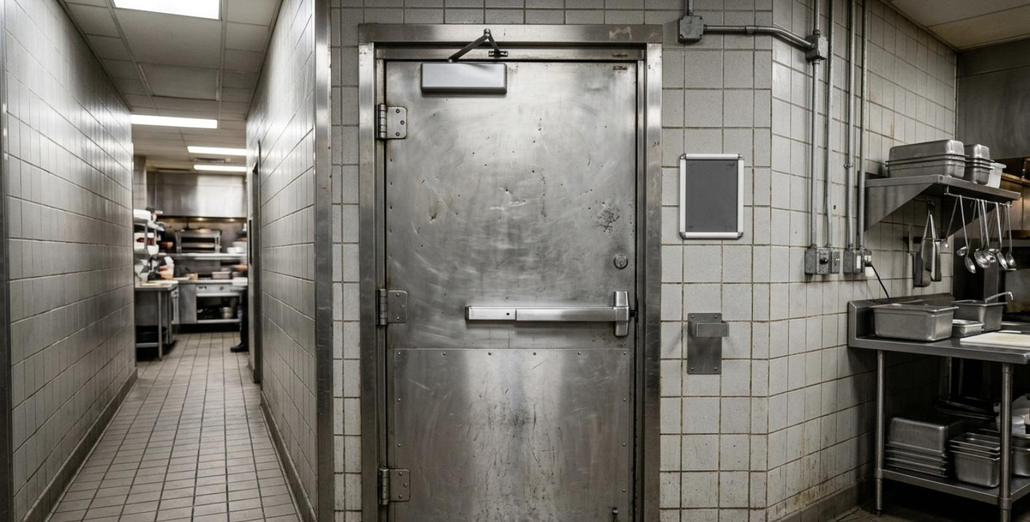
Restaurant door hardware lives in a harsh environment: grease, steam, frequent cleaning with caustic chemicals, and traffic counts that wear residential-grade hardware out in months. The spec that holds up is BHMA Grade 1 in 630 satin stainless steel for corrosion resistance, heavy-duty closers tuned for high cycle counts, panic hardware on every required exit, and kick or armor plates on doors that take cart and foot abuse. The split that matters is front-of-house versus back-of-house: front-of-house doors balance appearance and access control, while back-of-house doors (kitchen, walk-in, delivery, dry storage) prioritize corrosion resistance, sanitation, and one-way traffic flow. This guide specs hardware by door type and explains why stainless and Grade 1 are non-negotiable in food service.
The food-service environment problem
Three forces destroy under-specified restaurant hardware:
- Corrosion: steam, grease, and daily chemical cleaning attack plated and painted finishes. Satin stainless (630) is the base-metal finish that survives.
- Cycle count: a busy kitchen door can swing thousands of times a day. Grade 1 (1,000,000 cycles on locks, 500,000 on exit devices) is the only tier that lasts.
- Sanitation and flow: doors must move staff and carts efficiently, often hands-free, and resist the physical abuse of that traffic.
The finish call is covered in the door hardware finishes guide: 630 stainless for back-of-house and exteriors, with painted closer finishes matched to the look up front.
Hardware by door type
Each door in a restaurant has a different priority. This table maps the door to its hardware and the spec priority that should drive the selection.
| Door | Hardware | Spec priority |
|---|---|---|
| Front entry | Lockset or storefront hardware, closer, access control | Appearance plus scheduled access |
| Dining-to-kitchen (double swing) | Double-acting closer or pivot, push plates, kick plates, vision lite | Hands-free flow, sanitation |
| Kitchen exit / egress | Panic exit device (630), closer | Code egress, corrosion |
| Walk-in cooler / freezer | Specialized cold-room latch (not standard commercial) | Cold and seal rated, inside safety release |
| Delivery / receiving | Heavy-duty closer, latch guard, weather seal | Security, weather, abuse |
| Restroom | Privacy function lever, closer | ADA, privacy with emergency access |
| Dry storage | Storeroom function lever | Always-locked outside |
Kitchen-to-dining doors take constant cart and shoulder traffic, so protect the door face with armor or kick plates such as the Ives 8400 satin stainless kick plate (US32D). See top 10 door protection plates for high-traffic commercial environments for sizing.
Why Grade 1 stainless is non-negotiable back-of-house
Back-of-house doors fail first, because that is where corrosion and cycle count concentrate. The fixes are specific:
- 630 satin stainless on exit devices, hinges, kick plates, and any lockset exposed to steam or cleaning chemicals. Plated chrome (626) corrodes in this environment.
- Continuous geared hinges instead of butt hinges on high-traffic kitchen and delivery doors, because they distribute load along the full door edge and outlast butt hinges under heavy cycling. See continuous geared hinges: sizing, specs, common mistakes.
- Heavy-duty exit devices on egress doors. A stainless exit device such as the Corbin Russwin ED4200 rim exit device in 630 survives the environment while keeping egress free. See how to choose the best commercial panic exit devices and the panic exit devices category, and choosing the right commercial door hinges for the hinge decision.
Closers tuned for traffic and temperature
Door closers in food service work harder than almost anywhere else, between high cycle counts and the temperature swings on doors that open outside. The spec:
- Grade 1 closers sized to the door and adjustable for sweep, latch, and backcheck.
- Hold-open arms where code allows on non-rated doors for service flow. Never hold open a fire-rated door without a fire-alarm-release closer-holder.
- Cold-weather behavior on delivery doors that open to the outside, because fluid viscosity changes with temperature. See door closer in cold weather: fix slamming, poor latching and how to choose a commercial door closer.
Browse closers on the door closers category and by brand on LCN and Norton.
Egress and code: never lock the exit
Restaurants are assembly-adjacent occupancies, and the exit count and panic-hardware requirements scale with occupant load. The hard rules:
- Every required exit stays freely openable from the inside without a key, tool, or special knowledge.
- Panic hardware where occupant load or assembly classification requires it.
- No chains, slide bolts, or padlocks on exit doors during business hours, which is a frequent and dangerous code violation in busy kitchens.
The function-code choice for back-of-house secured rooms is covered in commercial lock function codes explained: storeroom for dry storage, never a locked exit. Front and storefront entries follow the commercial door hardware for retail and storefront approach.
Common restaurant hardware mistakes
- Plated chrome (626) back-of-house. It corrodes in steam and cleaning chemicals. Use 630 stainless.
- Residential or Grade 2 hardware on kitchen doors. Cycle count destroys it. Specify Grade 1.
- Locking or chaining exits during service. Illegal and deadly. Use storeroom function on storage and free egress on exits.
- Butt hinges on high-traffic swing doors. They loosen and sag. Use continuous geared hinges.
- Unprotected door faces. Cart traffic gouges doors. Add stainless kick or armor plates.
Sanitation, NSF, and hands-free hardware
In any area that touches food prep or storage, the health inspector cares about the same surfaces you do. Hardware in those zones should be cleanable and non-porous, which is why NSF certified or NSF-equivalent stainless components are the safe default near prep lines, dish areas, and walk-in entrances. A smooth lever or pull with no crevices for grease to collect is easier to wipe down on a wash-down schedule and far less likely to draw a citation than a decorative escutcheon that traps debris.
Hygiene has also pushed two hardware types into the back of house. Hands-free foot pulls mounted low on cooler and kitchen doors let staff open a door with a boot while carrying trays, which cuts hand contact and keeps grease off the lever. Antimicrobial finishes, usually a silver-ion layer over stainless, add a second line of defense on the levers and push plates that every shift touches. Neither one changes the function or the egress behavior of the door, so they pair cleanly with the Grade 1 stainless and panic hardware the rest of the spec already calls for.
FAQ
What finish should restaurant door hardware be?
630 satin stainless steel for back-of-house, exterior, and any door exposed to steam or chemicals, because it carries the finish in the base metal and resists corrosion. Plated chrome (626) is fine only for dry, low-corrosion front-of-house interiors.
Do restaurants need panic hardware?
It depends on occupant load and occupancy classification. Many restaurant exits require panic hardware once occupant load crosses the code threshold, and every required exit must open freely from the inside regardless.
What hardware goes on a walk-in cooler?
Walk-ins use specialized cold-room latches rated for the seal and temperature, with a mandatory inside safety release so no one can be trapped. These are not standard commercial locksets.
Why do kitchen door closers fail so fast?
High cycle counts and temperature swings. Specify Grade 1 closers sized correctly and tuned for latch and backcheck, and account for cold-weather fluid behavior on delivery doors.
How do I keep front-of-house hardware looking good and durable?
Use Grade 1 hardware in a finish that matches the design up front, reserve 630 stainless for any door near the kitchen or exterior, and protect high-touch surfaces with kick and push plates so wear does not show.
Next step
Spec by zone: 630 stainless Grade 1 hardware and continuous hinges back-of-house, protected door faces, Grade 1 closers tuned for traffic, and free-egress panic hardware on every required exit. Browse panic exit devices, door closers, door hinges, and the door protection plates range. Our commercial desk specs corrosion-rated food-service packages and confirms egress compliance for the local AHJ.