 SAME DAY & EXPEDITED SHIPPING AVAILABLE






Overhead Concealed Door Closers
An overhead concealed door closer hides inside the head frame or the top of the door, so the opening looks clean while the door still closes and latches under control. Shop LCN concealed closers such as the 2030 Series and 2034-BUMPER, and Dormakaba concealed closers such as the RTS26 and ITS96.

What is an overhead concealed door closer?
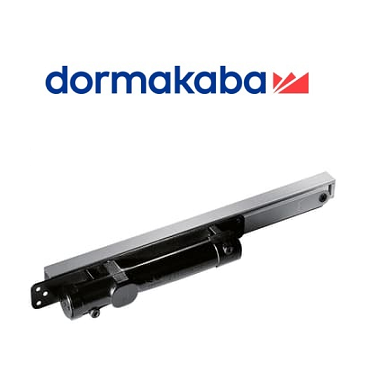
An overhead concealed closer is a hydraulic door closer installed out of sight, either in the head frame above the door or inside the top rail of the door, with a slide track or arm that controls the door. It does the same job as a surface closer but leaves nothing on the face of the door, which is why it is used on lobbies, storefronts, glass entrances and offices. A floor closer is the other concealed option; see floor closers.
Where the closer sits: in frame, in tube or in door
LCN describes the mounting in each listing, and it decides which closer fits the opening:
- In frame: the closer is in the head frame, as on the LCN 2010 Series (2011 to 2016).
- In tube: the closer is in a frame tube, as on the LCN 2030 Series (2031 to 2035), listed as heavy duty, and the 5030 Series arm closers.
- In door: the closer is in the top rail of the door, as on the LCN 3130 Series (3131 to 3133) and the Dormakaba ITS96 and RTS88 listings.
| Closer | Mounting (as listed) | Size or limits | Notes |
|---|---|---|---|
| LCN 2010 Series | In frame | Sizes 1 to 6 | Standard track or hold open track |
| LCN 2030 Series | In tube | Sizes 1 to 5 | Grade 1, heavy duty, adjustable backcheck, 180 degree swing with bumper |
| LCN 3130 Series | In door | Sizes 1 to 3 | Standard or hold open track, bumper versions |
| LCN 2210 Series | In frame | Sizes 3 and 5 listed | High security concealed closer |
| LCN 6030, 5030 Series | In tube | See listing | 6030 double acting; 5030 hold open arm |
| Dormakaba RTS88 (RTS01 to RTS31) | Concealed, cam action | Doors up to 250 lb interior, 200 lb exterior | Single or double acting, 90 or 105 degree swing, by door and frame material |
| Dormakaba ITS96 | In door | Sizes 1-3 or 2-5; up to 125 lb | Cam and roller design |
Choosing a Dormakaba RTS closer
Dormakaba RTS closers are listed by the door and frame material and the hanging method, so pick the model that matches the opening. Examples in the catalog are the RTS25 and RTS26 for aluminum door and frame (hinge hung or 3/4" offset pivot hung), the RTS27 for steel door and frame, the RTS28 for wood door and steel frame, the RTS30 and RTS31 for wood door and aluminum frame, and end load and double acting versions such as the RTS17 to RTS22. Each comes in 90 degree or 105 degree swing, with hold open (HO) versions.
Sizing, swing and hold open
Size the closer by door width, weight and location; exterior doors need more closing force against wind. LCN listings show a fixed size per model (for example the 2034 is size 4), while the Dormakaba ITS9613 and ITS9625 are adjustable sizes 1-3 and 2-5. Choose standard track for normal closing and hold open (H) versions where the door should stay open, but never hold open a fire door that must close by itself. Bumper versions add a stop in the track.
Concealed door closers on fire doors
Concealed closers can be used on fire doors when the closer and the installation are listed for the rated opening, and the door must close and latch on its own. Check the closer listing and the door and frame label before ordering, and avoid hold open arms unless they release on alarm, under NFPA 80.
Are concealed door closers any good?
Concealed closers give the clean look of a hidden closer with the control of a surface closer, and heavy duty models such as the LCN 2030 Series are listed as Grade 1. The trade-off is installation: the frame or door must be prepared for the closer, and service is harder than on a surface closer. They suit new construction and storefronts more than quick retrofits.
Most requested concealed closers
The concealed closers our customers look up most often right now:
- Dormakaba RTS26 105 Overhead Concealed Closer, aluminum door and frame
- LCN 2034-BUMPER Concealed Standard Track Closer, Size 4
- LCN 2031-BUMPER Concealed Standard Track Closer, Size 1
Related categories: commercial door closers, LCN door closer parts, storefront bolts and latches, LCN concealed closers and Dormakaba concealed closers.
What to have ready when ordering a concealed closer
- Mounting: in frame, in tube or in door, and the existing prep.
- Door and frame material, and hinge hung or pivot hung.
- Single or double acting, and swing (90, 105 or 180 degrees).
- Door width, weight and location (interior or exterior), for the size.
- Standard, hold open or bumper track, and fire rating.
Specifying entrances? Request a quote, and schools and agencies can submit a government or school PO. Orders placed before 3:00 p.m. ET on business days ship the same day after card approval, and ground shipping is free on orders of $450+. Call 718-814-6300 with the existing closer model.
The tables and selection notes on this page are compiled by National Lock Supply from LCN and Dormakaba catalogs and product listings. Last reviewed: November 2026.
Frequently Asked Questions
What is the best concealed door closer?
The best choice depends on the door and frame. Choose by where the closer will sit (in frame, in tube or in door), the door weight and width, single or double acting, and hold open needs. LCN 2030 and 2010 Series and Dormakaba RTS88 are common choices.
How do I adjust an overhead concealed door closer?
Concealed closers have valves for closing speed, latch speed and often backcheck, reached from the face of the closer once the cover or track access is open. Adjust in small steps and test. Follow the installation instructions attached to the product page for your model.
Can a surface closer be replaced with a concealed closer?
Usually not as a direct swap. An overhead concealed closer needs a frame header or a door top rail prepared for the closer body and its track or arm, so the frame or door must be suitable. Aluminum storefront headers are often designed for it, while hollow metal and wood doors are normally prepared for it when they are specified.