 SAME DAY & EXPEDITED SHIPPING AVAILABLE






Door Closers
Commercial door closers control how a door swings shut and latches, for facility managers, locksmiths and contractors. Shop surface door closers, overhead concealed closers, floor concealed closers and power operators from LCN, Norton, Falcon, Dormakaba, Sargent and more, with regular, parallel arm and hold-open arms for each mounting.
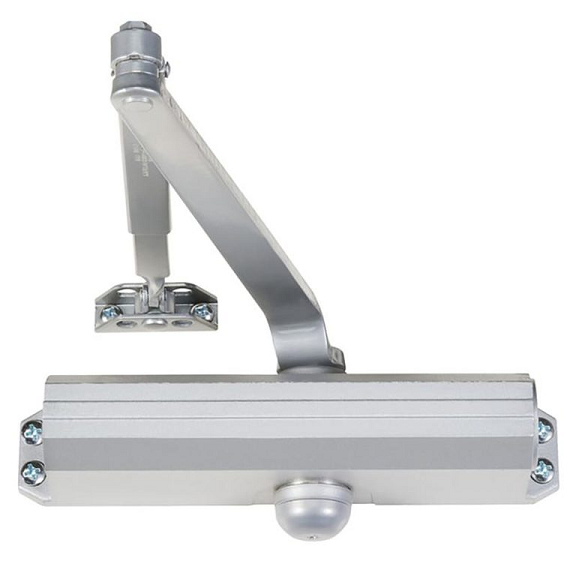
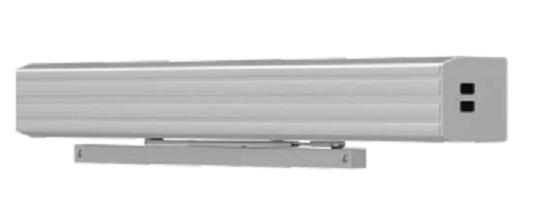


What is a commercial door closer?
A commercial door closer is a hydraulic, spring-powered device that closes a door in a controlled sweep and then snaps it into the latch. Unlike a spring hinge, it has separate valves for closing speed, latching speed and backcheck. Closers are tested under ANSI/BHMA A156.4, which sorts them into Grades 1, 2 and 3 by cycle life and durability, and Grade 1 is the grade specified for heavy traffic.
Door closer types: surface, concealed, floor and power operators
There are four families, and the mounting location decides which one you shop for. Surface closers bolt to the door or frame in plain view and cover most replacements. Overhead concealed closers sit inside the door header or top rail, floor closers sit in the floor under a pivot, and power operators open the door automatically for accessible entrances.
For a longer walkthrough of closer types, grades and installation, read door closers explained.
- Surface door closers: the easiest to install and service, with the widest choice of arms and covers.
- Overhead concealed closers: hidden in the header, common on aluminum storefront doors and interior glass doors.
- Floor concealed closers: for heavy or frameless doors that cannot carry a surface unit, such as the double-acting Dormakaba BTS80A for aluminum doors.
- Power operators: low-energy and automatic operators for ADA openings, such as the Norton 5710 and Falcon 8231.
Surface closer mounting options: regular arm, parallel arm and top jamb
A surface closer mounts in one of three positions, and each pairs with a different arm. Regular arm mounting puts the closer on the pull side of the door, on the hinge side, with the arm reaching to the frame face. Parallel arm mounting puts the closer on the push side, on the hinge side, with the arm running parallel to the door. Top jamb mounting sets the closer in the frame header on the push side, which keeps the unit off the door leaf.
Most heavy-duty bodies are tri-mount, so one closer can be installed in any of the three positions. For example, the Arrow DCN516-2 is a tri-mount closer, and the Norton 8301 and CPS8501 are multi-sized architectural bodies sold with regular or parallel arm sets.
Parallel arm, regular arm and hold-open arms compared
A parallel arm closer is the right choice when the door swings out into a corridor or when you want the arm tucked flat against the door. The arm folds toward the door instead of reaching across the opening, which also gives a stronger stop with a dead-stop or compression-stop bracket. The catalog carries parallel arms as arm kits and as complete closers, such as the Falcon SC81A DS and the BEST HD8016 series.
Regular arms suit standard pull side installs. Hold-open arms add a friction or positive stop so the door stays open at about 90 degrees until pushed shut. Extra-duty arms (EDA) are forged for abusive traffic, as on the LCN 4040XP EDA. Delayed action (DA) closers, such as the Norton 8301DA, slow the last stage of closing so a person with a cart or a walker can clear the doorway.
Concealed and floor closers for aluminum storefront and glass doors
If the door is aluminum with a narrow top rail, a concealed overhead or a floor closer keeps the face of the door clean. The Dormakaba RTS series is built for aluminum doors and frames, sold by swing angle and top rail width (5/8 inch to 1 inch), single or double acting. LCN 2000 and 5000 series closers mount in the frame or the tube for hidden hold-open or regular-arm operation. Check the top rail depth, the swing angle and whether the door is center hung, offset pivot hung or hinge hung before ordering. See the concealed closer specification guide.
Door closer grades, sizes and codes
Pick the closer size from the door width and exposure, then confirm the grade. Sizes run from 1 to 6, and most adjustable-size closers cover several door widths through a spring power adjustment: heavier, wider and wind-exposed doors need the larger sizes. Our closer sizing and adjustment guide gives the sweep and latch settings to start from.
Three code points matter for most openings. Fire-rated doors must be self-closing and latching under NFPA 80, which also requires the closer to be listed for use on the door. Interior hinged doors on accessible routes should open with no more than 5 lbf under the ADA 2010 Standards, and closing speed is limited so a door takes at least 5 seconds to move from 90 degrees to 12 degrees. Cold weather thickens closer fluid and can cause slamming or poor latching, which our cold weather closer fix guide covers.
Door closer brands and series in the catalog
| Brand and series | Type | Typical use | Door |
|---|---|---|---|
| LCN 4040XP, 4050A, 4031 | Surface, heavy duty | High-traffic commercial and institutional doors | Wood, hollow metal, aluminum |
| LCN 1450, 1461, 1250 | Surface, cast aluminum or cast iron | Replacement and general commercial doors | Wood, hollow metal, aluminum |
| Norton 8301, 8501, CPS8501 | Surface, architectural | Offices, schools, retail interiors | Wood, hollow metal |
| Norton 7500, PR7500H | Surface, institutional | Schools and healthcare | Hollow metal, wood |
| Norton 1601, CLP1601, CPS1601T | Surface, aluminum storefront | Narrow stile entrances | Aluminum |
| Falcon SC61A to SC94A | Surface, parallel or regular arm | Medium to heavy commercial traffic | Wood, hollow metal, aluminum |
| Dormakaba 8916, TS9315 | Surface, heavy duty | Busy commercial doors | Wood, hollow metal |
| Dormakaba RTS series | Overhead concealed | Aluminum storefront and glass doors | Aluminum |
| Sargent 1431, Corbin Russwin DC6210 and DC8210 | Surface, heavy duty | Commercial openings in matching hardware suites | Wood, hollow metal |
Most requested door closers
The door closers our customers look up most often right now:
- LCN 4040XP-REG 689 ST1630 Door Closer w/ Regular Arm and Special Template 1630, Aluminum Painted Finish
- Sargent 351-UO Powerglide Door Closer, Universal Standard Arm
- LCN 4040XP-REG Door Closer w/ Regular Arm
- Dormakaba ITS9613 Concealed Door Closer, Size 1-3
- Falcon SC71A RW/PA Door Closer, Regular Arm with parallel arm shoe
- Sargent 351-UH Powerglide Door Closer, Universal Hold Open Arm
Related categories: exit devices, commercial door hinges and mortise locks.
What to have ready when ordering a door closer
- Door width, height and thickness, and whether it is interior or exterior.
- Door material and frame: wood, hollow metal or aluminum storefront, plus top rail or header depth.
- Swing direction and handing, push or pull side, and the mounting you want (regular arm, parallel arm, top jamb).
- Closer size or the model being replaced, and the arm you need (regular, hold-open, extra duty, dead stop).
- Finish code: aluminum painted (689), dark bronze (690) or black (693), plus cover type.
- Fire rating, delayed action or ADA needs.
Not sure how a closer swings? Our arm types and mounting guide and the commercial door closer selection guide cover the options step by step.
Ordering quantities? Request a quote for volume pricing. Schools and agencies can submit a government or school PO. Orders placed before 3:00 p.m. ET on business days ship the same day after card approval, and ground shipping is free on orders of $450+. Questions on arm or size? Call 718-814-6300.
The tables and selection notes on this page are compiled by National Lock Supply from manufacturer catalogs, templates and product listings. Last reviewed: October 2026.
Frequently Asked Questions
What is a parallel arm door closer?
A parallel arm door closer mounts on the push side of the door with its arm running parallel to the door face. It suits doors that swing out into a corridor and offers a strong stop with a dead-stop bracket. A regular arm mounts on the pull side and reaches across the opening to the frame.
How do I size a commercial door closer?
Size the closer from the door width, weight and exposure. Sizes run from 1 for narrow interior doors to 6 for wide, heavy or wind-exposed doors. Many adjustable-size bodies cover several widths through a spring power adjustment, so check the maker's chart against your door width before ordering.
What do Grade 1, 2 and 3 mean for door closers?
ANSI/BHMA A156.4 rates closers as Grade 1, 2 or 3 by cycle life and durability. Grade 1 is the heavy-duty grade for schools, hospitals and busy commercial entrances. Grades 2 and 3 are for lighter traffic. Check the grade on the specification rather than assuming from the series.
Does a door closer lock the door?
No. A door closer pulls the door shut and controls the latching speed, but the lockset or exit device does the locking. If a door does not latch, raise the latch speed or check the latch and strike alignment. A hold-open arm keeps a door open but does not secure it.
Are door closers ADA compliant?
They can be when set correctly. Interior hinged doors on an accessible route should open with no more than 5 lbf under the ADA 2010 Standards, and closing speed has to be slow enough for people to pass. Delayed action closers and low-energy power operators help on heavy or busy doors.
Do fire-rated doors need a closer?
Yes. Fire doors must close and latch on their own under NFPA 80, so they need a closer that is listed for fire door use, with a hold-open only if it releases on alarm. Check the door label and the opening schedule, and avoid hold-open arms on fire doors unless the arm is rated for it.
What finishes do commercial door closers come in?
Common finishes are aluminum painted (689), dark bronze (690) and black (693), with some series offering plated or special-coat colors. The finish code appears in the part number, as in the Norton 8301 690 and 8501 693. Pick covers and arms in the same finish so the closer matches the other hardware.