 SAME DAY & EXPEDITED SHIPPING AVAILABLE






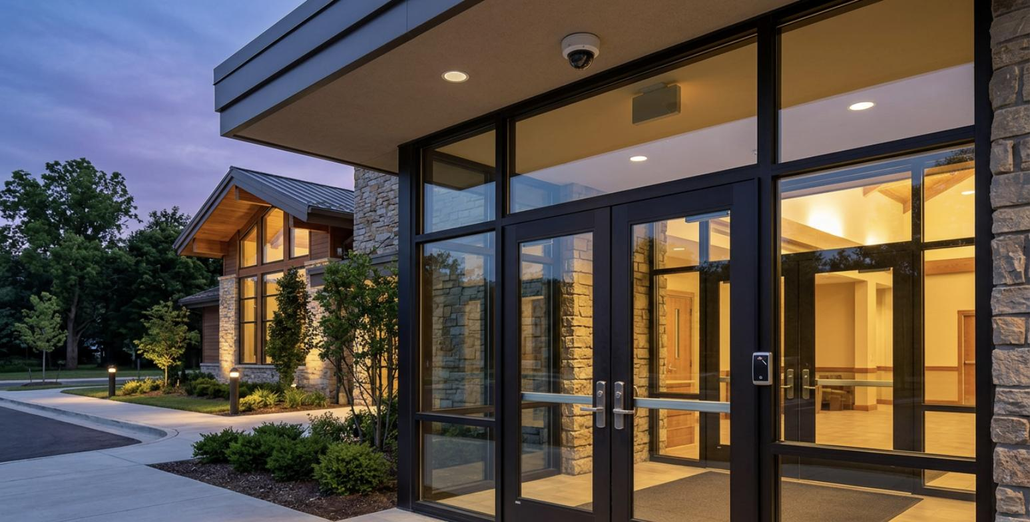
House of Worship Security Hardware FEMA NSGP grant-ready
Posted by National Lock Supply on Jun 12th 2026
A house of worship has to do two things that pull in opposite directions: welcome the public during services and lock down hard against a threat the rest of the time. The hardware that resolves this is a layered access plan, with a controlled main entry on access control, fail-secure electric strikes or electrified locks on staff and child-area doors, panic exit devices on every assembly exit for code-compliant egress, and a lockdown function that secures classrooms and offices from the inside without opening the door. Most of this hardware is reimbursable under the FEMA Nonprofit Security Grant Program (NSGP), so specifying it correctly matters for both safety and funding. This guide maps the openings, the device per opening, and the spec details that keep a project grant-eligible.
The faith-facility access problem
Worship facilities are open by design during services and target-rich the rest of the week, so the security model has to be zoned:
- Public zone (sanctuary, narthex, fellowship hall): free egress always, controlled entry during non-service hours.
- Protected zone (offices, nursery, classrooms, counting room): access-controlled and lockdown-capable.
- Restricted zone (server/IT, mechanical, storage): storeroom function, key or credential only.
Each zone gets a different hardware spec, and the mistake is treating the whole building as one security level.
Hardware by opening
This table maps each opening to the device, the function or fail mode, and the reason behind the choice.
| Opening | Device | Function / fail mode | Why |
|---|---|---|---|
| Main public entry | Electrified lock or strike plus access control | Fail-secure, scheduled unlock | Open during service, locked otherwise |
| Assembly / sanctuary exits | Panic exit devices | Free egress always | Code-required on assembly occupancies |
| Nursery / children area | Electrified lock plus access control | Fail-secure, badge in | Highest-protection zone |
| Classrooms (Sunday school) | Classroom Security (intruder) lever | Lock from inside, no door opening | Lockdown without exposure |
| Offices / counting room | Storeroom or Office function | Fail-secure | Cash and records protection |
| IT / mechanical / storage | Storeroom function | Always locked outside | Restricted zone |
Panic hardware on assembly exits is not optional, because assembly occupancies above the code threshold require panic or fire-exit hardware. See how to choose the best commercial panic exit devices and the panic exit devices category. For the classroom lockdown function, see how to choose a heavy-duty classroom lever lock and the function-code breakdown in commercial lock function codes explained.
The lockdown requirement, and why standard classroom locks fail it
A lockdown plan needs every protected-zone door to lock from inside the room without opening the door. Standard Classroom function forces someone into the hallway to lock the door with a key, which is exactly the wrong move during a threat. Specify Classroom Security or Intruder function on classrooms and offices so a person inside can secure the door instantly. A lock such as the Corbin Russwin ML2072 classroom intruder mortise lock is built for exactly this. Pair it with controlled entry on the building perimeter so the lockdown layer and the access layer reinforce each other, and confirm the fail-mode logic for any electrified doors against fail-safe vs fail-secure: how to choose for every electrified device.
Access control for a volunteer-run building
Faith facilities are usually run by rotating volunteers, which makes lost keys a constant problem. A few patterns solve it:
- Keypad or proximity entry removes the lost-key problem across rotating volunteers. See keypad vs proximity entry for doors and the keypad and proximity locks category.
- Scheduled unlock on the main entry so the door is open during service times and locks automatically afterward.
- Standalone battery or pushbutton locks (Alarm Lock, Kaba) where running wire is impractical in an older masonry building. A mechanical pushbutton lock like the Kaba Simplex 5031 pushbutton lever lock needs no power or wiring at all. See the Alarm Lock and Kaba brand pages.
- Maglocks with REX and push-to-exit only on glass narthex or vestibule doors where a strike will not fit, specified per the how to choose a magnetic lock (maglock) rules.
Keeping the project NSGP grant-eligible
The FEMA Nonprofit Security Grant Program funds physical-security hardening for at-risk nonprofits, including faith-based organizations. To keep a hardware project reimbursable, tie every line item to a vulnerability identified in the required risk assessment (controlled entry, lockdown capability, monitored doors), and specify target-hardening, BHMA Grade 1 hardware rather than residential-grade products. Grade matters for both durability and eligibility, which is worth confirming against what is Grade 1 lock hardware. Confirm the current NSGP application window and eligibility against the official FEMA program guidance before building the budget, because cycles and ceilings change year to year.
Common faith-facility hardware mistakes
- One security level for the whole building. Zone it into public, protected, and restricted instead.
- Standard classroom locks where lockdown is the goal. Specify Classroom Security or Intruder function.
- Chaining or padlocking exit doors for security. This is illegal and deadly. Use panic hardware with access control instead.
- Maglocks without independent egress release. Add REX and push-to-exit per code.
- Residential-grade locks on a grant project. Use BHMA Grade 1 commercial hardware.
CPTED and controlled entry during services
Most faith-facility security plans that survive a grant review are built on CPTED, Crime Prevention Through Environmental Design. CPTED layers natural surveillance, clear access points, and territorial definition so the building controls who reaches each zone before any lock is even tested. In practice that means funneling visitors to a single staffed entrance during services and locking secondary doors to entry from outside while they stay free for exit. A video intercom or a camera-and-buzzer entry at that main door lets a greeter or volunteer admit late arrivals without propping the opening, which is the single most common weak point in a worship building.
Because a sanctuary is an assembly occupancy, the egress rules are strict. NFPA 101 and the IBC require that occupants always be able to leave through the exit doors without a key, a tool, or special knowledge, even when the building is locked against entry. That is why security here is about controlling the inbound side: electrified entry hardware, a request-to-exit sensor where access control is used, and a UL 294 listed controller, all paired with panic exit devices that keep the outbound path free. Where the threat assessment calls for it, a two-stage lockdown button at the platform or office can secure interior and entry doors at once, and ballistic glazing can be added at the entry vestibule without ever compromising the exit path.
FAQ
Does NSGP cover door hardware?
The FEMA Nonprofit Security Grant Program funds physical-security improvements for eligible at-risk nonprofits, which commonly includes access control and target-hardening door hardware tied to a documented risk assessment. Confirm current eligibility and the application window with official FEMA guidance.
How do we lock down classrooms during a threat?
Specify Classroom Security (Intruder) function so a person inside can lock the door without opening it. Standard Classroom function requires locking from the hallway, which is unsafe during a lockdown.
Can we lock exit doors during service for security?
No. Assembly exits require free egress and usually panic hardware. Control entry from the outside with access control while egress stays free from the inside.
What access system works for a volunteer-staffed facility?
Keypad or proximity entry removes the lost-key problem across rotating volunteers, and scheduled unlock opens the main door during services automatically. Standalone battery locks work where wiring is impractical.
How do we balance a welcoming entrance with security?
Use scheduled access control so the main door is open and inviting during services and automatically secured afterward, while keeping every required exit on free-egress panic hardware at all times.
Next step
Zone the building, then spec per opening: access-controlled fail-secure entries, panic hardware on assembly exits, Classroom Security function on protected rooms, and storeroom function on restricted spaces. Browse panic exit devices, electric strikes, and keypad and proximity locks, and tie each item to your risk assessment for NSGP. Our commercial desk specs grant-ready, BHMA Grade 1 faith-facility packages that keep egress compliant while hardening every protected door.