 SAME DAY & EXPEDITED SHIPPING AVAILABLE






Electric Strikes
Electric strikes release a locked door from a keypad, card reader or button, for locksmiths, integrators and facility managers who need remote entry without replacing the existing lock. Browse and compare cylindrical, mortise and rim exit electric strikes, plus faceplates and parts, in fail-safe and fail-secure models.
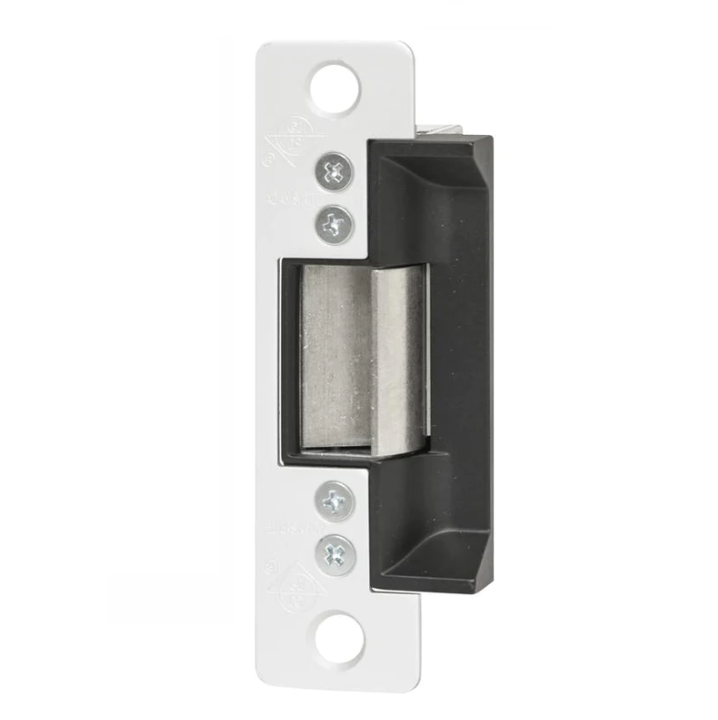


What is an electric strike?
An electric strike is a door strike with a solenoid-driven keeper that releases the latch bolt on command, so a door can be unlocked remotely without touching the lock. It mounts in the frame opposite the lock, takes the place of the standard strike plate, and opens when a keypad, card reader, intercom or push button sends it power. Because the lock itself stays mechanical, a key or a lever still works from the outside when the strike is wired fail-secure. Electric strikes are tested under ANSI/BHMA A156.31.
Fail-secure vs fail-safe electric strikes
A fail-secure strike stays locked when power is lost, and a fail-safe strike unlocks when power is lost. Fail-secure suits most office, retail and security doors because the opening stays locked in an outage, and the lock can still be opened with a key and exits freely by the lever or panic hardware. Fail-safe suits stairwell and life-safety situations where the authority having jurisdiction wants the door free on power loss, but it draws current continuously while locked. Many strikes are field-switchable, such as the RCI L6507 and S6514 (fail-safe or fail-secure). Our fail-safe vs fail-secure guide covers the code side.
Electric strike types by lock and door prep
Pick the strike from the lock it releases, then from the jamb it goes into. There are three groups, each with its own subcategory.
- Cylindrical electric strikes release the latch bolt of a knob or lever lock. The HES 5000 and 1006 and the Von Duprin 6211 series are typical choices.
- Mortise electric strikes handle the thicker latch bolt and deadbolt of a mortise lock, often with a faceplate kit to suit the throw. Examples include the Von Duprin 6210 and the HES 8500 and 1006 with a mortise faceplate.
- Rim exit electric strikes pair with surface-mounted rim exit devices. The Von Duprin 6111, 6112 and 6114, HES 9600 and Trine 4850 are in this group.
Surface mounted electric strike vs recessed
A recessed strike is cut into the frame and gives the cleanest look, while a surface mounted strike bolts on the face of the frame and skips the routing. Recessed models such as the HES 1006 and 5000 need a cutout in hollow metal, wood or aluminum jambs and are the standard for latchbolt locks. Surface mounted models, such as the HES 9400 and 9600 and the Trine 006, suit rim devices and retrofits where the jamb cannot be cut. For a shallow cutout, check the low-profile HES 5000 and RCI L6507.
Electric strikes for storefront, fire-rated and double doors
Aluminum storefront and fire-rated openings
For aluminum jambs, use a strike built for the narrow storefront frame. The Adams Rite 7100, 7131, 7410 and 7440 are offered with flat or radiused faceplates to match aluminum, hollow metal and wood jambs. For fire-rated doors, specify a strike marked fire rated for the exact opening: the catalog includes the HES 4500C, 7501 and 8500, Adams Rite 7270, Camden CX-ED1579L and Locknetics RS310-F. A strike on a fire door must be fail-secure so that the door stays latched, and the rating applies only to the tested door, frame and lock combination.
Electric strike for double doors
On a pair of doors, each leaf that needs remote release needs its own strike, or the inactive leaf is held by flush bolts. Pairs with rim exit devices use a rim strike on the active leaf, and pairs with mortise or cylindrical locks use a strike in each frame jamb. Vertical rod devices use the Folger Adam 310-4 and 310-6 strikes. See the electric strike selection guide for door-pair layouts.
Electric strike vs maglock, power and access control
An electric strike works with the lock already on the door and keeps the door locked when the strike is closed, while a maglock holds the door shut with magnetism and has no mechanical latch. Strikes keep the key override, and a maglock requires a request-to-exit and fire release for egress. See the strike vs maglock comparison. Most strikes run on 12 or 24 volts DC, and some models, such as the Von Duprin 6211WF (24V) and 6212WF (12V), come with specific voltages. Pair with an access control power supply and a rectifier such as the HES 2001-1 when you run from AC. Latchbolt monitors (LBM) on the HES 5000C and 8000C report whether the latch is in the keeper.
Electric strike brands and series in the catalog
| Brand and series | Releases | Notes | Jamb |
|---|---|---|---|
| HES 1006, 5000, 5200 | Cylindrical and mortise locks | Grade 1, latchbolt monitor options | Hollow metal, wood, aluminum |
| HES 7000, 8000, 8500 | Cylindrical, mortise, rim latchbolts | Concealed and fire-rated models | Hollow metal, wood |
| HES 9400, 9600, 9700 | Rim exit devices | Surface mounted, fire-rated option | Hollow metal |
| Von Duprin 6210 to 6222 | Cylindrical and mortise locks | 12V and 24V models | Hollow metal, wood, aluminum |
| Von Duprin 6111, 6112, 6114 | Rim exit devices | 12V and 24V | Hollow metal, aluminum |
| Adams Rite 7100, 7131, 7410, 7440 | Storefront deadlatches | Flat and radiused faceplates | Aluminum |
| RCI 2364, 4108, 7105, L6507 | Cylindrical and mortise locks | Fail-safe, fail-secure, low profile | Hollow metal, wood |
| Folger Adam 310 series | Surface and concealed vertical rod devices | Fail-safe and fail-secure | Hollow metal |
| Trine 3000, 4100, 4850 | Cylindrical, mortise, rim | Fail-safe and fail-secure | Hollow metal, wood |
Faceplates, lip extensions and parts
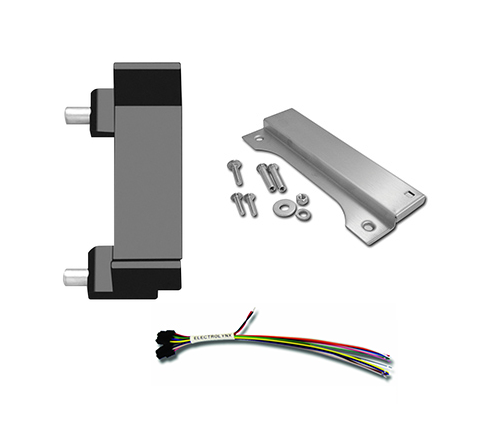
Most faceplates are sold separately so you can match the cutout in the existing jamb. HES offers faceplates and kits in ANSI and ASA sizes for the 1006, 5000 and 8000 series, and RCI, Trine and Locknetics carry matching plates and lip extensions. Our guide to electric strike faceplates (ANSI vs ASA) explains the difference. Shop electric strike faceplates and strike parts and accessories for spacers, shims and plug-in connectors.
Most requested electric strikes
The electric strikes our customers look up most often right now:
- Von Duprin 6400 Electric Strike, for Cylindrical or Mortise Locks
- RCI 0162 32D 3/4" Surface Mounted Electric Strike for Pullman Latch Rim Exit Device, Satin Stainless Steel Finish
- HES 5200C-630 Grade 1 Complete Electric Strike w/ Horizontal Adjustability, Satin Stainless Steel Finish
- Von Duprin 6111 24V Electric Strike, for Rim Exit Devices
- Adams Rite 7100 Electric Strike, Flat Faceplate w/ Radius Corners for Aluminum Jamb
- RCI S65U 32D Electric Strike, Universal, Includes 3 Faceplates, Fail Safe/Fail Secure, Satin Stainless Steel Finish
Related categories: maglocks, electronic door hardware, exit devices and deadlatches.
What to have ready when ordering an electric strike
- Lock type and make: cylindrical, mortise, rim exit or vertical rod, and the latchbolt throw.
- Fail-safe or fail-secure, and the supply voltage (12V or 24V, AC or DC).
- Jamb type and depth: hollow metal, wood or aluminum, and the existing cutout size.
- Faceplate size and corner style (flat, radius, square), plus the finish (630 or 32D stainless steel, aluminum or dark bronze).
- Fire rating, latchbolt monitor or request-to-exit needs, and single or double door.
Ordering quantities? Request a quote for volume pricing. Schools and agencies can submit a government or school PO. Orders placed before 3:00 p.m. ET on business days ship the same day after card approval, and ground shipping is free on orders of $450+. Need help matching a strike to a lock? Call 718-814-6300.
The tables and selection notes on this page are compiled by National Lock Supply from manufacturer catalogs, templates and product listings. Last reviewed: October 2026.
Frequently Asked Questions
How do electric strikes compare with maglocks?
An electric strike works with the existing mechanical lock and holds the door by the latch, while a maglock holds the door with magnetism and has no latch. Strikes keep the key override and need no extra release device. Maglocks need a request-to-exit device and a fire-alarm release for egress.
What voltage do electric strikes use?
Most commercial electric strikes run on 12V or 24V, and many accept AC or DC. Some models are voltage-specific, such as the Von Duprin 6211WF at 24V and 6212WF at 12V, and others are field-switchable. Match the strike to the access control power supply and check the amp draw.
What is the difference between surface mounted and recessed strikes?
A recessed strike sits inside a routed cutout in the frame and gives a clean look. A surface mounted strike bolts on the frame face and skips the cutout, which helps on rim exit devices and retrofits. Recessed strikes suit latchbolt locks, and surface mounted strikes suit rim devices.
What electric strike fits an aluminum storefront door?
Use a strike built for aluminum jambs, such as the Adams Rite 7100, 7131, 7410 or 7440, with a flat or radiused faceplate to match the frame. Check the jamb depth and the latch, since many storefront doors use a narrow stile deadlatch rather than a standard cylindrical lock.
How do I choose the right electric strike faceplate?
Measure the existing strike cutout, then match the faceplate length and width and the corner style (radius or square). Common sizes include 4-7/8 by 1-1/4 inch and 7-15/16 by 1-7/16 inch. Order a faceplate kit when the lock throw or the lock type changes the keeper position.
What do I need for an electric strike release kit?
You need the strike, a power supply at the right voltage, and an input such as a keypad, a card reader or a push button. A rectifier is needed for AC supplies, and a latchbolt monitor or request-to-exit is optional. Plug-in connectors and spacers are sold as separate parts.