 SAME DAY & EXPEDITED SHIPPING AVAILABLE






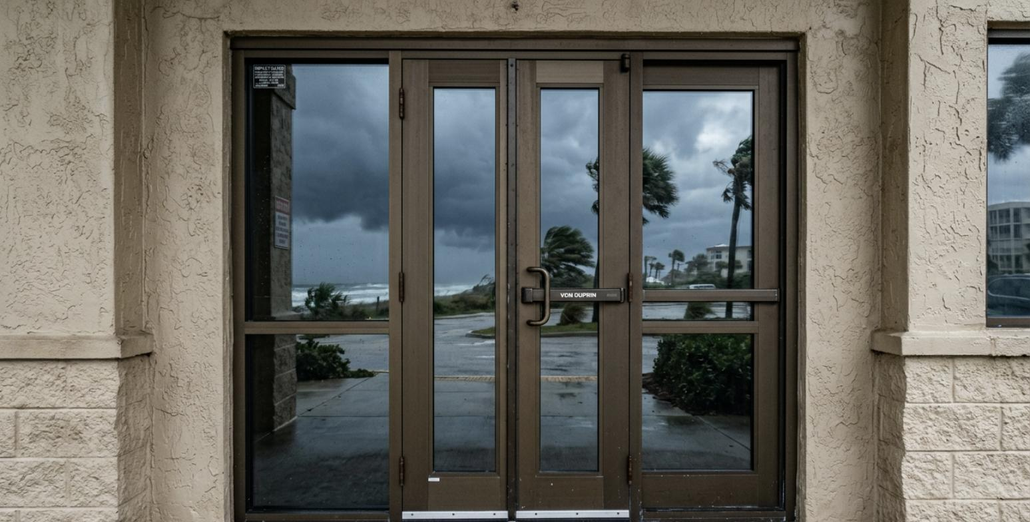
Hurricane and Impact-Rated Hardware for Florida
Posted by National Lock Supply on Jun 13th 2026
In Florida, commercial door hardware on exterior openings has to do two jobs the rest of the country does not require: survive hurricane wind pressure and resist windborne-debris impact. The governing documents are the Florida Building Code (FBC) and, in the High-Velocity Hurricane Zone (HVHZ, meaning Miami-Dade and Broward counties), a product-specific Miami-Dade Notice of Acceptance (NOA) or a Florida Product Approval. The hardware that qualifies is part of a tested door assembly, where the door, frame, hinges, lock or exit device, and any glazing are approved together rather than as separate parts. The corrosion baseline is 630 satin stainless, because coastal salt destroys lesser finishes. This guide explains the approval system, the assembly concept, and how to keep hardware selections inside an approved listing.
The approval system: FBC, NOA, and Product Approval
Florida regulates exterior assemblies through two paths:
- Statewide Florida Product Approval: a product tested and listed for use under the FBC outside the HVHZ.
- Miami-Dade NOA (Notice of Acceptance): the stricter HVHZ approval required in Miami-Dade and Broward, where windborne-debris (large- and small-missile impact) testing applies.
Both reference test standards (large-missile impact, cyclic wind pressure) that an exterior assembly must pass. The key concept is that approvals are issued for assemblies and configurations, not loose hardware. A lock or exit device is approved as part of a specific door and frame combination tested to those standards, and the BHMA performance grades and finishes still apply on top of the impact rating. See the BHMA A156 series cheat sheet for the performance standards and the door hardware finishes guide for the corrosion finishes.
Why the assembly matters more than the part
Because approvals cover assemblies, swapping any single component can void the listing. The practical consequences are strict:
- The exit device or lock must match the one in the tested assembly NOA or Product Approval. A similar device voids the listing.
- Hinges are part of the rating. Continuous geared hinges are common in tested assemblies because they anchor the door along its full edge. A unit like the Ives full-mortise aluminum geared continuous hinge distributes wind load better than butt hinges, but confirm the specific hinge in the assembly listing. See continuous geared hinges: sizing, specs, common mistakes.
- Thresholds and seals are part of the water-infiltration performance. A tested saddle threshold such as the Pemko 171A aluminum saddle threshold is specified to the assembly. See Pemko saddle thresholds: measure, choose the right one.
For the aluminum storefront context that shows up constantly on Florida exteriors, see how to choose storefront hardware for aluminum doors and commercial door hardware for retail and storefront.
The impact tests behind an approval: TAS and ASTM
An NOA or Florida Product Approval is really a record that the assembly passed a defined set of impact and pressure tests, so it helps to know what those tests are. In the High-Velocity Hurricane Zone (HVHZ), which covers Miami-Dade and Broward, the governing protocols are TAS 201, TAS 202, and TAS 203. TAS 201 is the large-missile impact test, firing a roughly nine-pound 2x4 at the assembly to simulate windborne debris. TAS 203 then cycles the assembly through thousands of positive and negative pressure cycles to confirm it stays sealed and operable after the impact. Outside the HVHZ, the equivalent national standards are ASTM E1886 and ASTM E1996, which define the same large-missile and small-missile impact and cyclic-pressure regime.
Every approved opening also carries a design pressure, or DP, rating. The DP is the wind load in pounds per square foot the assembly is certified to resist, and it must meet or exceed the load calculated for the building's location, height, and exposure. Impact-rated glazing in these assemblies is laminated, so even when the outer pane cracks, the interlayer holds the opening sealed against wind and water. When you match hardware to one of these doors, the exit device, hinges, and multipoint lock have to be the exact models listed in the approval, because the DP and the impact rating belong to the tested assembly, not to any one part.
Corrosion: the coastal baseline
Salt air attacks plated and painted finishes fast, so coastal Florida has a few non-negotiables. Use 630 satin stainless steel on exterior locks, exit devices, hinges, and fasteners, and avoid plated chrome on any coastal exterior because it corrodes quickly. Aluminum storefront hardware uses clear-anodized 628. Specifying anything less on a coastal opening trades a small upfront saving for premature failure and warranty problems.
On the most exposed coastal openings, Type 316 stainless steel is the practical baseline for screws, hinges, and exit-device trim, because its added molybdenum resists the chloride pitting that ordinary 304 stainless and plated steel suffer within sight of salt water. Pairing 316 fasteners with a 630 satin-stainless finish keeps the whole assembly from streaking and seizing a few seasons after install.
Egress still governs, even in a storm
A rated exterior exit must still allow free egress. The impact and wind requirements are added to, not substituted for, the egress and panic-hardware rules:
- Exit devices on rated exterior openings must be both impact-approved within the assembly and code-compliant for egress. See how to choose the best commercial panic exit devices and the panic exit devices category.
- No security add-on (slide bolt, secondary lock) may defeat egress, even for storm security.
- The frame and anchorage are part of both the egress door operation and the wind rating, so confirm them against the assembly in commercial door frames: types and hardware compatibility.
Common Florida hardware mistakes
- Substituting a similar device into a tested assembly. It voids the NOA or Product Approval. Match the listed hardware exactly.
- Plated chrome on coastal exteriors. It corrodes. Use 630 stainless and stainless fasteners.
- Treating hardware approval as separate from the door. Approvals cover assemblies, so the whole opening must match the listing.
- Assuming statewide approval works in the HVHZ. Miami-Dade and Broward require a Miami-Dade NOA with debris-impact testing.
- Letting storm security block egress. Impact rating never overrides free egress on exits.
FAQ
What is a Miami-Dade NOA?
A Notice of Acceptance is the High-Velocity Hurricane Zone product approval required in Miami-Dade and Broward counties. It certifies a tested assembly against windborne-debris impact and cyclic wind pressure. Outside the HVHZ, a statewide Florida Product Approval applies.
Is door hardware approved separately from the door?
No. Florida impact approvals are issued for tested assemblies and configurations. The lock, exit device, hinges, and threshold are approved as part of a specific door and frame combination, and substitutions void the listing.
What finish should coastal Florida hardware be?
630 satin stainless steel on exterior hardware, with stainless or approved-coating fasteners, because coastal salt corrodes plated and painted finishes. Aluminum storefront hardware uses clear-anodized 628.
Does hurricane rating change egress requirements?
No. Impact and wind requirements are added on top of egress and panic-hardware rules. Required exits must still open freely from the inside, and storm-security additions cannot defeat egress.
How do I verify a product is approved for my project?
Pull the NOA or Florida Product Approval number for the exact assembly and confirm the lock, exit device, hinge, and threshold all appear on that listing. If any component differs from the tested configuration, the approval no longer applies.
Next step
Source hardware to the tested assembly: match the exact lock or exit device, hinge, and threshold in the NOA or Florida Product Approval, in 630 stainless with stainless fasteners, and keep egress free on every exit. Browse panic exit devices, door hinges, and storefront bolts and latches. Our commercial desk matches hardware to NOA and Florida Product Approval listings so the opening passes inspection in and out of the HVHZ.