 SAME DAY & EXPEDITED SHIPPING AVAILABLE






Mortise Locks
Mortise locks are heavy-duty locks that sit in a pocket cut into the door edge, built for schools, hospitals, offices and government buildings. Choose by brand and series: Schlage, Corbin Russwin, Sargent, Falcon, BEST and Accentra (Yale), in passage, office, storeroom, classroom and dormitory functions.


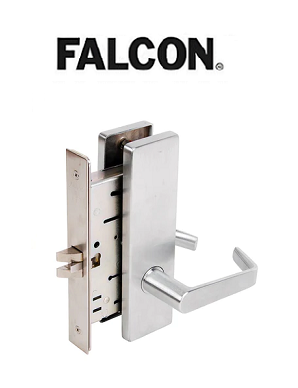
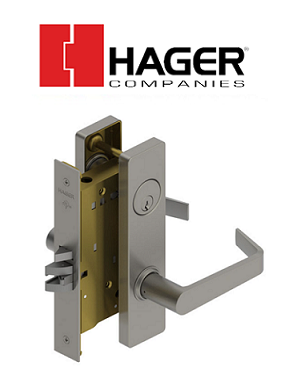


What is a mortise lock?
A mortise lock is a lock whose steel case sits inside a rectangular pocket cut into the edge of the door, so the latch, deadbolt and trim hardware all work from one body. That is why facility managers and locksmiths specify it for schools, hospitals, government buildings and apartment corridors. Spelling variants such as "mortice lock" and "mortis lock" describe the same product.
Compared with a bored (cylindrical) lock, the mortise case carries more functions and a heavier latch assembly. The trade-off is installation: the pocket has to be routed or prepped to the manufacturer template, which is why many openings keep the same mortise body for decades and only swap trim or cylinders.
Mortise lock functions and types
Mortise locks are sold by function, meaning how the latch and deadbolt respond to the lever, the key and the inside thumbturn. The functions you will see across our catalog include:
- Passage and closet: latch only, no lock, for interior circulation doors.
- Privacy: inside push or turn button for restrooms and bedrooms, with emergency release outside.
- Office and entry: key or inside button locks the outside lever, and the latch can also be held by a deadbolt.
- Storeroom and institutional: the outside lever is always locked and only the key retracts it, so the door cannot be left unsecured.
- Classroom and classroom security: key locks or unlocks the outside lever; the security versions add an intruder deadbolt thrown from the inside of the room.
- Apartment, dormitory and hotel: deadbolt plus latch, often with a function that keeps the inside lever free for egress.
- Holdback, store door and dummy trim: latch holdback for high-traffic doors, key-operated store door locks, and non-functioning trim for the inactive leaf.
Manufacturer function names differ, so read the product title and see our commercial lock function codes guide before ordering a replacement.
Mortise lock series compared
The catalog is dominated by six series, and they are close to dimension-compatible, which makes retrofits between brands possible but never automatic. Always check the template of the existing body.
| Series | Brand | Functions in the catalog | Cylinder and core options |
|---|---|---|---|
| L9000 | Schlage | Passage, privacy, office, apartment, classroom | SFIC, LFIC, less cylinder |
| ML2000 | Corbin Russwin | Passage, store door, storeroom, classroom, dormitory, institutional | LFIC (CL6), conventional less cylinder |
| 8200 | Sargent | Office, storeroom, classroom security, institutional, privacy with indicator | LFIC, SFIC, less cylinder |
| MA | Falcon | Store door, security, classroom security, apartment corridor, storeroom | SFIC, Schlage C keyway, less cylinder |
| 45H (Grade 1) | BEST | Office, entrance, storeroom, classroom, dormitory, hotel, privacy, passage, exit, intruder | See each listing for core prep |
| 8800FL | Accentra (Yale) | Passage, privacy, storeroom, entry, classroom, intruder, hotel, dormitory, holdback, apartment corridor | See each listing for cylinder type |
For a side-by-side read of the three most specified bodies, see Schlage L9000 vs Sargent 8200 vs Corbin ML2000. Arrow and Hager mortise locks are listed in their own subcategories.
Mortise vs cylindrical locks: door prep and sizing
A mortise lock needs a rectangular pocket plus a face-plate mortise and two cross bores, while a cylindrical lock needs only a 2-1/8 inch face bore and a 1 inch edge bore. That extra prep is the main installation cost, and it is also what gives a mortise body its strength inside the door edge.
Confirm three dimensions before you buy: door thickness (commercial doors are normally 1-3/4 inches), backset, and the faceplate shape (square or beveled, matched to the frame hardware). Handing matters because many mortise bodies are field-reversible but some trims are not. Our guides on mortise vs cylindrical locks and mortise lock installation cover the template steps.
Cylinders, cores and keying
Most mortise locks in the catalog are sold in one of three ways: with a conventional cylinder, "less cylinder" (LC) so you fit your own, or prepped for an interchangeable core. Small format (SFIC) and large format (LFIC) cores are not interchangeable with each other, and several Corbin Russwin and Sargent bodies are listed with LFIC prep, while Falcon and some Schlage bodies are listed for SFIC. Falcon also lists bodies with a Schlage C keyway.
If the building runs a master key system, buy the body prepped for the existing core type instead of rekeying later. Our SFIC vs LFIC guide explains how to tell them apart.
Match the cylinder cam to the lock
A mortise cylinder only works if its cam matches the lock body. Each lock brand uses its own cam profile, so a cylinder with the wrong cam can turn without retracting the bolt or latch, which leaves the door unsecured or stuck in passage mode. When you order a mortise cylinder or interchangeable core housing separately, confirm the lock brand and series it will go into, and whether the function needs a standard cam or a different one for deadbolt or dual-cylinder functions.
Grades, ADA and fire doors
Commercial mortise locks are tested under ANSI/BHMA A156.13, and the grade 1 rating is the highest durability tier. Specifiers choose lever trim because ADA 2010 Standards 404.2.7 require door hardware that can be operated with one hand and without tight grasping, pinching or twisting of the wrist.
On fire-rated doors, check that the lock body and the door label allow each other, and follow NFPA 80 for installation and annual inspection. Finish codes follow BHMA, so 626 (US26D) is satin chrome and 630 (US32D) is satin stainless steel; see the finishes guide if a schedule lists only one of the two systems.
Most requested mortise locks
The mortise locks our customers look up most often right now:
- Corbin Russwin ML2010 LL Passage or Closet Mortise Lock - Body Only
- Corbin Russwin ML2051 LWM Entrance or Office Mortise Lock
- Schlage L9040 06A OS-OCC Bath/bedroom Privacy Mortise Lock w/ Exterior Vacant/Occupied Indicator
- Corbin Russwin ML2051 NSN Entrance or Office Mortise Lock
- Schlage L9496 17A Corridor w/ Deadbolt Mortise Lock, 17 Lever and A Rose
Related categories: mortise cylinders, interchangeable cores, electrified mortise locks and, for lighter-duty doors, cylindrical lever locks.
What to have ready when ordering a mortise lock
- Series and function from the hardware schedule or the old lock (for example ML2057 storeroom or L9070 classroom).
- Handing of the door (LH, LHR, RH, RHR).
- Door thickness, backset and faceplate shape.
- Finish code, for example 626 or 630.
- Cylinder or core: conventional, less cylinder, SFIC or LFIC, and the keyway.
- Lever or knob style and rose or escutcheon trim.
Need quantities for a project? Request a quote. Schools and agencies can submit a government PO. Orders placed before 3:00 p.m. ET on business days ship the same day after card approval, and free ground shipping applies to orders of $450 or more. Call 718-814-6300.
The tables and selection notes on this page are compiled by National Lock Supply from manufacturer catalogs, templates and product listings. Last reviewed: October 2026.
Frequently Asked Questions
What is the difference between a mortise lock and a cylindrical lock?
A cylindrical lock installs through two round bores, while a mortise lock needs a rectangular pocket in the door edge. The mortise body holds more functions and a stronger latch and deadbolt. A cylindrical lock installs faster, but a mortise lock is the normal choice where durability and function variety matter.
Are mortise locks the same as mortice locks?
Yes. Mortice is the British spelling of mortise, and shoppers also type mortis lock or mortisse lock. The product is the same: a lock body that sits in a pocket cut into the door edge. Use the series and function name, such as ML2000 storeroom or L9050 office, when matching parts.
Which mortise lock brands do you carry?
The catalog includes Schlage, Corbin Russwin, Sargent, Falcon, Accentra (Yale), BEST, Arrow and Hager mortise locks. Schlage L9000, Corbin Russwin ML2000, Sargent 8200 and Falcon MA are the series most used on commercial openings. Each brand has its own page linked above the product grid.
Do mortise locks work with interchangeable cores?
Yes. Many bodies are prepped for small format (SFIC) or large format (LFIC) cores, and others come less cylinder or with a conventional cylinder. The two core sizes do not interchange, so match the core type already used in the building before ordering, especially if you run a master key system.
What door prep does a mortise lock need?
The door needs a rectangular mortise pocket in the edge, a faceplate recess, a cylinder bore and a spindle bore for the trim, all cut to the manufacturer template. Check door thickness, backset and handing first. If you are replacing an existing mortise lock, the old pocket usually guides the match.
Are mortise locks ADA compliant?
Lever-operated mortise locks can meet ADA 2010 Standards 404.2.7, which require hardware operable with one hand and without tight grasping, pinching or twisting of the wrist. Knob trims generally do not meet that requirement. Choose lever trim on any opening that serves the public.
What does less cylinder or LC mean on a mortise lock?
Less cylinder means the lock body ships without a keyed cylinder so you can install your own, such as a conventional cylinder in the existing keyway. It is common on Corbin Russwin, Sargent and Schlage listings. Check the cylinder length and cam style that the lock body requires before ordering.
Can I get quantity pricing on mortise locks for a project?
Yes. Send the series, function, finish, handing and quantity through the quote form and we respond with pricing for the full opening list. Schools and government agencies can submit a purchase order through the government PO page. Orders placed before 3:00 p.m. ET on business days ship the same day after card approval.