 SAME DAY & EXPEDITED SHIPPING AVAILABLE






Storefront Lock Parts: Strikes, Spacers, Cams & More
Posted by National Lock Supply on Feb 5th 2026
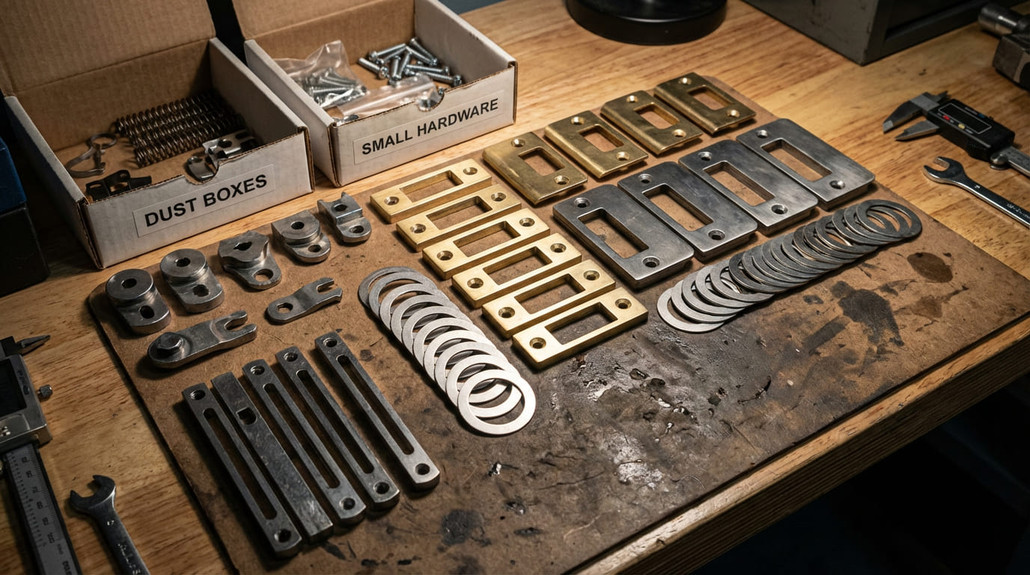
Storefront lock problems don’t always mean the lock is bad. More often, the issue is a worn strike that isn’t catching, a missing spacer that’s throwing off alignment, or a cam that no longer connects the cylinder to the lock body the way it should. These are the small parts that make storefront hardware work—and when one fails, the whole door feels broken.
This guide covers the parts that storefront technicians order most: strikes, spacers, cams, tailpieces, dust boxes, fillers, and reinforcers. You’ll learn what each one does, how to diagnose the most common symptoms, and how to identify and reorder parts without pulling the entire lock off the door.
The Parts Most Often Needed
If you’re here because something isn’t working on a storefront door, the fix usually comes from one of these categories:
- Strike/keeper: the part on the frame that catches the bolt or latch. Worn strikes are the #1 cause of “door won’t hold” complaints.
- Spacer/shim: corrects alignment between the lock body and the door or frame. Solves rub, drag, and inconsistent engagement.
- Cam/tailpiece: connects the cylinder to the lock mechanism. When the key turns but nothing happens, this is usually where it broke.
- Dust box, filler, reinforcer: protects the lock prep, fills unused cutouts, and strengthens the stile around the hardware.
Most of these parts live inside Adams Rite Accessories—the go-to source for storefront lock components including replacement strikes, cylinder parts, trim rings, and supporting hardware for deadlatches and deadlocks.
What Each Part Does (and When to Use It)
Strikes/keepers: latch engagement & alignment
The strike is the part mounted on the frame (or header/threshold) that receives the bolt or latch. On storefront doors, strikes take constant impact—every close cycle drives the latch into the strike face. Over time, strikes wear, loosen, or shift position, and the result is a door that doesn’t hold, bounces open, or requires extra force to close.
When to replace or upgrade a strike:
- The latch no longer catches consistently (misalignment or worn pocket)
- The strike face is visibly worn, bent, or cracked
- The mounting screws have loosened or stripped in the frame
- You’re upgrading the lock and the new unit needs a different strike profile
For non-storefront doors with standard cylindrical or mortise hardware, replacement strikes and latches are available inside Latches, Strikes, & Parts. This category covers bolt assemblies, strike plates, spring latches, and the small components that keep commercial locksets functioning correctly.
Spacers/shims: correcting fitment
Spacers and shims sit between the lock body (or strike) and the door or frame surface. Their job is simple: close the gap. On narrow-stile aluminum doors, even 1/16” of misalignment can cause the latch to drag, miss the strike pocket, or bind during operation.
Common reasons you’d add a spacer:
- The lock body doesn’t sit flush against the stile (gap between faceplate and door edge)
- The strike doesn’t align with the latch because the frame is slightly off-plane
- A previous repair changed the door prep depth and the hardware needs packing out
Spacers are typically sourced alongside the lock or strike they correct. If you’re working with a deadlatch that’s dragging or not engaging cleanly, confirm you’re looking at the right lock family first—explore Deadlatches to match faceplate profile, backset, and function before adding spacers to the order.
Cams/tailpieces: cylinder-to-lock connection
The cam (or tailpiece) is the part at the back of the cylinder that physically engages the lock mechanism. On storefront hardware, the cam must match both the cylinder and the lock body—different locks require different cam profiles, and getting it wrong means the key turns but the bolt doesn’t move.
When to check or replace a cam:
- Key turns freely but the bolt/latch doesn’t extend or retract
- The cam is visibly worn, cracked, or stripped at the engagement point
- You’re installing a new cylinder and need to match the cam profile to the existing lock body
Cam selection is tied directly to the cylinder you’re using. When ordering or replacing mortise cylinders for storefront hardware, explore Cylinders and confirm the cam profile matches your lock series. Standard storefront cylinders are 1-5/32” diameter, 1” length—but the cam geometry varies by manufacturer and lock model, so always verify before ordering.
Dust boxes, fillers, reinforcers
These are the parts that protect the door prep and keep the hardware area clean and solid over time. A dust box covers the lock pocket inside the stile to keep debris out of the mechanism. Fillers cover unused cutouts when you’re swapping lock types. Reinforcers strengthen the stile around the hardware—especially important on doors that have been rekeyed, re-bored, or repaired multiple times.
If the stile around the lock is cracked, soft, or enlarged from repeated service, reinforcement may be the smarter fix than another lock swap. For doors where the lock area needs structural help, a wrap around plate can stabilize the prep before installing new parts.
Diagnose First: Symptoms → The Right Part
Before you order anything, let the door tell you what it needs. Most storefront lock complaints fall into three symptoms—and each one points to a specific parts category.
Door won’t latch
This is the most common call. The door closes but doesn’t hold, or it bounces back open. Nine times out of ten, the problem is engagement between the latch and the strike. Check the strike first: is it worn, loose, or misaligned? If the strike is fine, check the latch throw—a weak or damaged spring can reduce projection. If both are fine, the door itself may be sagging, which changes the geometric relationship between latch and strike.
Fix path: replace strike → check latch/spring → verify door alignment.
Latch rubs / hard close
When the door is hard to close or the latch drags against the strike face, it’s usually a fitment problem. The lock body may not be sitting correctly in the prep (needs a spacer), the strike may be out of plane with the latch, or the door has shifted slightly from its original position.
Fix path: shim lock body or strike → check door alignment → confirm faceplate sits flush.
Key turns but no action
When the key rotates but the bolt doesn’t move, the cam or tailpiece is almost always the issue. Either the cam has worn past its engagement point, it’s the wrong profile for the lock, or it cracked during a forced-key event. This is a common problem after rekeying when the replacement cylinder ships with a generic cam that doesn’t match the lock body.
Fix path: pull cylinder → inspect cam → match correct cam to lock series → reinstall.
How to Identify Parts Without Full Removal
On storefront doors, full lock removal isn’t always practical—especially during business hours. Here’s how to identify what you need with minimal disassembly:
- Strike: visible from the frame side. Note the profile shape (flat, angled, surface-mount), screw pattern, and pocket dimensions. Photograph it next to a ruler.
- Faceplate: visible from the door edge. Note flat vs radius profile, length, width, and screw spacing. This tells you the lock series.
- Cam: pull the cylinder (usually one set screw from the edge). The cam is attached to the back—photograph it and note the profile shape and dimensions.
- Spacers: visible when you remove the faceplate screws and slightly pull the lock body. If there’s a gap between the faceplate and the stile edge, you need one.
The quickest path to a correct order is matching the lock model number (stamped on the faceplate or body) to the right parts in the manufacturer’s accessory catalog.
Measurement Checklist for Reordering
Capture these before you place an order:
- Lock model number (stamped on the faceplate or body edge)
- Faceplate dimensions (length, width, flat vs radius, screw spacing)
- Backset (31/32”, 1-1/8”, and 1-1/2” are the most common on storefront hardware)
- Strike profile (shape, pocket dimensions, mounting pattern)
- Cylinder diameter and length (standard storefront is 1-5/32” diameter, 1” length)
- Cam profile (photograph the back of the cylinder with the cam attached)
- Door thickness (1-3/4” is standard; confirm before ordering trim rings or spacers)
If you’re also replacing the operating hardware at the same time, browse Storefront Trims to match function and finish alongside the parts order—ordering trim and parts together prevents the “second trip” when components don’t match.
Pro Tips to Prevent Repeat Visits
- Replace the strike when you replace the lock. A new lock body paired with a worn strike is a callback waiting to happen. Engagement is a two-part system.
- Always confirm the cam before leaving site. If the key operates smoothly with the door open but feels wrong when latched, the cam or latch engagement is the problem—not the cylinder.
- Carry common spacer sizes. A 1/16” or 1/8” spacer in the truck saves a return trip on half of all fitment complaints.
- Photograph everything before disassembly. Orientation, screw pattern, and cam position are easy to forget once the parts are off the door.
- Check door alignment first. If the door is sagging, even brand-new parts will feel wrong. Fix alignment before blaming hardware.
FAQs
Can I replace just the strike without changing the lock?
Yes—this is one of the most common field fixes. As long as the new strike matches the lock’s bolt profile and mounting pattern, it’s a straightforward swap.
How do I know which cam fits my cylinder and lock?
Match the lock model number to the cam profile in the manufacturer’s documentation. On Adams Rite hardware, the cam must match the specific deadlatch or deadlock series. When in doubt, photograph the existing cam and compare before ordering.
What causes a storefront lock to feel “sloppy” over time?
Usually a combination of strike wear, loose mounting screws, and slight door shift. Replacing the strike and confirming fitment (with spacers if needed) typically restores solid operation.
Do I need spacers on every storefront install?
Not every install—but always check. If the faceplate doesn’t sit flush against the stile or the latch doesn’t align cleanly with the strike, spacers can solve the problem without any door modification.
Where do I find replacement parts for Adams Rite storefront locks?
The Adams Rite Accessories category at National Lock Supply is the starting point for strikes, cams, cylinder accessories, and supporting hardware. For cylinders specifically, the Cylinders category covers mortise, rim, and IC options with the correct cam profiles.
Why Buy Storefront Lock Parts at National Lock Supply
The fastest storefront fixes happen when you can identify the failing part, match it to the correct replacement, and order the supporting components at the same time. National Lock Supply organizes storefront parts the way technicians actually search for them—so you can move from diagnosis to a complete order without hunting across multiple sites or making a second trip because one component didn’t match.