 SAME DAY & EXPEDITED SHIPPING AVAILABLE






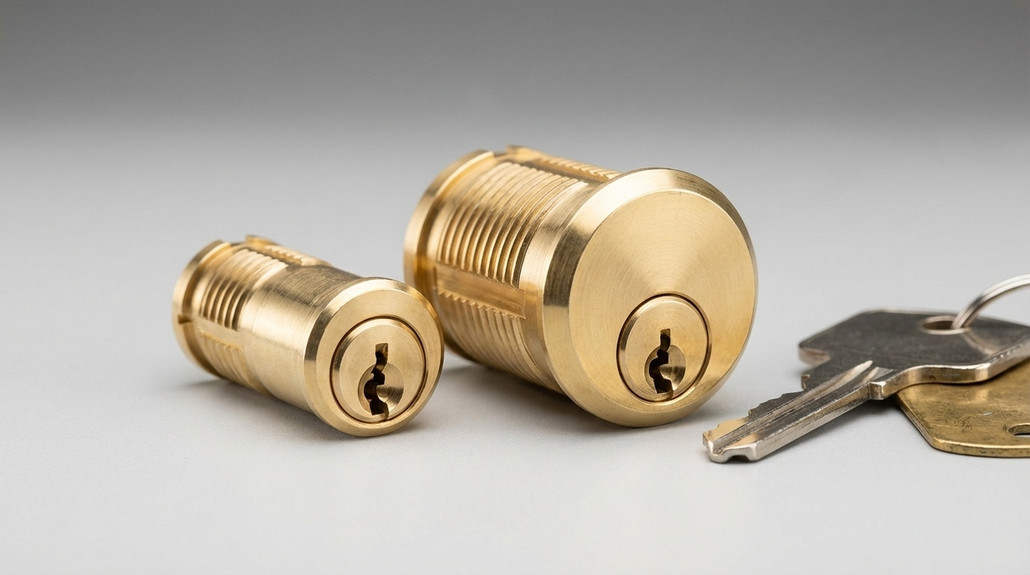
SFIC vs LFIC: Interchangeable Cores Explained + What to Buy
Posted by National Lock Supply on Dec 10th 2025
Interchangeable core cylinders revolutionize institutional key control by allowing complete lock rekeying in 10-15 seconds without removing hardware or disassembling mechanisms. Facility managers insert a control key, rotate, extract the old core, and insert a new core with different keying. This speed transforms security response after key loss or terminations from days of locksmith labor into minutes of in-house maintenance work.
Two core formats dominate institutional markets: Small Format Interchangeable Core (SFIC) and Large Format Interchangeable Core (LFIC). Each offers distinct advantages in specific applications, but mixing formats within facilities creates inventory and operational complications. Browse interchangeable core cylinders from Best, Schlage, and Arrow for institutional key control systems.
SFIC Core Specifications and Applications
Physical Dimensions and Design
Small Format Interchangeable Cores measure approximately 1 inch diameter by 1.4 inches long, with the compact dimensions allowing installation in cylindrical locks, mortise locks, padlocks, and cabinet locks without requiring oversized housings. The figure-8 cross-section profile--wider at the bottom than the top--provides rotational orientation preventing improper insertion. Control key access occurs through a dedicated slot separate from the operating keyway.
Standard SFIC uses 6-pin configurations providing adequate security for most commercial applications. Each pin chamber accepts standard pin tumbler components--driver pins, key pins, and springs--arranged in the traditional pin tumbler format. High-security SFIC versions incorporate 7-pin configurations, sidebars, or specialized pins resisting picking and bumping attacks. The additional pin chamber increases available key differs from approximately 40,000 combinations in 6-pin to over 200,000 in 7-pin formats.
The operating key rotates the core plug operating the lock mechanism through a cam or tailpiece extending from the core rear. The control key--cut to different depths than operating keys--accesses a secondary shear line engaging a retaining clip that secures the core in its housing. Rotating the control key 20-30 degrees releases the clip, allowing core extraction. This dual-key system separates operating access from rekeying capability, essential for institutional security where numerous staff need operational keys but only security personnel should rekey locks.
SFIC Housing Compatibility
SFIC cores require compatible housings adapting the standard core format to different lock types. Mortise housings install in institutional mortise locks, cylindrical housings adapt IC cores to standard cylindrical locksets, rim housings mount on door surfaces for electric strikes or rim locks, and padlock housings create high-security removable core padlocks. This housing variety allows SFIC standardization across diverse lock types--the same core format operates mortise locks, cylindrical locks, and padlocks.
The compact SFIC dimensions prove particularly advantageous for cylindrical lock conversions. Standard cylindrical lock cylinders require approximately 1-1/8 inch diameter bores through door faces. SFIC housings fit these existing preparations without modification, allowing retrofit of cylindrical locks to IC systems without drilling oversized holes. This compatibility makes SFIC the preferred choice for facilities with existing cylindrical hardware seeking IC benefits without door replacement.
LFIC Core Specifications and Advantages
Enhanced Security Through Larger Format
Large Format Interchangeable Cores measure approximately 1.25 inches diameter by 2 inches long--25 percent larger diameter and 40 percent longer than SFIC. The increased size accommodates 7-pin standard configurations or 8-pin high-security versions, providing superior key differs and master keying capacity compared to SFIC. The additional pin chambers support more complex master key hierarchies--grand masters, great grand masters, and construction master systems--essential for large institutional facilities with sophisticated key control requirements.
LFIC construction uses heavier gauge materials throughout--thicker cylinder shells, larger diameter pins, and more robust springs--creating inherently stronger cores resisting drilling, prying, and impact attacks better than SFIC equivalents. The larger core mass and increased pin chamber count also improve pick resistance; additional pins multiply the combinations an attacker must manipulate, extending successful picking times beyond practical attack windows. High-security LFIC cores incorporate sidebars, magnetic pins, or interactive element technology raising attack resistance to UL 437 high-security standards.
The control key mechanism in LFIC uses the same dual-shear-line principle as SFIC but benefits from larger components and more robust retaining mechanisms. LFIC retaining systems typically provide 50,000-100,000 cycle service life versus 20,000-30,000 for SFIC, reducing maintenance frequency in high-traffic institutional applications. The longer core body also allows separation between operating keyway and control key access, reducing accidental control key insertion into operating keyways--a common user error in SFIC systems.
LFIC Application Requirements
LFIC suits high-security institutional applications including hospitals, universities, government facilities, and correctional institutions where master key system complexity exceeds SFIC capability. The 8-pin configurations support master key structures with 4-5 levels without excessive master keying that weakens security. Facilities requiring more than 500 keyed openings across multiple buildings generally benefit from LFIC expanded keying capacity.
The larger LFIC dimensions require correspondingly larger lock housings. Cylindrical locks need 1-3/8 inch diameter bores versus 1-1/8 inch for SFIC--a significant difference requiring different door preparation. Existing doors prepared for standard cylinders cannot accept LFIC housings without drilling oversized holes. This preparation incompatibility makes LFIC less suitable for retrofit applications, favoring new construction or major renovations where door replacement is already planned.
Key System Planning and Capacity
Available Key Differs and Master Keying
SFIC 6-pin systems provide approximately 40,000 theoretical differs--the number of unique key combinations possible. Master keying reduces available differs significantly; each level of master keying typically consumes 20-30 percent of theoretical capacity. A three-level master key system (change keys, master keys, grand master keys) in SFIC typically delivers 5,000-8,000 usable change key differs before key duplication risks become unacceptable.
LFIC 7-pin systems offer approximately 200,000 theoretical differs--five times SFIC capacity. Master keying still consumes capacity, but the expanded base provides adequate usable differs even in complex hierarchies. Four-level master systems in LFIC typically yield 20,000-30,000 usable change key differs--adequate for large institutional campuses with thousands of keyed openings. The additional capacity also allows geographic or functional subdivisions; different building complexes can use separate sections of the key system without overlap.
Control Key Security and Management
Control key security proves critical in IC systems since control keys provide immediate rekeying access to any core in the system. Both SFIC and LFIC use control keys cut to different bitting than operating keys, but control key bitting must be protected as zealously as master keys. Facilities typically limit control key distribution to security directors and senior maintenance supervisors, with signed accountability for each control key issued.
Some facilities use secondary control key systems where different control keys access different core groups--one control key for academic buildings, another for administrative, a third for residential. This segmentation limits damage from control key loss or compromise. The attacker gains rekeying capability only for the specific control key group, not the entire facility. Both SFIC and LFIC support segmented control key systems, though implementation complexity and cost increase with the number of control key groups specified.
Cost Comparison and TCO Analysis
Initial Hardware Investment
SFIC cores cost $35-60 each depending on security level and manufacturer. LFIC cores run $60-100 each--approximately 70 percent premium over SFIC. For facilities with 200 cores, the difference equals $5,000-8,000 in initial core inventory. Housings show similar premiums; LFIC housings cost 50-80 percent more than SFIC equivalents. The initial investment difference proves significant for budget-constrained projects.
However, installation labor costs favor IC systems dramatically over conventional cylinders regardless of format. Rekeying conventional cylinders requires disassembly, pin replacement, and reassembly consuming 15-20 minutes per cylinder. IC core swaps take 10-15 seconds per lock--a 60-fold time reduction. For a 200-opening facility, conventional rekeying requires 50-70 hours labor versus 30-45 minutes for IC core swaps. The labor savings justify IC premiums after the first security incident requiring facility-wide rekeying.
Long-Term Operating Costs
IC systems reduce ongoing key control costs by simplifying inventory management. Conventional systems require maintaining key blanks for every keyway in use--potentially dozens of different keyways across a large facility. IC systems standardize on one or two keyways (operating and control), dramatically reducing blank inventory requirements. Core inventory replaces the need for on-site pin kits and rekeying supplies; spare cores can be pre-keyed and stored ready for immediate deployment.
The rapid rekeying capability also reduces security exposure windows after key loss or employee termination. Conventional rekeying may require days or weeks to complete, during which compromised keys provide unauthorized access. IC core swaps complete in hours or minutes, minimizing exposure. This security benefit proves difficult to quantify but provides significant risk reduction for facilities handling sensitive materials or information. For complete IC system implementation, coordinate cores with compatible locksets and padlocks for system-wide key control.
Format Selection Decision Matrix
Choose SFIC for facilities under 300 openings with straightforward master key requirements--two or three levels maximum. SFIC proves ideal for office buildings, small retail chains, K-12 schools, and light industrial facilities where cylindrical lock retrofit capability matters. The compact dimensions and lower cost make SFIC the practical choice when high-security requirements do not justify LFIC premiums.
Select LFIC for large institutional facilities exceeding 500 openings, complex master key hierarchies requiring four or more levels, or high-security applications where enhanced attack resistance justifies the cost premium. Universities, hospitals, government facilities, and corporate campuses benefit from LFIC expanded capacity and superior security. New construction projects avoid SFIC/LFIC retrofit compatibility issues, making LFIC specification straightforward when security analysis supports the investment.
Never mix SFIC and LFIC within the same facility unless absolutely necessary--the dual inventory requirements, different control keys, and incompatible housings create operational complexity outweighing any perceived benefits. If mixed systems prove unavoidable due to acquisitions or phased construction, establish clear boundaries and documentation preventing cross-contamination. Color-code control keys and core inventory distinctly, use separate storage systems, and train maintenance staff to identify formats before attempting core swaps.