 SAME DAY & EXPEDITED SHIPPING AVAILABLE






Pemko Saddle Thresholds: Measure & Choose the Right One
Posted by National Lock Supply on Dec 16th 2025
Commercial door thresholds create the critical weather seal, accessibility transition, and structural support at the base of exterior openings-yet they are frequently misspecified, incorrectly measured, or installed with fastener patterns that void weatherproofing warranties.Pemko commercial threshold line dominates institutional and commercial specifications due to proven weatherproofing performance exceeding ASTM E283 air infiltration standards, ANSI/BHMA A156.21 compliance verified through independent testing, and the comprehensive range of profiles addressing every door configuration from standard hinged entries to sliding patio systems and panic hardware applications.
This guide covers proper measurement techniques ensuring first-time-correct orders that eliminate costly returns of non-returnable custom-cut thresholds, profile selection methodology matching your specific door type and floor conditions, material considerations balancing durability against thermal performance requirements, and installation procedures that maintain both weather seal integrity and ADA compliance throughout the threshold expected 15-20 year service life.
Understanding Saddle Threshold Types and Profiles
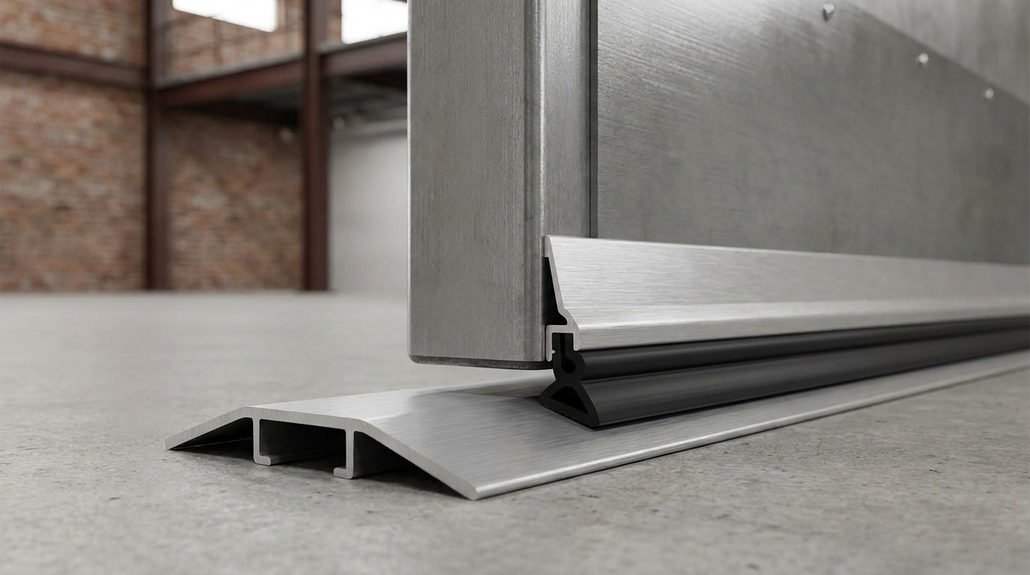
Saddle thresholds mount directly on top of the floor substrate, bridging the gap between interior and exterior floor elevations while providing a weather barrier beneath the door bottom. Unlike bumper thresholds that create a vertical dam the door must pass over--suitable for garage doors and industrial applications where carts do not cross--saddle profiles present a sloped transition from one side to the other, allowing smooth passage for carts, wheelchairs, and pedestrian traffic while directing water away from the interior. The saddle designation refers to the profile shape: highest in the center where it contacts the door bottom sweep or weatherstripping, sloping down toward both the interior and exterior edges to create gradual ramps meeting ADA slope requirements.
Commercial saddle thresholds typically feature aluminum or bronze extruded bodies with vinyl or EPDM weather seals running along the top surface in a continuous bead or replaceable insert configuration. When the door closes, compression of this weather seal creates the primary barrier against water, air, and pest infiltration. Threshold effectiveness depends entirely on maintaining consistent contact between the door bottom sweep and the seal throughout the door full width--gaps as small as 1/16 inch allow significant water penetration during wind-driven rain events, with testing showing that a 1/8 inch gap permits water infiltration at wind speeds as low as 15 mph. The seal must compress uniformly across the full door width; uneven compression indicates door bottom adjustment problems, threshold substrate irregularities, or door warping requiring correction before threshold replacement provides benefit.
The most common commercial profiles include the Pemko 170 series for standard hinged doors with equal floor heights on both sides of the threshold, providing symmetric slopes from the center peak to both edges. The 171 series accommodates doors with a step-down from interior to exterior, featuring an asymmetric profile with a gradual slope on the interior side meeting ADA requirements and a steeper drop on the exterior where accessibility codes do not apply. The 172 series addresses installations where exterior grade sits higher than interior--common in retrofit situations or buildings with settled foundations--providing the reverse asymmetric profile. Selecting the wrong profile number results in thresholds that create tripping hazards violating ADA maximum 1/2 inch height limits, prevent proper door closure due to interference with the door bottom, or fail to seal effectively even when all other measurements are correct because the seal contact angle does not match the door bottom sweep geometry.
Profile Selection by Application Type
Standard office entrances with level floors on both sides specify 170 series saddle profiles in heights from 1/2 inch to 3/4 inch depending on the door bottom seal projection and required compression. Retail storefronts frequently experience higher traffic volumes and require heavy-duty profiles with reinforced seal channels resisting compression set from millions of annual passages. Warehouse and loading dock applications need industrial-grade thresholds rated for forklift traffic, typically aluminum extrusions 1 inch tall or greater with replaceable Dynaflex or neoprene seal inserts allowing field replacement without threshold removal when seals wear from heavy equipment crossings.
Residential entry doors converted to commercial use often have the 171 step-down profile because residential construction typically places interior floors 1-2 inches above exterior grade for water diversion. Healthcare facility thresholds require special consideration--the 1/4 inch maximum height for areas serving patients in beds or wheelchairs exceeds standard commercial thresholds, necessitating ultra-low-profile models or recessed threshold installations where the threshold sits in a substrate depression rather than on top of the floor. Educational facilities balance durability requirements from high student traffic against tight accessibility compliance, typically specifying anodized aluminum 170 series profiles with replaceable vinyl seals allowing maintenance staff to restore weather sealing without replacing complete thresholds.
Critical Measurement Procedures for Accurate Ordering
Width Measurement Accounting for Frame Rabbets
Threshold width must match the door frame rabbet-to-rabbet dimension, not the door leaf width that most inexperienced specifiers incorrectly measure. The rabbet is the recessed ledge on each side of the frame where the door stops when closed, typically measuring 1/2 inch to 1 inch deep depending on frame design. Measure from the inside face of one rabbet directly across to the inside face of the opposite rabbet--this measurement typically runs 1-1/2 inches to 2 inches wider than the door leaf itself, depending on frame design and weatherstripping compression space. Standard 3 foot 0 inch doors in commercial hollow metal frames usually require 37 inch to 38 inch thresholds, while 3 foot 6 inch doors need 43 inch to 44 inch thresholds. This relationship holds across frame types; wood frames with applied stops follow the same rabbet measurement methodology.
Measuring existing thresholds provides a reliable reference, but only if the original threshold was correctly sized and has not shifted during service life. Remove any threshold covers or trim pieces before measuring--the structural threshold underneath determines the dimension you need, not decorative caps that may have been added during remodeling. If replacing a threshold that has gaps at the sides allowing water infiltration or visible light penetration, the original was undersized; measure the actual rabbet dimension rather than copying the failed threshold width. Add 1/16 inch to the measured rabbet dimension to ensure slight compression fit--thresholds ordered exactly to measured size often end up slightly short due to measurement tolerances, thermal expansion of the frame during summer installation, or substrate irregularities.
For new construction where frames are not yet installed, coordinate threshold width with frame schedule dimensions showing rabbet-to-rabbet measurements. Frame manufacturers provide this data on shop drawings; never assume standard dimensions since custom frame modifications create non-standard rabbet spacing. Consider commercial weatherstripping selection simultaneously with threshold specification since weatherstripping compression affects the effective threshold-to-door-bottom gap and influences required threshold height.
Height Selection and ADA Compliance Verification
Threshold profile selection depends on the vertical relationship between interior and exterior floor surfaces, measured accurately using a level and ruler rather than visual estimation that introduces significant error. Place a 4 foot level across the doorway at the threshold location spanning from interior to exterior floor. Measure from the level down to each floor surface at points 6 inches from the door frame on both sides--measuring directly at the frame often provides incorrect readings due to substrate damage or buildup near the frame. If both measurements are equal within 1/8 inch, use a standard symmetric saddle profile. If the interior floor sits higher by 1/4 inch to 1 inch, use a profile designed for interior-to-exterior step-down like the 171 series. If the exterior is higher--common in retrofit situations or buildings experiencing foundation settlement--you will need a profile accommodating exterior-to-interior slope like the 172 series or custom profile options for height differentials exceeding standard catalog offerings.
ADA regulations under the 2010 ADA Standards for Accessible Design limit threshold height to 1/2 inch maximum for exterior doors and 3/4 inch at sliding doors, with both interior and exterior beveled edges that do not exceed 1:2 slope. This means a 1/2 inch tall threshold must have beveled edges extending at least 1 inch from the peak, creating a gradual ramp on both sides with a 26.5 degree angle or less. Pemko ADA-compliant profiles automatically meet these requirements when installed on level substrates, but installers must verify the finished slope after installation since substrate irregularities can create non-compliant conditions even with compliant threshold products--a threshold meeting the 1:2 slope requirement installed on a substrate with a 1/4 inch lip creates an effective slope exceeding code limits.
Measure finished threshold height from the floor surface to the threshold peak with the door closed and weatherstripping compressed. The measurement point is at the highest point of the threshold where it contacts the door bottom, not at the threshold edges where slopes begin. Buildings constructed before 1991 may have thresholds exceeding current ADA limits that are grandfathered under previous codes, but any threshold replacement triggers current code compliance regardless of when the building was constructed. Facilities receiving federal funding face stricter scrutiny; even grandfathered thresholds may require correction to receive continued funding under Section 504 of the Rehabilitation Act.
Material Selection and Thermal Performance
Aluminum thresholds dominate commercial specifications due to an optimal balance of strength-to-weight ratio, natural corrosion resistance through oxide layer formation, thermal performance better than steel alternatives, and cost significantly below bronze or stainless steel options. Mill finish aluminum provides the most economical option at approximately $40-60 per threshold for standard 3 foot widths, suitable for interior applications or protected exterior locations where appearance is not critical and corrosion exposure is minimal. The natural mill finish develops a gray patina over time as the aluminum oxide layer forms; this patina actually enhances corrosion resistance but creates an inconsistent appearance some facility managers find unacceptable in public-facing applications.
Anodized aluminum--available in gold, bronze, or dark bronze Class I or Class II finishes--offers enhanced corrosion resistance exceeding mill finish by 300-500 percent and appearance retention in exterior or high-traffic applications where finish consistency matters. The anodization process creates a hard oxide layer 0.0001 to 0.001 inches thick that resists scratching, weathering, and UV degradation better than paint or powder coat finishes that chip or fade within 3-5 years of exterior exposure. Class I anodized finishes provide minimum 0.7 mil thick coating suitable for interior or protected exterior locations, while Class II finishes exceed 1.4 mils for severe weather exposure including coastal installations within 1 mile of saltwater. The anodized color penetrates the oxide layer rather than sitting on the surface, preventing the appearance degradation common with painted thresholds where scratches expose base metal. Cost premium for anodized aluminum runs 40-60 percent over mill finish but eliminates refinishing costs over the threshold 15-20 year service life.
Bronze thresholds deliver superior corrosion resistance in coastal or severe weather environments--essential for installations within 1/4 mile of saltwater where aluminum shows pitting corrosion within 18-24 months--but cost 200-300 percent more than equivalent aluminum profiles. The material density (bronze weighs 550 pounds per cubic foot versus aluminum at 170 pounds) provides enhanced durability in high-abuse institutional applications including schools, hospitals, and public buildings where aluminum thresholds develop surface damage from cart traffic and cleaning equipment impact within 3-5 years. Bronze also offers aesthetic benefits in high-end commercial buildings, hotels, and historic restoration projects where traditional materials support architectural authenticity and specify materials matching existing bronze door hardware, frames, and architectural details.
Thermal Break Technology for Energy Efficiency
Thermal performance considerations favor thresholds with integral thermal breaks--insulating barriers separating the interior and exterior aluminum sections, preventing direct metal-to-metal thermal bridging that conducts heat readily. Standard aluminum thresholds without thermal breaks conduct heat at approximately 1400 BTU per hour per square foot per degree Fahrenheit temperature difference, contributing to significant condensation formation during winter when warm interior air contacts the cold threshold surface cooled by exterior temperatures. This condensation creates slip hazards, promotes mold growth in adjacent flooring materials, and signals ongoing energy loss as conditioned interior air temperature equilibrates with exterior conditions through the conductive threshold.
Thermally broken thresholds reduce energy transfer by 60-70 percent compared to solid aluminum through polyamide or vinyl inserts molded within the aluminum extrusion during manufacture--not adhesive-bonded or mechanical attachments that fail over time. The thermal break material exhibits thermal conductivity 800-1000 times lower than aluminum, effectively blocking the conductive heat path while maintaining structural integrity through mechanical interlocking with the aluminum sections. This technology is mandatory in ENERGY STAR certified buildings where threshold U-factors must not exceed 0.50 BTU per hour per square foot per degree Fahrenheit, and strongly recommended for any climate with significant heating or cooling degree days exceeding 4000 annually. The thermal break typically consists of glass-reinforced polyamide or rigid vinyl inserts 1/4 to 1/2 inch wide positioned at the threshold centerline where interior and exterior sections would otherwise conduct thermally.
Cost premium for thermally broken thresholds runs 60-80 percent over non-thermal-break equivalents, but payback periods in heating-dominated climates typically range 3-5 years through reduced HVAC costs and eliminated condensation remediation. For comprehensive weatherproofing, coordinate thermally broken thresholds with door bottom seals and door sweeps creating complete thermal barriers at door perimeters.
Installation Procedures and Fastening Methods
Proper threshold installation begins with substrate preparation--the floor surface must be level within 1/16 inch across the full threshold width, clean of all debris and contaminants, and structurally sound without cracks, spalling, or deterioration requiring repair. Remove existing thresholds completely including any adhesive residue using scrapers and solvents appropriate for the substrate material--adhesive residue prevents proper seating of the new threshold and creates voids that allow water to track beneath the threshold into substrate materials causing rot in wood floors or corrosion in steel deck systems. Vacuum the area thoroughly using shop vacuums with HEPA filtration; even fine dust trapped under the new threshold prevents proper seating and creates voids that compromise weather seal integrity.
Check for substrate damage or deterioration requiring repair before proceeding with installation. Concrete substrates showing surface cracking, spalling, or hollow sounds when tapped indicate subsurface damage needing repair with concrete patching compounds cured minimum 48 hours before threshold installation. Wood substrates require moisture content testing; wood exceeding 14 percent moisture content needs drying before threshold installation or moisture will wick into the threshold causing corrosion of aluminum or seal deterioration. Steel deck substrates need rust remediation with wire brushing, chemical rust converters, and protective coatings before threshold mounting to prevent continued corrosion that loosens fasteners and compromises threshold attachment.
Sealant Application and Fastener Installation
Apply continuous beads of polyurethane or silicone sealant along the threshold underside before setting it in position, using cartridge guns with steady pressure creating uniform 1/4 inch diameter beads. The sealant serves dual purposes: adhering the threshold to the substrate through mechanical bond and chemical adhesion, and creating a water barrier preventing moisture from migrating underneath the threshold where it attacks substrate materials and creates efflorescence in concrete or rot in wood. Many installers make the critical error of relying solely on mechanical fasteners without sealant--this creates a pathway for water to enter around each fastener hole, leading to substrate damage, fastener corrosion, and premature threshold failure within 3-5 years versus properly sealed thresholds lasting 15-20 years.
Sealant selection depends on substrate compatibility and expected movement. Polyurethane sealants provide superior adhesion to concrete and masonry with movement capability accommodating thermal expansion up to 25 percent of joint width--critical for exterior thresholds experiencing temperature swings from -20 degrees F to 140 degrees F in direct sunlight. Silicone sealants offer better UV resistance and maintain flexibility at extreme temperatures but exhibit reduced adhesion to porous substrates requiring primers. Apply sealant within 5 minutes of opening the tube or cartridge; atmospheric moisture begins curing polyurethane immediately upon air exposure, reducing adhesion if application is delayed. Press the threshold firmly into the sealant bed, working from one end to the other to avoid trapping air pockets that create voids compromising the water barrier.
Fastener selection and placement follow manufacturer specifications precisely, accounting for substrate type and expected loads. Concrete substrates require masonry anchors--typically 1/4 inch diameter by 1-3/4 inch embedment--at 8 to 12 inch spacing along both threshold edges. Use concrete drill bits sized for the anchor rather than standard twist drills that wander in concrete creating oversized holes with reduced holding strength. Wood substrates use #12 or #14 stainless steel or hot-dipped galvanized screws penetrating minimum 1-1/2 inches into solid framing, not just subfloor layers that provide inadequate holding strength for threshold loads. Never over-tighten fasteners; excessive torque distorts the threshold profile preventing proper seal contact, or can crack aluminum extrusions at fastener holes creating stress concentration points that propagate into threshold failure. Countersink fastener heads slightly below the threshold surface--1/16 inch maximum--then fill with color-matched aluminum filler preventing water penetration through fastener holes and creating smooth walking surfaces.
For doors with panic hardware or high-traffic applications, verify threshold fastening provides sufficient holding strength for panic bar operation forces that can exceed 150 pounds applied suddenly during emergency egress. Coordinate threshold installation with door closer adjustments ensuring proper door bottom to threshold compression without excessive resistance that prevents latching.