 SAME DAY & EXPEDITED SHIPPING AVAILABLE






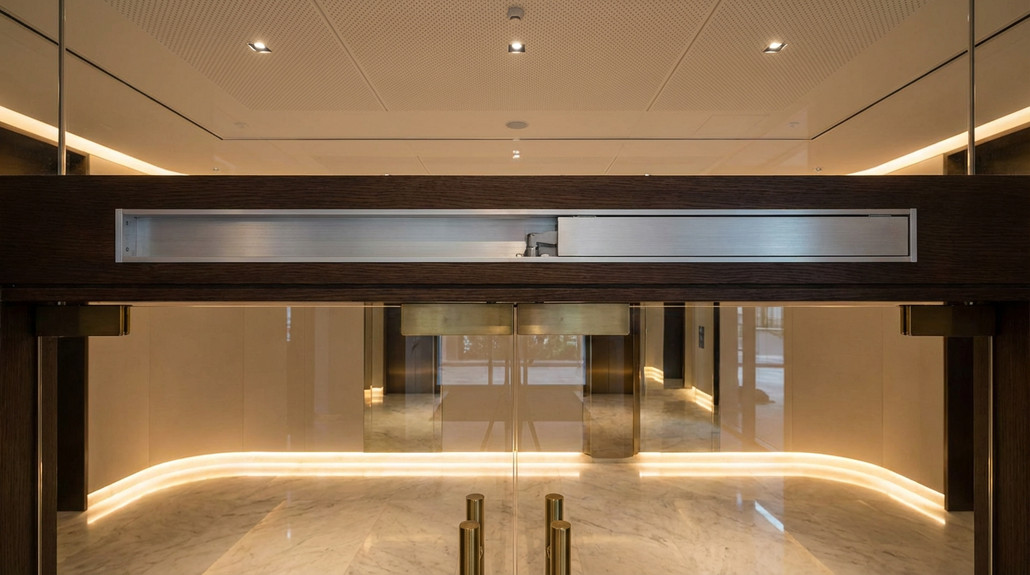
OverheadOverhead Concealed Door Closers: Specification Guide
Posted by National Lock Supply on Mar 17th 2026
A surface-mounted door closer does three things simultaneously: it controls the door, it announces its presence on the door face, and it defines the aesthetic of every opening it appears on. In standard commercial construction, this is acceptable. In historic buildings, high-end lobbies, glass-walled corridors, and architecturally significant spaces, a surface-mounted closer on every door is an aesthetic problem that no amount of finish coordination can fix. Overhead concealed door closers relocate the mechanism to the interior of the door or frame, making it invisible from both sides. The functional result is identical to a surface-mounted closer, but the specification and installation requirements are substantially more demanding and the cost difference is significant.
Two Types of Concealed Closers: Overhead vs. Floor
Overhead concealed door closers mortise the closer body into the top edge of the door. A concealed arm connects the closer to a track or pivot plate mounted on the frame header. From either face of the door, no hardware is visible. Installation requires a mortise pocket cut into the door top edge before the door is hung. This cannot be retrofit into an installed door without removing it entirely. The closer body dimensions must be confirmed against the available top-edge depth of the door before ordering.
Floor concealed closers set the closer body in a pocket in the floor below the hinge side of the door. They are the standard for heavy glass doors, frameless glazing systems, and building main entrances where architectural intent requires hardware-free door faces. They require a floor pocket set during concrete pour, which makes them a construction-phase decision that cannot be economically retrofit.
When to Specify Overhead Concealed vs. Surface-Mounted
If the architect has specified "all hardware concealed" or "no surface-mounted hardware visible," overhead concealed is the only compliant option. Historic preservation projects prohibit surface mounting hardware on designated historic fabric. High-end hospitality specifications consistently require concealed closers in public areas.
Overhead concealed closers cost 3 to 5 times more than equivalent-grade surface-mounted closers in unit cost, plus door preparation labor. If the architectural program does not require concealment for a specific opening, surface-mounted closers provide better value. The correct specification question is whether the architectural program requires concealment for this opening.
ANSI Grades and Cycle Ratings
Because overhead concealed closers are more expensive and more difficult to replace than surface-mounted units, the cost of failure in service calls, hardware removal, and door removal is significantly higher. Grade 1 is non-negotiable for any non-residential application, requiring a minimum of 2,000,000 cycles under ANSI/BHMA A156.4. For locations difficult to access for replacement, specify the highest cycle-rated model available rather than the minimum Grade 1 unit.
Fire Rating Compatibility
A concealed closer used on a fire-rated door must be part of a tested and listed assembly that includes the door, frame, and hardware as a complete system. Not all concealed closer models carry UL listings for fire-rated applications. When no listed concealed assembly exists for a required fire rating, the surface door closer selection covers more fire rating combinations and is the compliant specification for those situations.
Sizing Overhead Concealed Closers
Overhead concealed closers use the same ANSI size system as surface-mounted closers. The critical pre-order check: request the manufacturer's template drawing for the specific model and verify that the mortise pocket dimensions fit within the door construction at the top edge. This check takes 5 minutes and prevents a hardware return that takes 3 weeks. Specify "factory-prepared for overhead concealed closer Model [X]" in the door schedule so the door manufacturer receives the template before fabrication.
Concealed Closer Brands
Rixson (ASSA ABLOY) dominates the institutional overhead concealed closer market in the United States. The Model 2 is the standard specification for single-acting doors in low to medium traffic interior applications. The 9900 series is the heavy-duty option rated for high-traffic and heavy doors, frequently specified on main building entries in institutional projects. The Norton 7700 series provides overhead concealed closing for single and double-acting doors with strong presence in educational and light commercial applications. The Sargent 351 series is the concealed closer option within the Sargent hardware family, typically specified alongside Sargent exit devices and locksets for coordinated package projects.
Installation Requirements
The mortise pocket must be cut at the door factory using the manufacturer's template before the door is shipped. A hollow metal door mortised in the field produces inconsistent results and risks damaging the door construction. The frame header must also be fabricated with the correct mounting holes for the arm or track assembly before shipping. Post-installation adjustment of sweep speed, latch speed, and backcheck requires a tool specific to each closer model, inserted through the door edge slot. Request the adjustment tool from the manufacturer as part of the hardware package.
|
Rixson, Norton, and Sargent models with manufacturer templates for pre-order compatibility verification. Shop Overhead Concealed Closers |