 SAME DAY & EXPEDITED SHIPPING AVAILABLE






IC Housings Explained: Mortise vs Rim vs Key-in-Lever
Posted by National Lock Supply on Dec 16th 2025
Interchangeable core housings adapt IC cylinders to different lock types, door preparations, and security requirements. The housing provides the mechanical interface between the core and lock mechanism, controls key access angle, and determines door or frame preparation required. Specifying the wrong housing type results in cores that will not install in existing locks, require door modification, or present improper key access orientation creating operational problems.
Three primary housing types dominate commercial applications: mortise housings for institutional locks, rim housings for surface-mounted applications, and key-in-lever housings for cylindrical locksets. Understanding dimensional requirements and compatibility prevents costly specification errors. Shop IC housings matched to your specific lock manufacturer and model for guaranteed fit.
Mortise IC Housing Specifications
Thread Standards and Dimensions
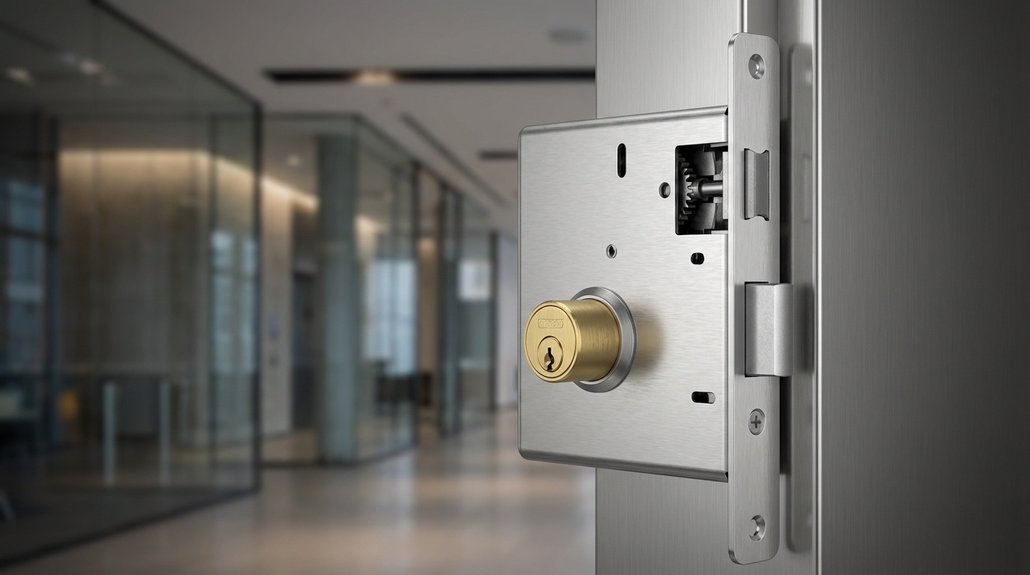
Mortise IC housings install in institutional mortise locks, inserting horizontally into the lock body through a threaded cylinder hole. Standard mortise housings use 1-1/4 inch diameter threads conforming to industry specifications established decades ago. The thread pitch--threads per inch--varies by manufacturer but typically runs 18 or 20 TPI (threads per inch). This threading engages with the lock body threaded cylinder hole, securing the housing and providing rotational alignment.
Housing length varies by door thickness. Standard housings suit 1-3/4 inch thick doors--the most common commercial door thickness. Thicker doors require throated housings, with 1-3/4 inch, 2 inch, and 2-1/4 inch throat lengths available. The throat is the housing section extending from the lock body face to the door exterior face where the core inserts. Throated housings cost 20-30 percent more than standard versions but prove essential for proper core access on thick doors or doors with surface-mounted reinforcement plates.
The housing rear features a tailpiece or cam that connects to the lock mechanism, transferring rotational motion from the core to operate latches and deadbolts. Tailpiece length and shape must match the specific lock model--Best locks use different tailpiece geometry than Schlage or Corbin Russwin. Using incorrect housings results in mechanisms that do not engage properly, creating locks that turn but fail to retract bolts. Always verify housing compatibility with the specific lock manufacturer and model number before ordering.
Trim Ring and Finish Options
Mortise housings include trim rings--decorative collars covering the threaded portion and providing finished appearance on the door exterior face. Trim rings come in standard architectural finishes: satin chrome US26D, bright brass US3, satin brass US4, oil-rubbed bronze US10B, and satin nickel US15. The trim ring threads onto the housing body, allowing field replacement if finish damage occurs without replacing the complete housing.
Some mortise housings omit trim rings entirely, designed for locks with integral trim or escutcheons covering the cylinder area. These reduced-cost housings suit institutional applications where locks include decorative trim plates hiding the housing. Specify housings with or without trim rings based on the lock trim configuration--using trim ring housings with locks that include trim creates doubled trim layers looking unprofessional.
Rim IC Housing Applications
Surface-Mount Configuration
Rim IC housings mount on the door surface, typically the exterior face, with the core accessible from outside and a cam or tailpiece extending through the door to operate surface-mounted locks or electric strikes. Rim housings suit applications where mortise preparation is impractical--metal doors with minimal edge thickness, hollow core doors lacking solid material for mortising, or retrofit situations where cutting mortises would damage door integrity.
The housing body bolts to the door face using machine screws threaded into the housing from the interior side. Standard rim housings measure 2-1/2 to 3 inches diameter by 1 to 1-1/4 inches projection from the door face. This visible hardware presence makes rim housings less desirable aesthetically compared to mortise configurations, but the installation simplicity and elimination of door edge machining provide significant advantages in challenging applications.
The cam extending through the door operates the lock mechanism on the interior side. Cam length must match door thickness--standard cams suit 1-3/4 inch doors, with extended cams available for thicker doors. The cam shape varies by application; electric strike applications use flat cams that simply rotate to signal the strike, while mechanical locks need cams with specific profiles engaging lock mechanisms. Specifying wrong cam style creates installations that turn but fail to operate locks.
Rim Housing Security Considerations
Rim housings present larger attack surfaces than mortise configurations since the entire housing body sits exposed on the door surface. High-security rim housings incorporate hardened steel housings resisting drilling and prying, spin-resistant flanges preventing wrench attacks, and through-bolt mounting rather than surface screws for extraction resistance. These enhanced security features add 60-80 percent cost but prove necessary for high-value or high-threat applications.
The exposed mounting also allows attackers to access fasteners from the exterior on improperly installed rim housings. Professional installation requires one-way screws, breakaway fasteners, or through-bolts accessible only from the interior, preventing simple screwdriver removal. For electric strike integration with IC systems, coordinate rim housings with electric strikes and access control systems for complete security solutions.
Key-in-Lever IC Housing Systems
Cylindrical Lock Conversion
Key-in-lever housings adapt IC cores to cylindrical locksets--the type with lever or knob handles on round roses common in office buildings and hotels. KIL housings replace the standard cylinder, allowing IC core benefits in cylindrical hardware that otherwise would not support interchangeable cores. This conversion proves valuable for facilities with significant cylindrical lock populations wanting IC rapid rekeying capability without replacing all locksets with mortise locks.
KIL housing dimensions must match the lock manufacturer and model precisely. Schlage cylindrical locks require different housing dimensions than Corbin Russwin, Yale, or Sargent. Even within manufacturers, different product lines use varied dimensions. The housing diameter, length, and tailpiece configuration must match the lock exactly or the housing will not fit the lock body, or will fit but fail to operate the mechanism. This manufacturer-specific compatibility makes KIL housings the least universal IC housing type.
Installation requires removing the existing cylinder from the cylindrical lock body and installing the KIL housing in its place. The housing threads or clips into the lock body similarly to standard cylinders. Most KIL systems use SFIC rather than LFIC due to dimensional constraints--the compact SFIC format fits cylindrical lock bodies more readily than the larger LFIC. This limitation means facilities using LFIC for mortise locks cannot easily extend IC systems to cylindrical locks without maintaining dual core formats.
KIL Operational Considerations
Key-in-lever housings typically project slightly more from the door face than standard cylinders due to the IC core access requirement. The core must insert and extract from the exterior, requiring the housing to position the control key slot outside the lever rose. This additional projection--typically 1/8 to 1/4 inch--creates interference risks with door stops, adjacent trim, or narrow clearances between doors and frames. Verify clearances before specifying KIL housings for doors with tight spacing.
The control key access location on KIL housings varies by design. Some place the control key slot above the operating keyway, others below or to the side. The location affects usability during core changes--slots positioned too close to the lever rose create awkward control key insertion angles, while slots too far from the rose require excessive housing projection. Evaluate control key access ergonomics when selecting KIL housing models, particularly for facilities expecting frequent core changes.
Housing Material and Finish Standards
IC housings use brass, bronze, or stainless steel construction depending on application requirements and budget. Brass housings provide adequate strength for most commercial applications with natural corrosion resistance and good machinability for precision threading. Standard brass housings cost $15-25 depending on configuration. Bronze housings offer enhanced corrosion resistance for coastal or high-humidity environments at 30-40 percent premium over brass.
Stainless steel housings deliver maximum corrosion resistance and superior strength for high-security or abuse-resistant applications. The harder material resists drilling better than brass or bronze, and maintains dimensional stability under impact that would deform softer metals. Stainless steel costs 80-100 percent more than brass but proves necessary for exterior applications in harsh climates or institutional settings with significant vandalism risk.
Housing finishes coordinate with door hardware finishes throughout the facility. Standard options include satin chrome US26D, bright chrome US26, satin brass US4, oil-rubbed bronze US10B, and satin nickel US15. Custom finishes matching specific architectural requirements are available with minimum order quantities. Finish durability varies--chrome plating shows wear more readily than oil-rubbed bronze that develops natural patina hiding wear patterns.
Installation Procedures and Compatibility Verification
Pre-Installation Testing
Before installing IC housings in all facility locks, test-fit housings in sample locks verifying complete compatibility. Thread mortise housings into lock bodies confirming proper thread engagement without binding or excessive play. Verify tailpiece engages lock mechanisms correctly--insert a core into the housing installed in the lock body, rotate the core, and confirm bolts retract fully. Incomplete retraction indicates wrong tailpiece length or incorrect housing model.
For rim housings, confirm cam length suits door thickness and cam profile matches the lock or strike mechanism. Test the complete assembly--housing, core, and lock--through multiple operation cycles before proceeding with facility-wide installation. This testing catches compatibility errors while correction remains simple, versus discovering problems after installing hundreds of housings.
Threading and Torque Specifications
Mortise housing installation requires proper threading technique preventing galling--metal transfer that damages threads and prevents proper seating. Apply anti-seize compound to housing threads before installation. Thread housings hand-tight initially, then use a housing wrench applying 15-20 inch-pounds torque. Excessive torque crushes lock body threads or distorts housings; insufficient torque allows housings to rotate during core insertion or extraction.
Some lock bodies use set screws securing the housing after threading, providing backup retention preventing housing rotation. Install and tighten set screws per lock manufacturer specifications. Document torque values and installation procedures in facility maintenance manuals supporting consistent installation quality across multiple installers over years.
Core-to-Housing Retention Mechanisms
IC cores secure in housings through retaining clips engaged by the control key. The clip--a spring steel component in the core body--extends into a groove in the housing when the operating key is inserted. Rotating the control key retracts the clip, releasing the core for extraction. This mechanism must function reliably through thousands of core change cycles; worn clips or damaged housing grooves prevent proper retention.
Quality housings use hardened steel inserts at retention groove locations resisting wear from repeated clip engagement. Economy housings without hardened inserts show groove wear after 500-1000 core changes, eventually failing to retain cores securely. The core falls out during door operation--a critical security failure. Specify housings with hardened retention areas for facilities expecting frequent rekeying, accepting 40-50 percent cost premium for extended service life.
Inspect retention mechanism function periodically, particularly in high-use locations. Cores requiring excessive control key force for extraction or seating loosely in housings indicate retention wear requiring housing replacement. For complete IC system implementation including housings, cores, and compatible locks, browse commercial locksets and interchangeable core accessories for comprehensive system components.