 SAME DAY & EXPEDITED SHIPPING AVAILABLE






How to Choose the Best Commercial Smart Locks
Posted by National Lock Supply on Jan 16th 2026
Choosing a commercial smart or digital door lock is no longer just about convenience; it's about security, access control, auditability, and long-term scalability. In offices, healthcare facilities, multi-tenant buildings, and mixed-use properties, digital locks have become a core part of modern security strategies. However, selecting the wrong system can lead to integration problems, user frustration, and costly replacements.
As with any commercial door hardware decision, success starts with selecting a reputable supplier with deep commercial expertise and responsive customer support, such as National Lock Supply. A trusted supplier helps ensure the digital lock chosen is compatible with the door type, usage level, and existing hardware, while also supporting future upgrades and code compliance.
What Is a Commercial Smart or Digital Lock?
A commercial smart or digital lock is an electronic locking device that controls access without traditional mechanical keys. Instead, it uses credentials such as PIN codes, keycards, mobile apps, or biometric data to grant or deny entry.
Unlike residential smart locks, commercial digital locks are engineered for:
- High-traffic usage
- Multi-user management
- Integration with access control systems
- Compliance with commercial building codes
Most commercial digital locks are installed as electrified locksets, electrified mortise locks, or integrated trim for exit devices, making them part of a larger commercial door hardware system.
Why Commercial Digital Locks Require a Different Approach
Commercial environments place far greater demands on locking hardware than residential settings. Doors may be used hundreds of times per day, often by different users with varying access permissions.
A properly specified commercial digital lock must support:
- Multiple users and credentials
- Time-based access schedules
- Audit trails and activity logs
- Fail-safe or fail-secure operation
For this reason, many facilities begin their selection process by reviewing commercial electrified locks designed specifically for institutional and professional use.
Types of Commercial Smart and Digital Locks
Commercial digital locks come in several formats, each suited to different applications and security requirements. Understanding these options is essential before selecting a system.
Common types include:
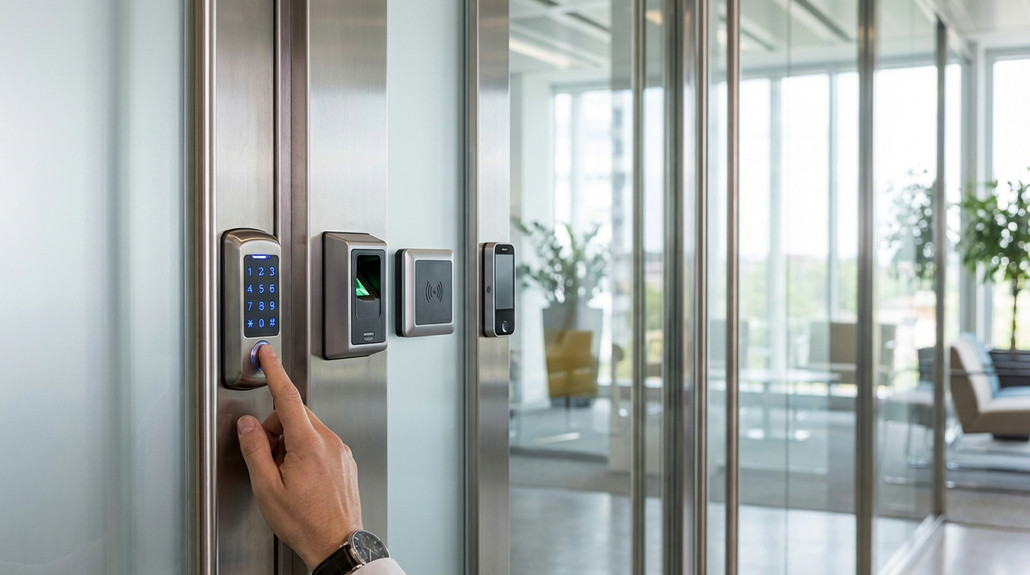
- Keypad locks, which use PIN codes for access and are popular in offices and staff-only areas
- Card-based locks are often used in hotels, multi-tenant buildings, and healthcare facilities
- Mobile-enabled smart locks allow access via smartphone apps or Bluetooth credentials
- Biometric locks, such as fingerprint readers, are used in high-security environments
Each type offers different levels of control, convenience, and integration capability.
Door Type and Hardware Compatibility
One of the most common mistakes in selecting a digital lock is overlooking door and hardware compatibility. Commercial doors vary widely in construction, thickness, and function.
Before choosing a digital lock, specifiers must confirm compatibility with:
- Cylindrical or mortise door preparations
- Fire-rated door assemblies
- Existing exit devices or closers
- Door material (wood, hollow metal, aluminum storefront)
Many commercial projects rely on electrified locking hardware that integrates seamlessly with traditional mechanical components, ensuring smooth operation without compromising security.
Smart Locks and Fire-Rated Doors
Fire-rated doors introduce additional requirements for digital locks. Any electronic locking hardware used on a rated opening must allow free egress and maintain positive latching during a fire event.
Key considerations include:
- Fail-safe vs. fail-secure operation
- Compatibility with fire alarm systems
- Listing for use on fire-rated assemblies
In these applications, digital locks are often paired with commercial door closers to ensure doors close and latch properly when power is interrupted or alarms are activated.
Access Control Integration and Scalability
One of the biggest advantages of commercial digital locks is their ability to integrate with broader access control systems. This allows facilities to manage credentials centrally and adjust access as staffing or security needs change.
Commercial smart locks may integrate with:
- Central access control panels
- Time and attendance systems
- Video surveillance systems
- Building management platforms
For facilities planning future expansion, scalability is critical. Choosing a system that can grow with the building prevents costly rip-and-replace upgrades later.
Power, Maintenance, and Reliability
Unlike mechanical locks, digital locks rely on power, either battery-based or hardwired. In commercial environments, reliability and maintenance planning are essential.
Specifiers should evaluate:
- Battery life and replacement procedures
- Low-battery alerts and monitoring
- Backup mechanical key access
- Durability under heavy use
High-quality commercial digital locks are designed to fail safely and continue operating reliably even during power interruptions.
Security Levels and ANSI/BHMA Standards
Commercial smart locks must meet the same performance expectations as mechanical locks. Many are tested under ANSI/BHMA standards, ensuring resistance to forced entry and long-term durability.
For high-traffic or high-security openings, specifiers should prioritize:
- ANSI/BHMA Grade 1 performance
- Reinforced lock bodies
- Tamper-resistant construction
Selecting properly rated products reduces risk and supports long-term security objectives.
Installation and Professional Support
Even the best digital lock can underperform if improperly installed or configured. Commercial installations often require coordination between hardware installers, electricians, and IT teams.
Working with an experienced supplier like National Lock Supply ensures access to:
- Product selection guidance
- Compatibility verification
- Post-installation support
This level of support is especially important when integrating digital locks into existing commercial door systems.
Conclusion: Choosing the Right Commercial Smart Lock
Commercial smart and digital locks offer powerful tools for managing access, improving security, and streamlining operations, but only when selected and specified correctly. By evaluating door compatibility, security needs, access control integration, and long-term scalability, facilities can choose solutions that deliver real value.
Whether you need electrified mortise locks for high-security applications or commercial-grade mortise locksets that can be upgraded with smart credentials, sourcing through National Lock Supply provides access to proven, commercial-grade solutions backed by expert guidance. With the right system in place, digital locks become a reliable, secure, and future-ready component of modern commercial buildings.