 SAME DAY & EXPEDITED SHIPPING AVAILABLE






How to Choose the Best Commercial Deadbolts
Posted by National Lock Supply on Jan 14th 2026
Commercial deadbolts remain one of the most trusted mechanical security solutions for protecting offices, retail spaces, healthcare facilities, and institutional buildings. While newer technologies like smart locks and access control systems continue to grow, a properly specified commercial deadbolt still provides reliable, code-compliant, and cost-effective security, especially for perimeter doors and controlled interior spaces.
As with any critical security hardware, choosing the right commercial deadbolt starts with working with a reputable supplier that understands commercial applications and provides strong customer support, such as National Lock Supply. An experienced supplier helps ensure deadbolts meet ANSI/BHMA requirements, integrate with existing door hardware, and perform reliably under real-world commercial use.
What Is a Commercial Deadbolt?
A commercial deadbolt is a locking device that secures a door by extending a solid bolt into the door frame, independent of the latch mechanism. Unlike spring latches, deadbolts cannot be forced open by manipulating the latch, making them highly resistant to prying and forced entry.
In commercial buildings, deadbolts are commonly used on:
- Exterior perimeter doors
- Office suites and secured rooms
- Storage and utility areas
- After-hours security doors
Commercial deadbolts are typically sourced from commercial mechanical lock systems designed to meet higher durability and security standards than residential products.
Why Commercial Deadbolts Are Different from Residential Deadbolts
Commercial deadbolts are engineered for far more demanding environments than residential locks. They must withstand frequent use, attempted forced entry, and long-term wear while remaining compliant with building and fire codes.
Key differences include:
- ANSI/BHMA Grade 1 or Grade 2 ratings for strength and durability
- Heavier bolt construction with longer bolt throws
- Reinforced housings and mounting hardware
- Compatibility with commercial door materials and frames
Using residential-grade deadbolts on commercial doors often results in premature failure, security vulnerabilities, and inspection issues.
Single Cylinder vs. Double Cylinder Deadbolts
One of the first decisions when selecting a commercial deadbolt is choosing between single-cylinder and double-cylinder configurations. Each serves a different purpose and has specific code implications.
Before selecting a type, it's important to understand how they differ:
- Single-cylinder deadbolts are operated by a key from the exterior and a thumbturn from the interior. They are the most common choice for commercial applications due to ease of egress.
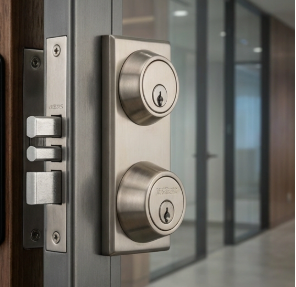
- Double-cylinder deadbolts require a key on both sides of the door and are typically restricted or prohibited by code in many occupancies due to egress concerns.
Most commercial facilities standardize on single-cylinder deadbolts to maintain life-safety compliance while still achieving strong security.
ANSI/BHMA Grades and Security Performance
ANSI/BHMA grading is one of the most important factors when choosing a commercial deadbolt. These grades indicate how well a lock performs under forced entry, cycle testing, and torque resistance.
Commercial deadbolts are commonly classified as:
- Grade 1 — Heavy-duty commercial and institutional use
- Grade 2 — Light commercial and high-end residential use
- Grade 3 — Residential use only
For exterior doors and high-risk areas, Grade 1 deadbolts are strongly recommended. Exploring commercial-grade deadbolt options from trusted manufacturers helps ensure compliance and long-term reliability.
Deadbolt Functions and Keying Options
Commercial deadbolts are available in several functional and keying configurations to support different security strategies. Selecting the right option ensures the deadbolt integrates with the building's access control plan.
Common considerations include:
- Standard keyed deadbolts for controlled access
- Deadbolts compatible with master key systems
- Deadbolts designed for interchangeable core cylinders
Many facilities coordinate deadbolts with existing key systems by selecting compatible interchangeable cores, simplifying rekeying and long-term key management.
Deadbolts and Fire-Rated Doors
Deadbolt use on fire-rated doors must be carefully evaluated. In many cases, deadbolts are not permitted on fire-rated egress doors because they can interfere with required latching and free exit.
When allowed, fire-rated deadbolts must:
- Be listed for use on rated assemblies
- Not impede free egress
- Be coordinated with approved latching hardware
Specifiers should always verify code requirements and listings before installing deadbolts on fire-rated doors.
Materials and Finishes for Commercial Deadbolts
Material selection affects both security and longevity. Commercial deadbolts must resist corrosion, wear, and tampering.
Common materials include:
- Solid brass, valued for durability and smooth operation
- Hardened steel bolts, providing resistance to sawing and prying
- Stainless steel components are ideal for exterior and humid environments
Finishes such as satin chrome or satin stainless steel are commonly selected to coordinate with other commercial door hardware.
Coordinating Deadbolts with Other Door Hardware
Deadbolts should never be specified in isolation. Proper coordination with other door components ensures smooth operation and long-term performance.
Commercial deadbolts are often paired with:
- Commercial door hinges rated for door weight and usage
- Door closers that ensure consistent door positioning
- Reinforced strikes and frames for added security
Selecting properly rated hardware for the complete door assembly helps maintain alignment and reduces stress on the locking mechanism.
Installation and Maintenance Considerations
Even the best commercial deadbolt can underperform if installed incorrectly. Proper door preparation and alignment are critical to security and ease of operation.
Installers should confirm:
- Correct backset and door thickness
- Secure strike reinforcement
- Smooth bolt extension and retraction
- Alignment with frame and latch hardware
Routine inspection and maintenance help ensure deadbolts continue to perform as intended over time.
Conclusion: Choosing the Right Commercial Deadbolt
Commercial deadbolts remain a foundational security component for many commercial buildings. When properly selected, they provide dependable protection, long service life, and compliance with industry standards.
By sourcing commercial deadbolts and mechanical locking hardware through a trusted supplier like National Lock Supply, facilities gain access to ANSI/BHMA-rated products, compatible cylinders, and expert support. With the right deadbolt selection, commercial doors deliver consistent security and peace of mind for years to come.