 SAME DAY & EXPEDITED SHIPPING AVAILABLE






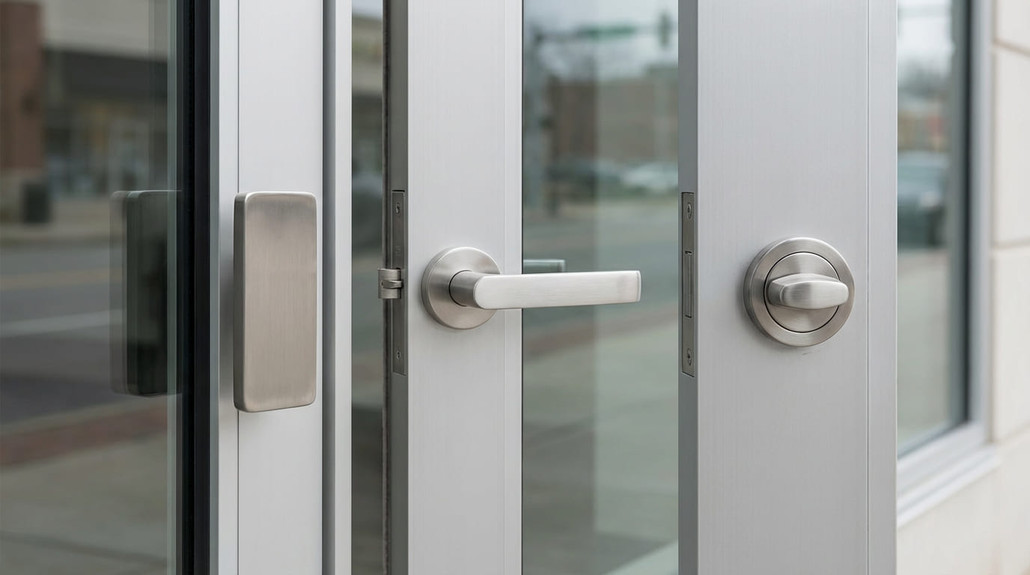
How to Choose Storefront Door Trims: Paddle vs Lever
Posted by National Lock Supply on Feb 17th 2026
Storefront trim looks like a “feel” decision until you’re dealing with a door that cycles all day, gets pulled from every angle, and still has to operate cleanly at closing time. On narrow-stile aluminum doors, trim selection affects more than comfort—it influences durability, user behavior, and whether the opening stays reliable or becomes a steady source of service calls.
This guide compares paddle vs lever trim the way pros do it in the field: not by preference, but by traffic, control, and compatibility. You’ll also learn where interior turn control fits, what to verify before ordering, and a simple process you can reuse on almost any storefront retrofit.
Start Here: The 60-Second Pick
If you want the fast answer, start with how people actually use the door.
- High-traffic customer entry (retail): paddle trim often wins because it’s intuitive, forgiving, and less sensitive to sloppy user behavior.
- Staff-only doors or controlled office entries: lever trim often makes sense when you want consistent operation, a familiar feel across the building, and more deliberate use.
- Replacing existing hardware: your best shortcut is matching what the door is already prepped for—start by checking Storefront Trims so you’re sourcing within the right storefront family before you narrow down a specific trim.
Paddle Trim: Built for Speed, Traffic, and “Imperfect” Users
Paddle trim is popular on storefront doors for a simple reason: it matches how people move. Customers don’t always grab a handle cleanly—they push with a shoulder, a bag, an elbow, a cart. Paddle trim tends to survive that reality better because the operating motion is broad and intuitive, which reduces awkward torque and the “yank-and-twist” abuse that destroys trim over time.
Where paddle trim shines most:
- Busy retail entries with constant cycles
- Doors where users may be distracted or carrying items
- Openings where you want fast, uncomplicated operation
The key caveat: paddle trim can feel fine even when the door isn’t perfectly aligned—until latching becomes inconsistent. If you’re pairing trim selection with a lock replacement, keep the lock family in mind too (many busy storefront entries are built around deadlatch-style setups). When that’s your scenario, it helps to cross-check the hardware path in Storefront Deadlatches before you finalize how the door will be operated.
Lever Trim: When You Want Control and Consistency
Lever trim tends to be the “facility standard” choice—especially in properties where levers are used everywhere else. It gives a controlled operating motion, can feel more deliberate, and often fits better in staff-managed environments where the door isn’t being slammed or shoved by unpredictable traffic.
Where lever trim is a strong fit:
- Staff-only entries and back-of-house doors
- Offices and multi-tenant buildings where you want a consistent feel
- Openings where you’re trying to reduce aggressive pushing or slamming
Lever trim also pairs naturally with security-forward storefront openings where the goal isn’t just convenience—it’s control and after-hours protection. In those cases, the trim choice should align with the lock family you’re using. If you’re building around a more security-forward setup, reviewing Storefront Deadlocks can help you keep the whole system aligned: lock body, operation style, and real-world use case.
Don’t Skip This: Function and Key Control Decide More Than Style
Most “wrong trim” installs aren’t really about paddle vs lever—they’re about function mismatch. Before you choose a style, clarify two things:
1) What should the exterior side do? (controlled entry, always locked, etc.) 2) What should the interior side allow? (simple egress, quick control, staff convenience)
This is where interior turn control can matter. Some storefront configurations rely on interior turning components (depending on how the opening is managed), and choosing the wrong format creates a door that technically installs but operates poorly. If your application needs the correct interior turn interface, check Thumbturns to match the right format to your storefront configuration.
And if your trim setup requires a specific cylinder format to operate correctly, confirm compatibility early—cylinders are one of the most common “everything fits except it doesn’t work” issues on storefront retrofits. A quick review of Cylinders can prevent that late-stage surprise.
Fitment Checks That Prevent Callbacks
Storefront trim success is usually decided before the order is placed. Confirm these first:
- Handing and door swing: left/right swing and swing direction can impact fit and feel.
- Door thickness and stile clearance: storefront stiles are tight; clearance matters.
- Existing prep / mounting footprint: retrofit installs live and die by footprint alignment.
- Alignment: a sagging door will make “perfect” trim feel wrong and wear faster.
If you’re missing any of these, measure first—returns cost more than five minutes on-site.
A Simple “Choose the Right Trim” Process
If you want one method you can reuse on most storefront openings:
1) Define the use case: customer entry, staff entry, or mixed. 2) Choose the operating style: paddle for fast/forgiving traffic; lever for controlled/standardized operation. 3) Match function to behavior: exterior control and interior convenience should reflect how the door is managed. 4) Confirm fitment: handing, thickness, clearance, mounting footprint. 5) Validate the operating interface: confirm cylinder/turn components match the configuration.
Common Problems (And What They Usually Mean)
Trim feels loose quickly Often a mounting mismatch, missing reinforcement, or door movement causing accelerated wear.
Door “works” but doesn’t latch consistently Usually alignment/engagement issues—not trim style. Fix door/frame relationship first.
Users abuse the hardware A sign the operating style doesn’t match user behavior. High-traffic customer doors often benefit from more intuitive operation.
FAQs
Is paddle or lever “more secure”?
Security is primarily driven by the lock family, prep, and installation quality. Trim influences operation and durability more than raw security.
Which is better for a busy retail storefront entry?
Often paddle, because it’s intuitive under chaotic traffic. Fitment and function still decide the final answer.
When does interior turn control matter most?
When staff need quick control from the inside, and the system is designed around that operation—matching the correct format prevents “it installs but operates wrong.”
Why Buy Storefront Door Trims at National Lock Supply
When you’re sourcing storefront trims, the easiest way to avoid wrong orders is to shop within the correct storefront trim family first, then confirm function and fitment before narrowing down to a specific unit. National Lock Supply’s storefront category structure makes that workflow straightforward—so you can compare paddle vs lever trim options in the right context, match them to your lock family, and keep your replacement clean (and callback-free) on narrow-stile aluminum doors.
How to Choose a Wrap Around Door Plate: Sizing Guide
Meta Title (≤65): How to Choose a Wrap Around Door Plate: Sizing Guide Meta Description: Learn how to choose the right wrap around door plate. Use this sizing guide to match door thickness, prep, lock type, and reinforcement needs—without misorders.
A wrap around door plate is one of those “small” upgrades that can save a job. When a commercial door has been slammed for years, drilled out, repaired badly, or forced at the lock edge, the problem usually isn’t the lock—it’s the door. You can install a brand-new lockset and still end up with wobble, misalignment, or a latch that never quite feels solid because the material around the prep is compromised.
The goal of a wrap plate isn’t to change how the lock works. It’s to restore strength, tighten up the prep, and prevent the same failure from happening again. Done right, it reinforces the lock area, helps stabilize the installation, and can reduce repeat service calls on high-traffic openings.
What a Wrap Around Door Plate Actually Does (and When It’s Worth It)
A wrap plate reinforces the area where the lockset mounts—especially the door edge and face around the lock prep. On many commercial doors, that’s the first area to deteriorate because it absorbs repeated force: pulling, pushing, lock torque, latch impact, and (sometimes) attempts to pry.
Wrap plates are most common when you’re dealing with:
- Stripped screw holes or “wallowed out” prep from repeated lock replacements
- Door edge damage around the latch area (chips, cracks, deformation)
- Post break-in repairs where the door skin is weakened
- Retrofits where you want extra reinforcement to avoid future failure
- High-abuse openings (public-facing doors, shared entries, constant cycles)
If you’re comparing options or trying to match a specific type, start by browsing Wrap Around Plate so you’re selecting from the correct hardware family before narrowing down sizing.
Full Wrap vs Half Wrap: The Decision That Shapes Everything
Most wrap plates fall into two common approaches:
Full wrap plates
A full wrap typically reinforces more of the lock area and “wraps” around the edge, offering broader coverage. These are often chosen when the door has visible damage, the prep is oversized, or the opening is a repeat problem.
Choose full wrap when:
- The door edge is damaged or deformed
- The lock prep has been enlarged or repaired multiple times
- You want maximum reinforcement on a high-risk/high-traffic opening
Half wrap plates
A half wrap is often used when you want reinforcement without as much coverage (or when you’re trying to fit within tighter clearance constraints). These can be a practical option when the door is in decent shape but needs extra strength around the lock area.
Choose half wrap when:
- The door is mostly intact but screw holes/prep are weakening
- Clearance or aesthetics require less coverage
- You want reinforcement as prevention, not repair
A simple way to decide: if you’re fixing damage, full wrap is usually safer; if you’re preventing damage, half wrap may be enough.
The Most Common Mistake: Buying a Plate Before Confirming the Door Prep
Wrap plates feel like an easy add-on, but they still have to match reality. The door’s prep and the lock’s footprint determine whether the plate installs cleanly or turns into a “field-mod” situation.
Before you order, confirm these five items.
Wrap Plate Sizing Checklist (The Measurements That Prevent Returns)
1) Door thickness
This is non-negotiable. Door thickness affects fit and how the wrap seats against the faces and edge.
2) Existing lock prep type
You don’t need to overcomplicate this—just identify what you’re reinforcing:
- Is this a standard bored/cylindrical prep?
- Is it a different prep pattern?
- Has the door been modified?
If you’re unsure, remove the existing trim and inspect the cutout. The door will tell you what it is.
3) Bore and spacing
Measure the bore (and spacing if applicable). A wrap plate that doesn’t match the prep will either look wrong, fit wrong, or force you into unnecessary modification.
4) Backset and latch location
Even when the plate is “close,” latch location matters because the plate has to align with the edge prep and the lock body position.
5) Clearance and door/frame relationships
On some openings, clearance is tight—especially if you have added hardware, narrow frames, or unusual stops. Always check for interference before you choose the largest coverage option.
When a Wrap Plate Is the Right Fix (and When It Isn’t)
A wrap plate is ideal when the door material around the lock has lost integrity. But it’s not a magic fix for every door problem.
Wrap plates are great for:
- Reinforcing weakened door skin around the lock
- Stabilizing worn-out prep
- Preventing pull-through and reducing wobble
- Extending the life of the repair after forced entry
Wrap plates won’t fix:
- A door that’s sagging and needs hinge/pivot attention
- A misaligned frame/strike relationship
- A latch that’s failing due to incorrect lock function or wrong prep match
If the door is sagging, you can reinforce the lock area and still end up with poor latching. Fix alignment issues first when they exist—then reinforcement actually pays off.
How to Choose the Right Wrap Plate (Simple Field Process)
Step 1: Decide if you’re repairing damage or preventing future damage
If you’re repairing visible damage, lean toward more coverage. If it’s preventive reinforcement, choose the smallest plate that solves the problem cleanly.
Step 2: Confirm door thickness and prep
Measure thickness. Confirm the prep type and bore/spacing. Don’t assume.
Step 3: Choose coverage (full vs half) based on conditions
- Visible damage, heavy abuse, or repeat failures → full wrap is usually the safer call
- Mild wear, preventive reinforcement, tight clearance → half wrap may be enough
Step 4: Check clearance before you commit
Make sure the plate won’t interfere with adjacent hardware, tight frames, or unusual door details.
Step 5: Decide whether you also need security reinforcement
Sometimes the door isn’t just worn—it’s been targeted. In those cases, pairing reinforcement can make sense. If the goal includes pry resistance at the latch edge, it’s worth reviewing Latch Protectors as a complementary solution for certain openings.
Installation Notes That Keep the Plate Tight (and Reduce Callbacks)
The best wrap plate install feels “factory,” not “aftermarket.” A few practical checks help.
- Dry fit first. If it doesn’t sit flat, don’t force it—find the interference and solve it cleanly.
- Don’t use the plate to hide a misalignment problem. If the door is sagging, you’re reinforcing a moving target.
- Use reinforcement as part of a system. On high-traffic doors, protection hardware can reduce future damage.
If you’re reinforcing a door that takes constant abuse at the bottom (carts, mops, shoes, kick impact), pairing reinforcement strategies can extend the life of the opening. For that kind of wear pattern, it’s common to combine reinforcement with protection like Mop & Kick Plates on commercial entries.
And if the door is taking damage from repeated impact (especially on public-facing openings), it may also be worth addressing the root cause—impact and travel. In many buildings, simple protection hardware like Door Stops prevents the kind of repeated door-edge stress that eventually destroys the lock area.
“My Door Still Feels Loose” — What to Check Next
If you install a wrap plate and the opening still feels inconsistent, the door is telling you something. Common culprits include:
- Door sag causing latch misalignment
- Frame/strike relationship that never fully engages
- Weathering or gaps that make closure inconsistent (common on exterior storefront openings)
If the door is exterior and you’re fighting inconsistent close/latch because of gaps or draft issues, it may be worth checking the door’s sealing and transition hardware. On many storefront openings, upgrades in Thresholds/Gasketing can improve how the door closes and how consistently the latch engages—especially when the issue is “it latches sometimes, but not always.”
FAQs
Do I need a wrap plate for every lock replacement?
No. Wrap plates are most valuable when the door prep is worn, damaged, or at risk of failing (high traffic, repeated replacements, forced entry history).
Full wrap or half wrap—what’s the safer default?
If you’re repairing visible damage or the door is a repeat failure, full wrap is usually the safer default. If you’re reinforcing a mostly healthy door, half wrap can be enough.
Will a wrap plate fix a door that won’t latch?
Only if the problem is weak material around the lock prep. If the issue is sag, misalignment, or strike engagement, a wrap plate won’t solve it by itself.
Are wrap plates mainly for security?
They can help, but their primary value is reinforcement and durability. If pry resistance is the main goal, consider pairing reinforcement with the right protective hardware.
What’s the fastest way to avoid ordering the wrong plate?
Measure door thickness and confirm the existing prep before you order—especially bore/spacing and latch location.
Why Buy Wrap Around Door Plates at National Lock Supply
When you’re reinforcing a commercial door, the most expensive outcome is ordering the wrong plate, losing time on-site, and ending up with a “close enough” install that becomes a callback. National Lock Supply makes it easier to get it right by letting you shop within the correct reinforcement categories first—starting with Wrap Around Plates, then layering in complementary solutions like Latch Protectors, Mop & Kick Plates, Door Stops, and Thresholds/Gasketing when the opening needs more than just one fix. That category-driven workflow mirrors how pros actually solve door problems in the field: diagnose the wear pattern, match the hardware family, confirm measurements, and install once.
How to Choose Door Latch Guards: Anti-Pry Guide
Meta Title (≤65): How to Choose Door Latch Guards: Anti-Pry Guide Meta Description: Learn how to choose a door latch guard for anti-pry protection. Compare door swing, gap size, latch type, and install fitment to avoid wrong orders.
A latch guard (often called a latch protector) is one of the simplest upgrades you can make to stop a very specific kind of attack: prying the latch side of the door. If a tool can get into the gap between the door and frame, an attacker isn’t trying to “pick” the lock—they’re trying to reach the latch, manipulate the keeper area, or create enough flex to defeat the door’s latching point.
The good news is that choosing the right latch guard usually isn’t complicated. The bad news is that storefront and commercial openings vary a lot, and the wrong guard can interfere with closing, clash with the strike area, or simply fail to cover the vulnerability you’re trying to solve. This guide walks you through a clean, field-friendly way to choose the right guard the first time.
Start Here: The 60‑Second Pick
If you need the fastest decision, don’t start with the product—start with the door.
If the opening has a noticeable gap on the latch side and you can imagine a pry tool getting purchase, you’re already in latch-guard territory. From there, your choice comes down to swing direction, how big the gap is, and how the door actually latches (spring latch vs bolt). If you want to see the range of styles that typically fit commercial doors, begin by exploring Latch Protectors and then use the checks below to narrow to the correct coverage and fit.
What Latch Guards Actually Protect (and What They Don’t)
A latch guard’s job is simple: block access to the latch-side gap so there’s no room to pry, shim, or attack the latch/strike area. That’s why latch guards are especially common on doors where the latch edge is exposed and the frame reveal is generous.
What latch guards don’t do is fix door problems that create gaps in the first place. If the door is sagging, the strike is misaligned, or the opening is “racking” under use, a guard can end up covering symptoms while the door continues to drift.
Think of a latch guard as “closing the attack lane,” not correcting the geometry of the opening.
The 3 Fitment Checks That Decide Everything
1) Door swing and latch-side exposure
The most important question isn’t brand or finish—it’s whether the latch side is vulnerable. Some doors expose the latch edge and gap in a way that makes prying easy; others are naturally tighter. Your guard choice should match where the exposure exists and how the door moves.
2) Gap size (reveal) and the coverage you actually need
If the gap is small, you can often use a simpler guard. If the gap is wider—or the door flexes under force—you typically need more coverage that blocks tool access across a larger span. This is where measuring saves you: you’re not trying to “make it work,” you’re trying to cover the vulnerability completely without interfering with the strike area.
3) Latch type: spring latch vs bolt engagement
A latch guard helps protect the latch-side interface, but your door’s actual locking matters too. Many prying attempts target spring-latch behavior; deeper, more positive bolt engagement changes the risk profile. If the opening is high-risk and you want to step up the locking side (not just shield the gap), it’s worth reviewing Deadbolts as part of a broader security upgrade plan.
Choosing the Right Style (Without Overthinking It)
Most latch guards fall into a few practical “families.” The trick is selecting the family that matches your door conditions.
Standard coverage guards (most common)
These are the go-to when you have a typical latch-side gap and you want straightforward anti-pry protection. They’re ideal when the door is otherwise in good shape and you’re not fighting a damaged edge or sloppy prep.
Heavy-duty / extended coverage guards
If the gap is larger, the opening sees abuse, or you’ve seen past tampering at the latch side, extended coverage is often the smarter move. More coverage generally means fewer “workarounds” and fewer opportunities for someone to attack the latch/strike interface.
When the strike area itself is part of the problem
Sometimes the vulnerability isn’t just the gap—it’s also weak strike reinforcement, poor engagement, or worn parts around the latch entry point. If the opening needs attention there, exploring Latches, Strikes, & Parts can help you address the “other half” of the problem: proper engagement and reinforcement at the frame side.
When a Latch Guard Isn’t Enough (and What Pros Add Next)
If the door edge is damaged, cracked, or “soft” around the lock prep, a latch guard alone can be a partial fix. In those cases, the right move is often to reinforce the door first, then protect the latch gap.
That’s exactly where a door reinforcer comes in. If you’re seeing splitting, enlarged prep, or a history of forced-entry repairs near the lock area, pairing latch protection with reinforcement makes the whole assembly more stable. For doors that need that kind of structural help, check Wrap Around Plate options before you finalize your latch guard—because reinforcement can change how cleanly everything fits.
The Hidden Cause of Pry Vulnerability: Door Sag and Drift
Here’s what happens on many commercial doors: a small alignment issue becomes a bigger gap over time. As the door sags, the reveal shifts, latch engagement gets inconsistent, and the latch side becomes easier to attack simply because there’s more room to work with.
If you’re dealing with heavy doors, high traffic, or repeated alignment drift, it’s often worth addressing the root cause—not just shielding the symptom. Upgrading support can stabilize the opening and reduce the gap that made the latch side vulnerable in the first place. For doors that need full-height support and better weight distribution, explore Continuous Hinges as a long-term stability upgrade.
A Simple “Choose the Right Latch Guard” Process
If you want a reliable field method, use this:
1) Confirm where the vulnerability is (latch-side gap, tool access, visible pry marks). 2) Measure the gap and decide how much coverage you need. 3) Check latch/bolt behavior and whether you’re also upgrading locking strength. 4) Verify strike-side condition (engagement, reinforcement, worn parts). 5) Look for alignment drift—if the door is sagging, fix the cause so the guard stays effective.
This approach keeps the decision grounded: protect the gap, ensure engagement, stabilize the door.
FAQs
Do latch guards work on any commercial door?
They work when the issue is pry access at the latch side. If the door is failing because of sag, poor engagement, or damaged prep, you may need reinforcement or alignment corrections as well.
Will a latch guard stop someone from kicking the door in?
It’s designed primarily for prying and latch-side manipulation. For broader security, consider overall door/frame reinforcement and stronger locking engagement.
Should I upgrade the strike when adding a latch guard?
Often, yes—especially if the strike area is worn, loose, or not engaging consistently. Good engagement and reinforcement complement latch-side protection.
Why does my latch side gap keep getting bigger?
Common causes include door sag, worn pivots/hinges, or frame/door movement over time. Stabilizing the opening can reduce vulnerability long-term.
Why Buy Door Latch Guards at National Lock Supply
The fastest way to avoid wrong orders on latch guards is to shop by the correct hardware family first, then narrow by the few fitment facts that actually matter: door swing, gap size, latch type, and interference around the strike area. National Lock Supply makes that workflow simple by letting you start inside the right categories—like Latch Protectors—and then build a complete fix when the job needs more than one component (reinforcement via Wrap Around Plate, engagement upgrades in Latches, Strikes, & Parts, stability improvements like Continuous Hinges, or stronger locking options such as Deadbolts). That’s how pros keep anti-pry upgrades clean: diagnose the opening, match the category, confirm measurements, and install once.