 SAME DAY & EXPEDITED SHIPPING AVAILABLE






How to Choose an Electric Strike
Posted by National Lock Supply on Mar 5th 2026
An electric strike is the most installation-sensitive component in access control hardware. Unlike a magnetic lock where the worst specification error is a mounting bracket mismatch, an electric strike that is incompatible with the existing lock body requires frame modification to correct. The strike must match the lock type, the fail mode must match the application's code requirements, the voltage must match the power supply, and the faceplate must match the frame cutout. All four variables are fixed by the existing opening before a single product is evaluated.
What an Electric Strike Does
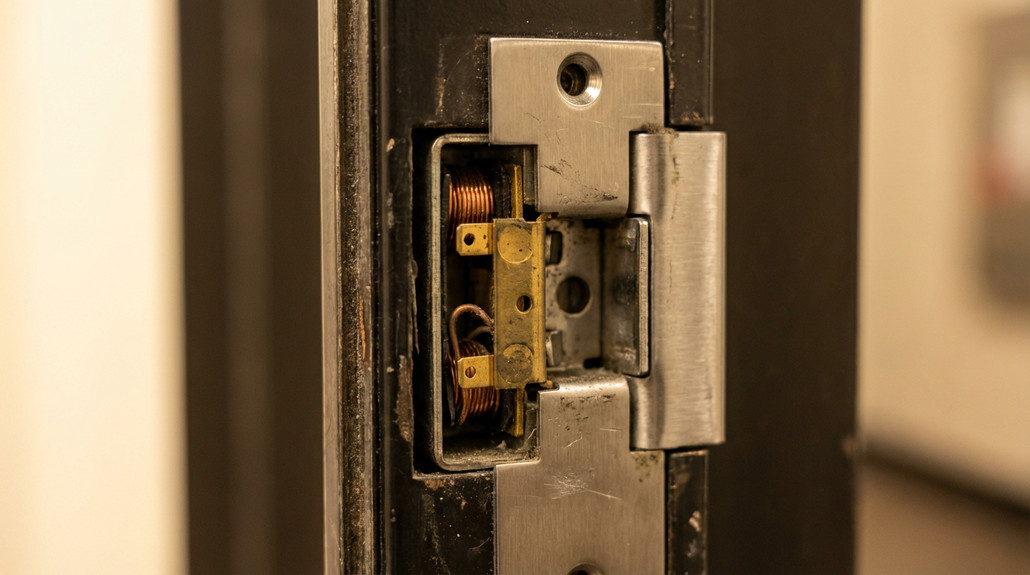
An electric strike replaces the fixed strike plate in the door frame with a pivoting keeper that holds the latch bolt in the secured position and pivots to release it when energized. The lock body on the door continues to operate mechanically at all times. A properly installed electric strike resists shimming and carding attacks because the keeper is spring-loaded and does not respond to lateral force.
First Decision: Lock Type Compatibility
Cylindrical electric strikes use an angled keeper that captures the round latch bolt of a cylindrical lockset. The most common commercial standard is the ANSI 4-7/8" x 1-1/4" faceplate dimension. Mortise electric strikes use a different keeper geometry for the rectangular mortise latch bolt and are not interchangeable with cylindrical strikes even when faceplates appear similar. Rim exit electric strikes engage the rim latch at the door edge and are designed for specific exit device product lines, not interchangeable between manufacturers. Adams Rite and narrow stile aluminum doors use the Adams Rite 7400 series exclusively.
|
Existing lock body |
Required strike type |
|---|---|
|
Cylindrical lever or knob lockset |
Cylindrical electric strike |
|
Mortise lockset |
Mortise electric strike |
|
Rim panic exit device |
Rim exit electric strike |
|
Adams Rite storefront lock |
Adams Rite series |
Fail-Safe vs. Fail-Secure
Fail-safe means power interruption releases the keeper, allowing the door to open without credentials. This is required on any door on a required egress path under NFPA 101. Fail-secure means power interruption holds the keeper locked, appropriate for storerooms and secured areas not on required egress paths. The correct fail mode is determined entirely by whether the door appears on the building's life safety plan as a required means of egress.
Voltage and Current
DC operation produces quiet solenoid action, which is the correct specification for any environment where noise is noticeable. AC produces a characteristic buzzing appropriate only for industrial areas. At equal power, 24VDC operation draws half the current of 12VDC, making it the preferred specification for new installations. For retrofits, match the existing system voltage to avoid replacing the power supply.
The solenoid draws 3 to 5 times its steady-state current for the first 20 to 100 milliseconds when energized. An access control power supply specified only for steady-state current will trigger overcurrent protection on every access event. Power supply specification must account for inrush across all strikes on the circuit simultaneously.
Faceplate Standards: ANSI vs. ASA
ANSI standard faceplates have square corners at 0-inch radius, which is standard in US commercial construction built to ANSI A115 door prep standards. ASA standard faceplates have rounded corners at 1/8-inch radius, common in pre-1980 buildings and European hardware. Using the wrong faceplate standard requires frame chiseling or leaves visible gaps. The electric strike faceplate guide covers measurement methodology and the implications for each standard.
Special Application Strikes
High-security applications require strikes rated to 1,500 pounds or higher in shear load. SDC manufactures a high-security series with reinforced keeper mechanisms tested for these applications. Exterior applications require strikes with sealed solenoid assemblies and stainless keeper components. The electric strike parts and accessories line covers weatherproofing options. Double door openings require flush bolts on the inactive leaf because a strike on the active leaf alone can be bypassed by opening the inactive leaf out of sequence.
Top Brands by Application
HES (ASSA ABLOY): most widely specified in commercial cylindrical applications. 1006 series is the Grade 1 commercial standard; 5000 series is high-security. Trine: rim latch and low-voltage cylindrical applications. Folger Adam: institutional and corrections standard for government and healthcare behavioral applications. ROFU: narrow-stile and storefront electric strike applications.