 SAME DAY & EXPEDITED SHIPPING AVAILABLE






How to Choose a Wrap Around Door Plate: Sizing Guide
Posted by National Lock Supply on Feb 9th 2026
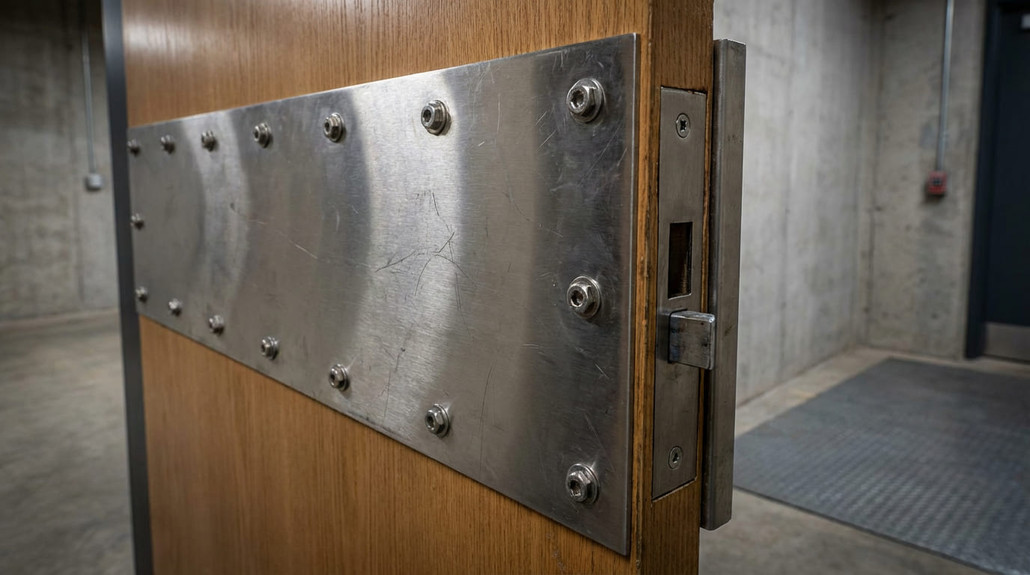
A wrap around door plate is one of those “small” upgrades that can save a job. When a commercial door has been slammed for years, drilled out, repaired badly, or forced at the lock edge, the problem usually isn’t the lock—it’s the door. You can install a brand-new lockset and still end up with wobble, misalignment, or a latch that never quite feels solid because the material around the prep is compromised.
The goal of a wrap plate isn’t to change how the lock works. It’s to restore strength, tighten up the prep, and prevent the same failure from happening again. Done right, it reinforces the lock area, helps stabilize the installation, and can reduce repeat service calls on high-traffic openings.
What a Wrap Around Door Plate Actually Does (and When It’s Worth It)
A wrap plate reinforces the area where the lockset mounts—especially the door edge and face around the lock prep. On many commercial doors, that’s the first area to deteriorate because it absorbs repeated force: pulling, pushing, lock torque, latch impact, and (sometimes) attempts to pry.
Wrap plates are most common when you’re dealing with:
- Stripped screw holes or “wallowed out” prep from repeated lock replacements
- Door edge damage around the latch area (chips, cracks, deformation)
- Post break-in repairs where the door skin is weakened
- Retrofits where you want extra reinforcement to avoid future failure
- High-abuse openings (public-facing doors, shared entries, constant cycles)
If you’re comparing options or trying to match a specific type, start by browsing Wrap Around Plate so you’re selecting from the correct hardware family before narrowing down sizing.
Full Wrap vs Half Wrap: The Decision That Shapes Everything
Most wrap plates fall into two common approaches:
Full wrap plates
A full wrap typically reinforces more of the lock area and “wraps” around the edge, offering broader coverage. These are often chosen when the door has visible damage, the prep is oversized, or the opening is a repeat problem.
Choose full wrap when:
- The door edge is damaged or deformed
- The lock prep has been enlarged or repaired multiple times
- You want maximum reinforcement on a high-risk/high-traffic opening
Half wrap plates
A half wrap is often used when you want reinforcement without as much coverage (or when you’re trying to fit within tighter clearance constraints). These can be a practical option when the door is in decent shape but needs extra strength around the lock area.
Choose half wrap when:
- The door is mostly intact but screw holes/prep are weakening
- Clearance or aesthetics require less coverage
- You want reinforcement as prevention, not repair
A simple way to decide: if you’re fixing damage, full wrap is usually safer; if you’re preventing damage, half wrap may be enough.
The Most Common Mistake: Buying a Plate Before Confirming the Door Prep
Wrap plates feel like an easy add-on, but they still have to match reality. The door’s prep and the lock’s footprint determine whether the plate installs cleanly or turns into a “field-mod” situation.
Before you order, confirm these five items.
Wrap Plate Sizing Checklist (The Measurements That Prevent Returns)
1) Door thickness
This is non-negotiable. Door thickness affects fit and how the wrap seats against the faces and edge.
2) Existing lock prep type
You don’t need to overcomplicate this—just identify what you’re reinforcing:
- Is this a standard bored/cylindrical prep?
- Is it a different prep pattern?
- Has the door been modified?
If you’re unsure, remove the existing trim and inspect the cutout. The door will tell you what it is.
3) Bore and spacing
Measure the bore (and spacing if applicable). A wrap plate that doesn’t match the prep will either look wrong, fit wrong, or force you into unnecessary modification.
4) Backset and latch location
Even when the plate is “close,” latch location matters because the plate has to align with the edge prep and the lock body position.
5) Clearance and door/frame relationships
On some openings, clearance is tight—especially if you have added hardware, narrow frames, or unusual stops. Always check for interference before you choose the largest coverage option.
When a Wrap Plate Is the Right Fix (and When It Isn’t)
A wrap plate is ideal when the door material around the lock has lost integrity. But it’s not a magic fix for every door problem.
Wrap plates are great for:
- Reinforcing weakened door skin around the lock
- Stabilizing worn-out prep
- Preventing pull-through and reducing wobble
- Extending the life of the repair after forced entry
Wrap plates won’t fix:
- A door that’s sagging and needs hinge/pivot attention
- A misaligned frame/strike relationship
- A latch that’s failing due to incorrect lock function or wrong prep match
If the door is sagging, you can reinforce the lock area and still end up with poor latching. Fix alignment issues first when they exist—then reinforcement actually pays off.
How to Choose the Right Wrap Plate (Simple Field Process)
Step 1: Decide if you’re repairing damage or preventing future damage
If you’re repairing visible damage, lean toward more coverage. If it’s preventive reinforcement, choose the smallest plate that solves the problem cleanly.
Step 2: Confirm door thickness and prep
Measure thickness. Confirm the prep type and bore/spacing. Don’t assume.
Step 3: Choose coverage (full vs half) based on conditions
- Visible damage, heavy abuse, or repeat failures → full wrap is usually the safer call
- Mild wear, preventive reinforcement, tight clearance → half wrap may be enough
Step 4: Check clearance before you commit
Make sure the plate won’t interfere with adjacent hardware, tight frames, or unusual door details.
Step 5: Decide whether you also need security reinforcement
Sometimes the door isn’t just worn—it’s been targeted. In those cases, pairing reinforcement can make sense. If the goal includes pry resistance at the latch edge, it’s worth reviewing Latch Protectors as a complementary solution for certain openings.
Installation Notes That Keep the Plate Tight (and Reduce Callbacks)
The best wrap plate install feels “factory,” not “aftermarket.” A few practical checks help.
- Dry fit first. If it doesn’t sit flat, don’t force it—find the interference and solve it cleanly.
- Don’t use the plate to hide a misalignment problem. If the door is sagging, you’re reinforcing a moving target.
- Use reinforcement as part of a system. On high-traffic doors, protection hardware can reduce future damage.
If you’re reinforcing a door that takes constant abuse at the bottom (carts, mops, shoes, kick impact), pairing reinforcement strategies can extend the life of the opening. For that kind of wear pattern, it’s common to combine reinforcement with protection like Mop & Kick Plates on commercial entries.
And if the door is taking damage from repeated impact (especially on public-facing openings), it may also be worth addressing the root cause—impact and travel. In many buildings, simple protection hardware like Door Stops prevents the kind of repeated door-edge stress that eventually destroys the lock area.
“My Door Still Feels Loose” — What to Check Next
If you install a wrap plate and the opening still feels inconsistent, the door is telling you something. Common culprits include:
- Door sag causing latch misalignment
- Frame/strike relationship that never fully engages
- Weathering or gaps that make closure inconsistent (common on exterior storefront openings)
If the door is exterior and you’re fighting inconsistent close/latch because of gaps or draft issues, it may be worth checking the door’s sealing and transition hardware. On many storefront openings, upgrades in Thresholds/Gasketing can improve how the door closes and how consistently the latch engages—especially when the issue is “it latches sometimes, but not always.”
FAQs
Do I need a wrap plate for every lock replacement?
No. Wrap plates are most valuable when the door prep is worn, damaged, or at risk of failing (high traffic, repeated replacements, forced entry history).
Full wrap or half wrap—what’s the safer default?
If you’re repairing visible damage or the door is a repeat failure, full wrap is usually the safer default. If you’re reinforcing a mostly healthy door, half wrap can be enough.
Will a wrap plate fix a door that won’t latch?
Only if the problem is weak material around the lock prep. If the issue is sag, misalignment, or strike engagement, a wrap plate won’t solve it by itself.
Are wrap plates mainly for security?
They can help, but their primary value is reinforcement and durability. If pry resistance is the main goal, consider pairing reinforcement with the right protective hardware.
What’s the fastest way to avoid ordering the wrong plate?
Measure door thickness and confirm the existing prep before you order—especially bore/spacing and latch location.
Why Buy Wrap Around Door Plates at National Lock Supply
When you’re reinforcing a commercial door, the most expensive outcome is ordering the wrong plate, losing time on-site, and ending up with a “close enough” install that becomes a callback. National Lock Supply makes it easier to get it right by letting you shop within the correct reinforcement categories first—starting with Wrap Around Plates, then layering in complementary solutions like Latch Protectors, Mop & Kick Plates, Door Stops, and Thresholds/Gasketing when the opening needs more than just one fix. That category-driven workflow mirrors how pros actually solve door problems in the field: diagnose the wear pattern, match the hardware family, confirm measurements, and install once.