 SAME DAY & EXPEDITED SHIPPING AVAILABLE






Complete Guide To Commercial Lever Door Handles
Posted by National Lock Supply on Jan 20th 2026
Lever door handles are one of the most widely specified hardware components in modern buildings, yet they’re often underestimated in terms of their impact on accessibility, durability, and code compliance. In commercial facilities especially, the choice of lever handle directly affects user safety, ADA compliance, maintenance costs, and overall door performance. From office buildings and healthcare facilities to schools and mixed-use properties, lever handles have become the standard operating hardware for most swinging doors.
This complete guide explains everything facility managers, contractors, and specifiers need to know about lever door handles—from how they work and where they’re used, to materials, finishes, ANSI/BHMA grades, and proper selection. Whether you’re replacing outdated doorknobs, specifying hardware for new construction, or upgrading doors to meet accessibility requirements, understanding lever handles at a professional level ensures long-term performance and compliance.
What Is a Lever Door Handle?
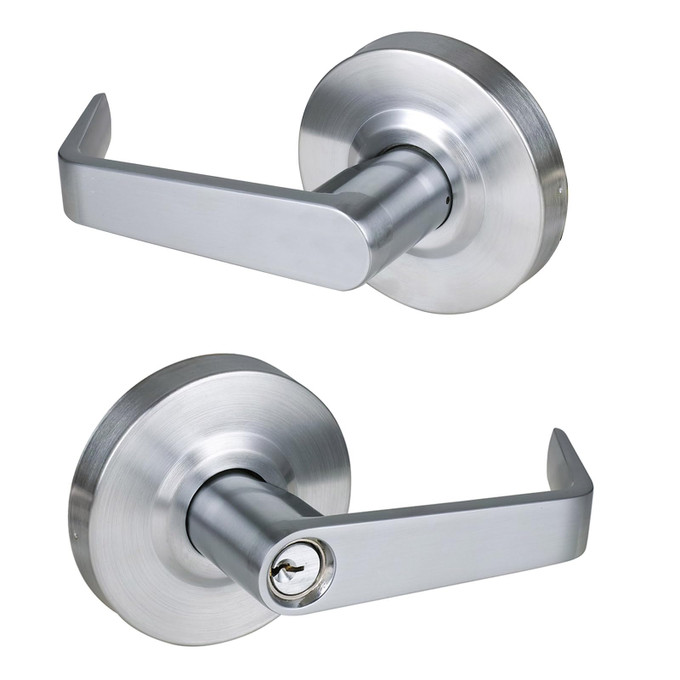
A lever door handle is a horizontal operating device that retracts a latch when pressed downward or upward, allowing the door to open. Unlike round knobs, levers do not require tight grasping, pinching, or wrist rotation, which makes them significantly easier to operate for a wide range of users.
From a hardware standpoint, lever handles are most commonly integrated into cylindrical or mortise locksets, depending on door construction and security requirements. In commercial environments, these lever locksets are engineered for durability and frequent use, often paired with reinforced latches and heavy-duty chassis. For facilities specifying or replacing commercial-grade lever locksets, reviewing commercial mechanical locksets such as those found in National Lock Supply’s Mechanical Locks category is a common starting point for ensuring ANSI/BHMA compliance and long service life.
How Lever Door Handles Work
Lever handles operate by converting rotational movement into linear latch retraction. While exterior lever designs may vary in shape and length, the internal mechanics follow consistent commercial standards.
Inside a typical lever handle assembly, several components work together to ensure smooth operation:
- Spindle and hub assemblies that transmit lever movement through the door to the latch
- Return springs that bring the lever back to a horizontal position after each use
- Spring-loaded latchbolts that retract and extend smoothly into the strike
In commercial installations, these internal components are cycle-tested for durability and designed to maintain alignment under constant use. Properly specified lever handles integrate seamlessly with other architectural hardware, contributing to consistent door operation across the facility.
Why Lever Handles Are Preferred in Commercial Buildings
Lever handles have become the preferred choice in commercial buildings because they combine ease of use, regulatory compliance, and long service life. Their design minimizes physical effort while maintaining secure latch engagement, even in high-traffic conditions.
From a practical standpoint, lever handles help facilities meet accessibility requirements without sacrificing aesthetics or security. The most common reasons they are specified include:
- ADA-compliant operation without tight grasping or twisting
- Higher durability when specified as ANSI/BHMA Grade 1 or Grade 2
- Consistent user experience throughout the building
In retrofit projects, replacing knobs with lever handles is often one of the most effective ways to improve usability and compliance without modifying existing door preparations.
Types of Lever Door Handles by Function
Lever handles are available in multiple functional configurations, each suited to specific door applications. Choosing the correct function is essential for meeting both security needs and code requirements.
Before specifying a lever handle, it’s important to consider how the door will be used:
- Passage levers for corridors and interior office doors
- Privacy levers for restrooms and private spaces
- Keyed entry levers for perimeter or secured openings
- Commercial functions such as storeroom or classroom configurations
In facilities that require controlled access, lever handles are frequently paired with electronic locking components. In these applications, traditional lever operation is combined with access control by using Electrified Locks which allow credential-based entry while preserving familiar mechanical operation.
Lever Handles and ANSI/BHMA Grades
In North America, commercial lever handles are evaluated under ANSI/BHMA A156 standards, which define performance requirements for durability, strength, and security.
Understanding the grading system helps ensure the correct product is selected:
- Grade 1 for heavy-duty institutional and high-traffic use
- Grade 2 for light commercial and high-end residential applications
- Grade 3 for low-use residential environments
Specifying Grade 1 lever handles significantly reduces maintenance issues and extends hardware service life.
Materials Used in Lever Door Handles
Material selection directly impacts a lever handle’s durability, corrosion resistance, and suitability for specific environments. Commercial facilities often require materials that can withstand constant use and frequent cleaning.
Professional-grade lever handles are commonly manufactured from:
- Stainless steel for healthcare and exterior openings
- Solid brass for strength and long-term reliability
- Bronze for architectural and historic projects
- Zinc alloy for lighter-duty applications
Choosing the right material ensures consistent performance throughout the life of the door.
Architectural Finishes and Hardware Coordination
Lever handles are available in a wide range of architectural finishes designed to coordinate with surrounding door hardware. In commercial projects, consistency across levers, hinges, and closers contributes to a professional appearance and simplifies maintenance.
To maintain this consistency, specifiers often match lever finishes with compatible Commercial Door Hinges ensuring smooth operation and a unified look across all openings.
Lever Handles in Fire-Rated Door Assemblies
When used on fire-rated doors, lever handles must be part of a listed fire-rated assembly and allow free egress at all times.
Fire-rated lever locksets are commonly paired with self-closing devices to ensure doors close and latch properly during a fire event. In these applications, installers frequently specify Commercial Door Closers to meet NFPA and IBC requirements.
Conclusion: Choosing the Right Lever Door Handle
Lever door handles are a fundamental component of door functionality, accessibility, and security in both commercial and residential settings. When properly specified, they improve user experience, support code compliance, and reduce long-term maintenance costs.
By sourcing commercial-grade lever handles and related hardware through National Lock Supply, facilities gain access to ANSI/BHMA-rated products, coordinated finishes, and solutions designed for real-world commercial use. Selecting the right lever handle today ensures reliable, compliant door operation for years to come.