 SAME DAY & EXPEDITED SHIPPING AVAILABLE






Bathroom Door Locks for Commercial Applications: Guide
Posted by National Lock Supply on Jan 20th 2026
Bathroom door locks play a critical role in commercial buildings, balancing privacy, accessibility, durability, and code compliance. Unlike residential bathroom locks, commercial restroom locks must withstand heavy daily use, meet ADA requirements, and integrate seamlessly with the rest of the door hardware system. Poorly specified restroom locks often lead to user complaints, maintenance issues, and even failed inspections.
This guide explains how to choose bathroom door locks for commercial applications, focusing on real-world use cases in offices, schools, healthcare facilities, retail spaces, and public buildings. We'll cover lock functions, hardware types, materials, compliance considerations, and practical selection tips so contractors, facility managers, and specifiers can confidently select the right solution.
What Is a Commercial Bathroom Door Lock?
A commercial bathroom door lock is a privacy locking device designed for restroom doors that require temporary interior locking without keyed access. These locks allow occupants to secure the door while ensuring emergency access from the exterior when required by code.
In commercial settings, bathroom locks are most commonly integrated into cylindrical locksets or mortise locksets, depending on the door construction and traffic level. Unlike residential hardware, commercial restroom locks are built to meet ANSI/BHMA standards and are designed for thousands of operating cycles per year.
Most facilities begin their selection process by reviewing commercial mechanical locksets that offer dedicated restroom or privacy functions engineered for high-use environments.
Why Commercial Bathroom Door Locks Are Different
Commercial restroom doors experience far more use than residential doors, often under harsh conditions such as frequent cleaning, moisture exposure, and misuse. As a result, commercial bathroom locks must meet stricter performance and durability requirements.
From a compliance perspective, restroom locks must support accessibility while still providing user privacy. From an operational standpoint, they must be easy to maintain and resistant to failure.
Key differences between commercial and residential bathroom locks include:
- Higher durability, often rated ANSI/BHMA Grade 1 or Grade 2
- ADA-compliant operation, requiring minimal force and no tight grasping
- Emergency release capability from the exterior side
- Compatibility with commercial levers and door hardware systems
Choosing a residential-grade lock for a commercial restroom almost always results in premature failure and increased maintenance costs.
Common Types of Commercial Bathroom Door Locks
Commercial bathroom door locks are available in several configurations, each suited to different door types and traffic levels. Understanding these options helps ensure the correct product is specified for the application.
Before selecting a lock, it's important to understand the most common types used in commercial restrooms:
- Cylindrical privacy locksets are widely used in offices and retail restrooms due to ease of installation and cost efficiency
- Mortise privacy locks, preferred in high-traffic or institutional settings for superior durability and security
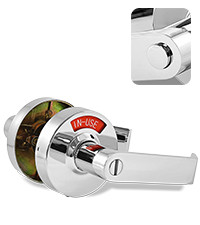
- Indicator locks, which visually display occupied or vacant status and are common in single-user restrooms
These lock types are typically paired with lever handles rather than knobs to maintain accessibility and ease of use.
Privacy Function and Emergency Access
The defining feature of a bathroom door lock is the privacy function. From the interior, the user engages a thumbturn or push button to lock the door. From the exterior, the lock remains non-keyed but includes an emergency release mechanism.
This design ensures:
- Privacy for the occupant
- Code-compliant emergency access for staff
- No reliance on keys for restroom entry
Many facilities standardize restroom locks across the building using commercial mechanical locks with consistent privacy functions, simplifying maintenance and replacement.
ADA Compliance for Commercial Restroom Locks
ADA compliance is a critical consideration when specifying bathroom door locks in commercial buildings. Even if the lock provides privacy, it must still be operable by users with limited dexterity.
To meet ADA requirements, bathroom door locks must:
- Be operable with one hand
- Require no tight grasping, pinching, or twisting
- Operate with minimal force
- Be mounted at compliant heights
Lever-operated privacy locks are the most common solution, as they naturally support ADA-compliant operation. Understanding commercial door hardware types helps ensure proper selection of locksets that meet accessibility standards for restroom applications.
Materials and Finishes for Restroom Environments
Commercial restrooms are demanding environments, with frequent cleaning and high humidity. Material selection directly impacts the lifespan and appearance of bathroom door locks.
The most commonly specified materials include:
- Stainless steel, ideal for healthcare and high-humidity environments
- Solid brass, offering durability and smooth operation
- Bronze is often selected for architectural or upscale projects
Finishes such as satin chrome or satin stainless steel are popular because they resist fingerprints and show less wear over time. Coordinating lock finishes with other restroom hardware helps maintain a clean, professional appearance.
Fire-Rated Doors and Bathroom Locks
In some commercial buildings, restroom doors may be part of a fire-rated corridor or partition. In these cases, the bathroom door lock must be listed for use on fire-rated doors and allow positive latching.
Fire-rated restroom doors typically require:
- Listed locksets approved for fire door assemblies
- No deadlocking features
- Compatibility with self-closing devices
When required, restroom locks are often paired with commercial door closers to ensure doors close and latch properly in compliance with fire codes.
Bathroom Door Locks and Access Control Integration
While most restroom doors do not require electronic access control, certain applications, such as staff-only restrooms or restricted areas, may integrate privacy locks with controlled access systems.
In these scenarios, mechanical privacy locks may be combined with electrified locking hardware or access-controlled openings elsewhere in the facility, maintaining consistent hardware standards across the building while limiting access where necessary.
Installation and Maintenance Considerations
Even the best bathroom door lock can underperform if installed incorrectly. Proper alignment, latch engagement, and lever return are critical for long-term reliability.
Installers should verify:
- Correct backset and door thickness
- Proper latch alignment with the strike
- Smooth thumbturn or push-button operation
- Secure mounting to prevent lever looseness
Routine inspection and maintenance help extend the service life of restroom locks in high-traffic environments.
Conclusion: Choosing the Right Bathroom Door Lock for Commercial Use
Bathroom door locks may seem like a small detail, but in commercial buildings, they play a major role in privacy, accessibility, and user experience. Selecting the right lock ensures compliance with ADA and building codes while reducing maintenance issues over time.
By sourcing restroom locksets and supporting hardware from National Lock Supply, facilities gain access to commercial-grade solutions built to ANSI/BHMA standards and designed for real-world use. With proper specification and installation, commercial bathroom door locks deliver reliable performance and peace of mind for both occupants and facility managers.